




By Stella Qiu
SYDNEY, July 29 (Reuters) - Australian consumer prices rose at a slower pace in the June quarter as fuel costs eased from peaks, while core inflation undershot forecasts and lessened pressure for a further hike in interest rates.
Markets now see little chance — just 3% — of an interest rate increase from the Reserve Bank of Australia next month, down sharply from 21% previously, while a hike this year is priced at about 50%.
The local stock market rallied 1%, the Australian dollar fell
0.3% to $0.6953 and 3-year government bond yields declined 10 basis points to 4.482%.
Data from the Australian Bureau of Statistics out on Wednesday showed its consumer price index (CPI) rose 0.6% in the second quarter from the previous period, after jumping 1.4% in the first quarter. Annual CPI eased to 4.0% from 4.1%.
The key trimmed mean measure of core inflation increased by 0.8% on-quarter, just below forecasts for a 0.9% gain. The annual pace picked up to 3.6%, from 3.5%, but was below market forecasts for 3.7% and the RBA's own forecast of 3.8%.
That was enough for UBS and Westpac to give up their calls for a rate hike next month. UBS still expects one rate hike in November, while Westpac is no longer tipping any rises from the RBA this year.
"Inflation has been more benign than we feared and the RBA forecast. The substantial pass-through of higher energy costs seen in the early phase of the Middle East conflict has not been followed up in recent months," said Luci Ellis, chief economist at Westpac.
"There is still a risk of a hike in November if inflation picks up again in Q3. But that is not our base case."
For June alone, CPI fell 0.1% from the previous month as fuel costs plunged nearly 11%, pulling the annual pace down to 3.8%, though the data has already been overshadowed by a 20% surge in oil prices this month as the U.S. and Iran resumed attacks in the Gulf.
DOMESTIC INFLATION STILL STRONG
The Reserve Bank of Australia has raised the key rate three times this year to 4.35% to tame inflation, fully reversing the amount of policy easing implemented last year. Governor Michele Bullock said on Tuesday it was not clear if rate hikes so far were enough to return inflation to target.
The labour market also stayed resilient, with the economy churning out more jobs in June despite a small pick-up in the unemployment rate.
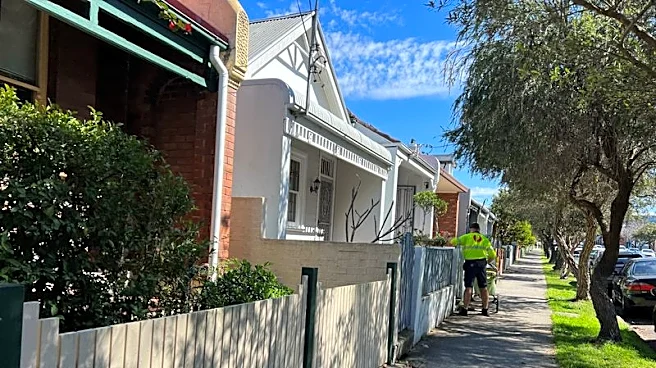
Wednesday's report showed new dwelling prices jumped 5.8% in June from a year ago — the fastest pace in almost three years — as builders passed on higher material and labour costs, the ABS said. However, on a monthly basis, price gains slowed to 0.4%.
Rent inflation held steady at an elevated rate of 3.6%. Most of the disinflation came from goods, while services inflation accelerated to 4%, from 3.7% the previous month.
"While inflation remains too high and has been away from target for too long, the recent data flow allows the RBA to be patient," said Belinda Allen, head of Australian economics at the Commonwealth Bank of Australia.
"Growth is slowing as expected, inflation is tracking below expectations, the labour market has eased a little quicker and the housing market has deteriorated more than anticipated."
(Reporting by Stella Qiu; Editing by Jacqueline Wong and Kevin Buckland)