






By Akash Sriram and Joey Roulette
Oct 20 (Reuters) - Elon Musk said on Tuesday that a merger of his two companies SpaceX and Tesla would be "a good idea" and that they had formed special committees to discuss a union, sending shares of the space and technology company up 4.9% in extended trading.
The company earlier posted its first profit as a public company and Musk said it was tracking an annual revenue run rate of up to $1 trillion.
Musk has in the past tantalized shareholders with the idea, citing
growing overlap between the companies. Speculation about SpaceX buying the EV maker has gained traction recently, with Barclays suggesting last week that a deal could be announced before Tesla's annual meeting in December.
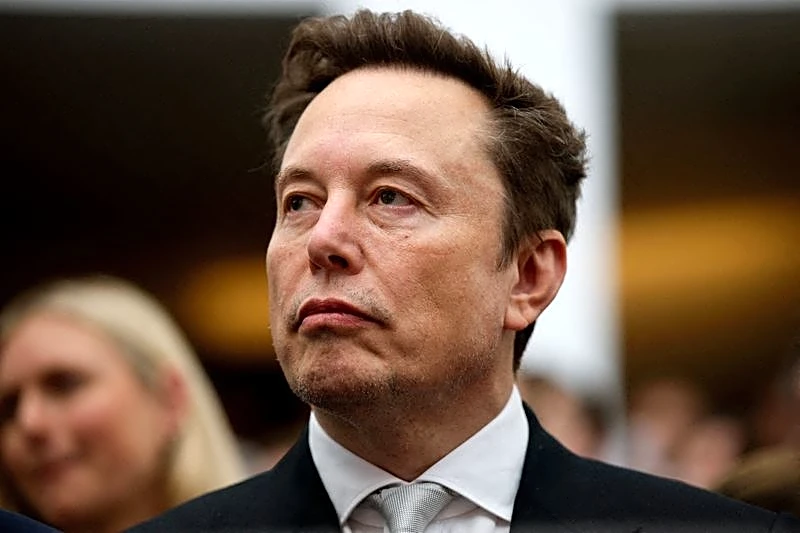
"I think it would be a good idea, but it's really up to the special committees of both companies," Musk said in the first official confirmation that the companies were formally talking. "Because I'm a conflicted party, I can't actually be in the discussion of the special committees," he told investors on a conference call. Shareholders ultimately would need to approve a deal, he added.
SpaceX's revenue climbed 161% to $14.58 billion for the three months ended September 30 from a year earlier. AI revenue surged by almost 10 times to $7.56 billion, mostly from renting out data-center capacity to developers such as Anthropic, Alphabet's Google and Reflection AI rather than from its own models.
"We are in an inflection moment for SpaceX across launch, connectivity and superintelligence," Musk said on the call. He ended his portion of prepared remarks with a seemingly off-script remark: "In a nutshell, what this implies for SpaceX annual recurring revenue by the end of '27 is somewhere between $500 billion and a trillion."
The third quarter offered the clearest evidence yet that SpaceX’s heavy investment in AI is translating into revenue, even as spending on compute infrastructure remains enormous — capital expenses nearly tripled.
The shift is reshaping a company whose financial engine has long been its Starlink internet services business and whose longer-term ambitions still hinge on getting Starship rockets into regular service. For now, though, its main business looks closer to a cloud provider's than an AI lab's.
AI REVENUE DRIVES SPACEX TRANSFORMATION
SpaceX's chief financial officer, Bret Johnsen, reiterated that SpaceX expects annual recurring revenue of about $100 billion by the end of 2026.
He said the company expects $35 billion to $40 billion in capital expenditures in the fourth quarter. AI took $16.4 billion of the company's $19.6 billion in capital spending in the third quarter.
"SpaceX delivered the quarter the bulls wanted, at least on the top line," said Will Rhind, CEO of asset manager GraniteShares. "The story now is all about AI. The compute contracts signed earlier this year are turning into revenue faster than a lot of people thought."
The company's AI business spans Grok, social media platform X and a fast-growing data-center operation.
Operating losses at the AI unit have been large and SpaceX has cautioned it will need sustained investment before it can consistently generate profits. But it turned a profit in the third quarter, compared with a year-ago loss.
"With AI revenue now the company's biggest business line, the company's hyperscale business is quickly providing operating strength and leverage which will carry into the advancements of its satellite and launch business," said Daniel Newman, CEO of tech research group the Futurum Group. "Increasingly, the strength and diversification of SpaceX makes a merger with Tesla feel imminent."
SpaceX reported net income of $4.4 billion versus a net loss of $1.1 billion a year earlier and analysts' expectation for a profit of $1.57 billion. On a per-share, adjusted basis, it earned 45 cents according to IBES calculations, outstripping a 13-cent average estimate.
STARLINK SUBSCRIBERS TOP FORECASTS
The satellite-internet unit has continued to expand its subscriber base, aided by additional satellite launches and a growing range of consumer, enterprise, aviation, maritime and government services.
Starlink reached 13.6 million subscribers in the third quarter, above the 12.19 million analysts expected, but growth is coming at a price: average monthly revenue per subscriber has fallen from $99 in 2023 to $69 in the third quarter as it expands abroad with cheaper plans.
The company has said geographic expansion beyond the wealthiest countries could push average revenue per user lower over time.
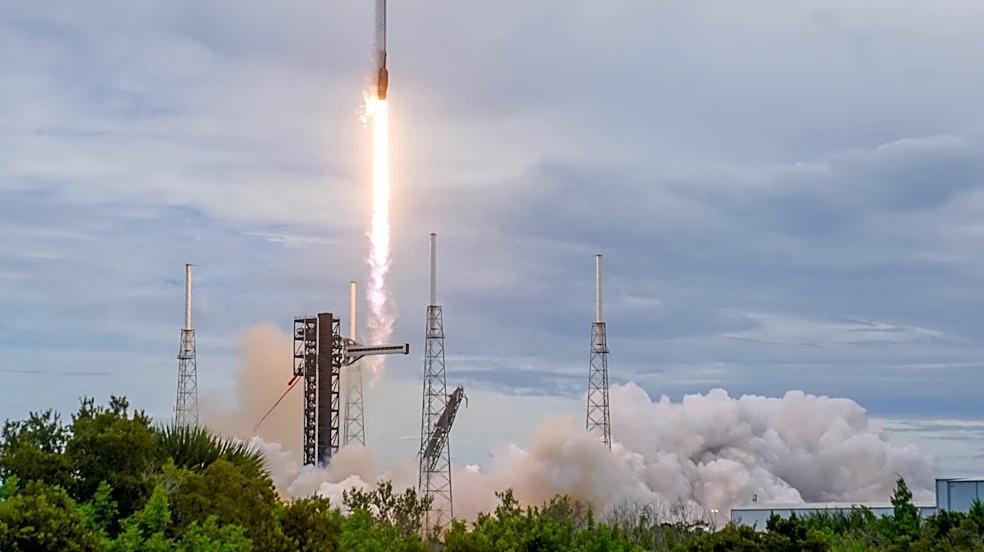
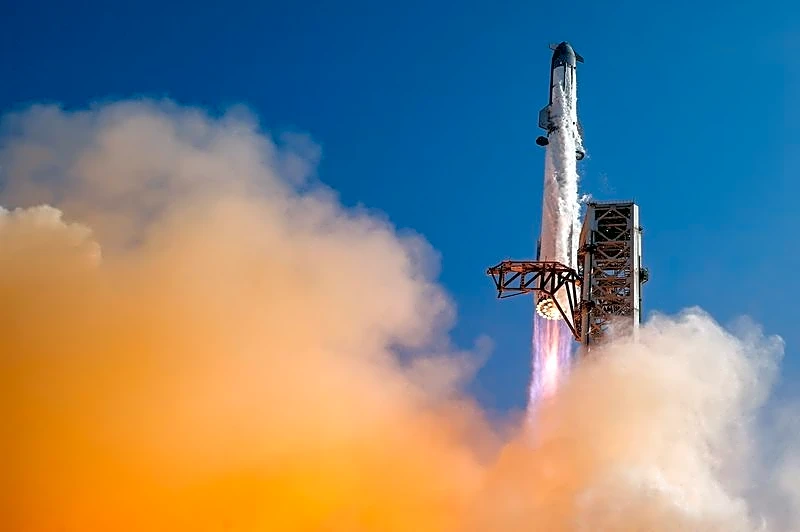
Starship, SpaceX's next-generation reusable rocket system, has yet to enter commercial service. It is expected to enable deployment of higher-bandwidth Starlink satellites and orbital AI-computing infrastructure. The company's ability to turn Starship into a reliably reusable vehicle is central to its longer-term strategy.
SpaceX successfully deployed several Starlink satellites last month, in Starship's first orbital test flight that ended hours earlier than expected after an engine issue.
The space segment includes commercial launches, government missions and Starship development and remains a significant source of costs and uncertainty.
Falcon launch activity has stayed robust, but revenue can vary with the mix of internal Starlink deployments, commercial customer missions and government contracts.
SpaceX has increasingly prioritized launches for its own satellite network over third-party payloads, while absorbing significant costs tied to Starship's development.
(Reporting by Akash Sriram in Bengaluru and Joey Roulette in Washington; Additional reporting by Max A. Cherney and Aditya Soni; Writing by Sayantani Ghosh; Editing by Pooja Desai and Matthew Lewis)