



By Sruthi Shankar
Sept 8 (Reuters) - The Japanese yen paused after rallying to near seven-month highs earlier on Tuesday, as inflation worries fuelled by a renewed surge in oil prices underpinned the dollar and Treasury yields.
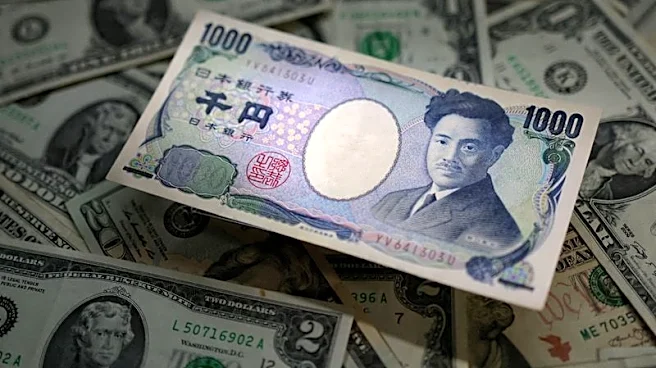
The yen strengthened to as much as 152.89 per dollar, surpassing levels reached during Japan's July intervention and hitting its strongest since February. The currency, however, pulled back to trade at around 154 through London and early New York hours, broadly flat on the day.
The dollar index, which tracks the U.S. currency against six others, edged nearly 0.2% higher. The 10-year U.S. Treasury yield, a benchmark for global borrowing costs, resumed its climb towards multi-year highs on expectations that a prolonged Middle East conflict will drive energy prices and inflation higher.
The yen has surged more than 5% so far this quarter, with traders and analysts pointing to a slew of factors that are turning away bears. These include bets on a faster pace of Bank of Japan tightening, the potential for Japanese investors to repatriate their funds, the unwinding of carry trades and U.S. political pressure.
"It seems more like it's a market-driven flow, possibly investors starting to think much more about the BOJ turning more hawkish at the next meeting," said Dominic Bunning, head of G10 FX strategy at Nomura in London.
"But it's going to be quite challenging for the BOJ to hike faster than the market has priced in or to a higher terminal rate. If a weaker yen was at least part of their thinking from an inflation perspective, that's obviously becoming less of an issue."
Traders largely expect Japan's central bank to hike interest rates by 25 basis points to 1.25% at the September 17-18 meeting.
Japanese Finance Minister Satsuki Katayama said on Tuesday Tokyo and Washington remain aligned in their approach to currency markets and will continue close communication to ensure orderly foreign exchange movements.
U.S. DATA, ECB DECISION AWAITED
Investors were watching geopolitical tensions in the Gulf and their implications for inflation after Yemen's Tehran-backed Houthis attacked energy facilities and cities in U.S. ally Saudi Arabia, wounding more than 70 people and highlighting the risk of the Iran conflict widening.
Oil prices hovered near a six-week high, with Brent crude futures firmly above $98 a barrel. [O/R]
Market focus now shifts to U.S. inflation readings this week, the last set of key data releases before the Fed meeting on September 15-16. Traders are pricing a roughly 60% chance of a Federal Reserve rate hike this month following Friday's stronger-than-expected nonfarm payrolls report.
Fed Governor Christopher Waller said last week that inflation dynamics were key to his policy outlook and that he was leaning towards keeping rates steady if price pressures continued to moderate, but that he would support a hike if inflation failed to cool.
The euro was trading largely flat at $1.1615. The European Central Bank is widely expected to raise interest rates on Thursday, as the U.S.-Iran war — which is keeping oil prices high and raising inflation — drags on.
The pound climbed to a one-week high of $1.3550, with investors awaiting comments from a number of Bank of England policymakers, including Governor Andrew Bailey.
(Reporting by Jiaxing Li and Sruthi Shankar; Editing by Jacqueline Wong, Lincoln Feast, Edwina Gibbs, Amanda Cooper; Timothy Heritage and Andrea Rcci )