



By Sinéad Carew and Iain Withers
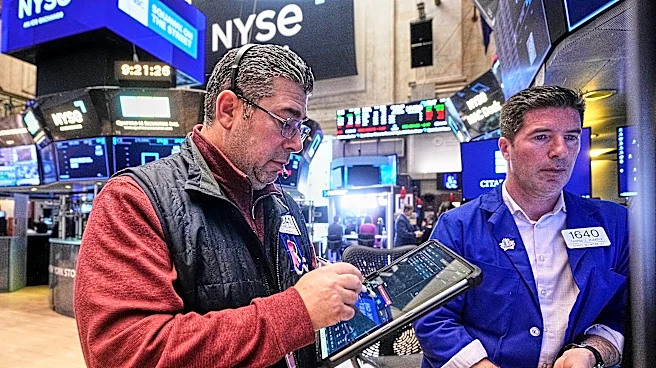
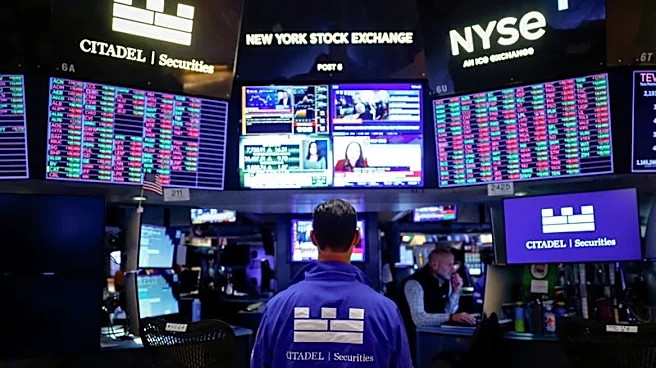
NEW YORK/LONDON, Oct 30 (Reuters) - A sharp selloff in Wall Street's tech shares pushed MSCI's global index down more than 1% on Friday, sending investors to the safety of US bonds on fears that hefty cash-burning AI investments may not deliver sufficient returns.
Shares in chipmaker Intel plunged 28% and Amazon shares were off 1.9% after their results each showed they burned through cash while investing heavily in AI-related development. Intel also said PC demand had
slowed, and that it could persist through next year.
Shares in Google parent Alphabet, after falling 12.6% on Thursday, extended losses on Friday. Its massive AI spending turned the company cash flow negative while its search business faced stiff competition.
"It's really been a horror show this morning and the real villain is AI spending," said Gene Goldman, chief investment officer at Cetera, saying the heavy cash burn and elevated capex are prompting questions about whether the AI returns will "justify the outlays."
Goldman also said pressure from rising oil prices due to more attacks in the Middle East and concerns about a hack at Binance, the world's biggest cryptocurrency exchange, added to the gloom. Bitcoin and other cryptocurrency prices fell.
Outside tech, other sectors were holding up, particularly energy, which rose following results from Exxon Mobil and Chevron. The oil majors posted strong profits due to big refining margins driven by supply disruptions from Ukrainian attacks on Russian refineries and the US-Israel war on Iran. Shares rose 1.3% and 3%, respectively.
On Wall Street at 12:09 p.m. ET (1609 GMT), the Dow Jones Industrial Average fell 384.61 points, or 0.73%, to 51,957.95, the S&P 500 fell 124.20 points, or 1.61%, to 7,595.93 and the Nasdaq Composite fell 684.06 points, or 2.61%, to 25,500.67.
MSCI's gauge of stocks across the globe fell 15.62 points, or 1.4%, to 1,117.00.
The pan-European STOXX 600 index fell 0.46%.
In currencies, the yen headed for a third daily gain on Friday after the Bank of Japan held rates steady but revised up its inflation forecast, while a fresh wave of selling in AI shares triggered demand for non-dollar safe havens.
The dollar index, which measures the greenback against a basket of currencies including the yen and the euro, fell 0.03% to 101.85, with the euro down 0.07% at $1.117.
Against the Japanese yen, the dollar weakened 0.2% to 157.37.
Bitcoin fell 1.80% to $77,424.37.
US Treasuries rose, putting benchmark 10-year yields on track for their biggest monthly decline since late 2023, as the tech-stock selloff pushed investors into safe havens.
The yield on benchmark US 10-year notes fell 4.36 basis points to 4.945% while the 30-year bond yield fell 0.69 basis points to 5.3221%.
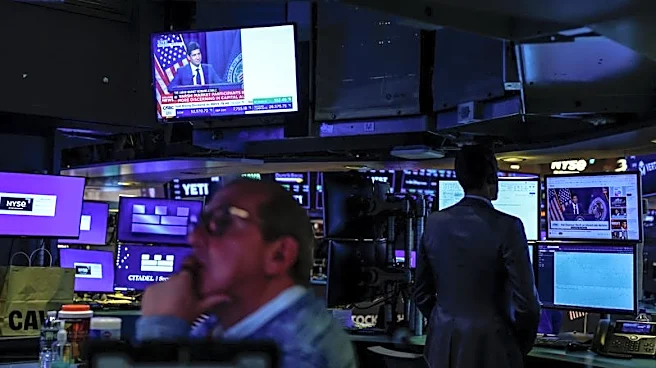
The 2-year note yield, which typically moves in step with interest rate expectations for the Federal Reserve, fell 5.4 basis points to 4.602%.
Oil prices were on track for a fourth straight monthly gain. Traders are bracing for a potential escalation in the US-Iran conflict after the US midterm elections. The war has lingered for eight months without a resolution, and on Friday, a tanker in the Strait of Hormuz was attacked, highlighting the ongoing supply risks. [O/R]
US crude rose 2% to $104.09 a barrel and Brent rose to $117.58 per barrel, up 2.4% on the day.
Precious metals fell. Gold dropped to a one-year low on Friday and silver slid below $50 an ounce for the first time since November 2025 as higher energy prices and persistent inflation concerns strengthened expectations that US interest rates will stay high.
Spot gold fell 3% to $3,901.83 an ounce. Spot silver fell 5.9% to $49.27 an ounce.
(Reporting by Sinéad Carew in New York, Iain Withers in London and Tom Westbrook and Ankur Banerjee in Singapore; Editing by Tom Hogue, Clarence Fernandez, Stephen Coates, William Maclean, Chizu Nomiyama and David Gaffen)