







By Marcela Ayres and Bernardo Caram
BRASILIA, June 17 (Reuters) - Brazil will end subsidies for diesel and gasoline if the price of crude oil stabilizes around $80 per barrel due to progress toward a U.S.-Iran deal to end their conflict, the executive secretary of the Finance Ministry, Rogerio Ceron, told Reuters.
Ceron said in a Tuesday interview that de-escalation in the Middle East would likely improve inflation expectations and ease pressure on long-term interest rates, giving Brazil's central
bank more room to keep cutting interest rates.
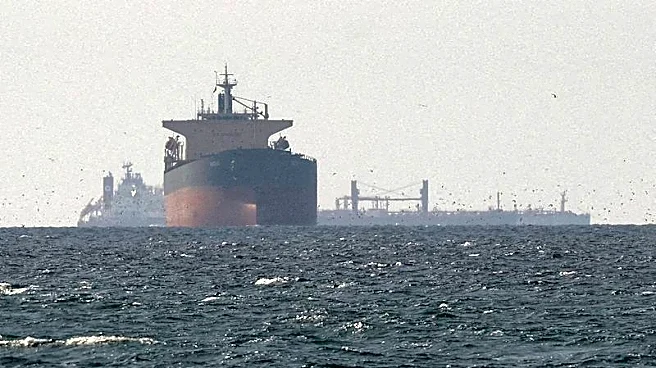
Brent crude prices fell 5.1% on Tuesday to $78.96 a barrel as details emerged of a provisional deal to reopen the Strait of Hormuz.
Ceron said the next 30 days would be key to assessing whether that scenario holds, stressing caution after sharp swings in oil prices, interest rates and exchange rates.
"If it stabilizes around $80 a barrel, there will be no need to maintain these (fuel subsidy) measures. We will withdraw them prudently," he said.
Since the conflict began in late February, President Luiz Inacio Lula da Silva has introduced emergency measures to cushion higher oil prices, including tax cuts and subsidies on diesel, gasoline, jet fuel and cooking gas.
Most measures were designed to last about two months, with the option of extension. Many expire in July, which Ceron said allows time to gauge the impact of a ceasefire.
"There are two scenarios: end them earlier or let them expire as scheduled," he said.
Ceron noted that although $80 is higher than the roughly $70 seen earlier this year, the Brazilian real has strengthened from about 5.20 to around 5.00 per dollar, offsetting some of the inflationary pressure.
He said the recent rise in inflation forecasts was largely driven by the war, rejecting the analysis of some economists who say government stimulus played a decisive role.
"If you exclude the impact of the war, there is no significant inflationary stress," he said.
With oil stabilizing, inflation expectations - which had drifted further from the 3% target - should reverse quickly, giving monetary policy "more room to maneuver," he said ahead of the central bank's rate decision on Wednesday.
STIMULUS DISPUTED
Private-sector analysts estimate Brazil's economy has seen more than 200 billion reais ($39 billion) in stimulus this year as Lula heads toward an October re-election bid, coming largely from subsidies and guarantees outside the government's primary budget balance.
Ceron rejected those estimates.
"If there were a stimulus of 2% of GDP, growth would be closer to 3%. There is no stimulus of that magnitude," he said, pointing to recent data such as retail sales showing "significant deceleration."
The Finance Ministry forecasts GDP growth of 2.3% this year, within a 2.0–2.5% range Ceron said is not inflationary. Market forecasts stand at 1.96%, according to a central bank survey.
Ceron said some analysts are conflating fiscally neutral measures, such as expanded income tax exemptions, with policies that only marginally boost activity, he said, such as subsidized credit for truckers, app drivers and delivery workers.
GLOBAL FACTORS DRIVING YIELDS
Ceron acknowledged fiscal challenges facing Brazil but said high interest rates are not driven only by fiscal conditions, pointing to structural factors such as low domestic savings.
He said the recent rise in Brazilian debt yields was driven mainly by strong U.S. economic data and global repricing.
"Our spread relative to the U.S. is not out of line with historical levels," he said.
Brazil is likely to issue new sustainable bonds in the second half of the year, with other news expected during Finance Minister Dario Durigan's visit to China, he added, without giving details.
Reuters reported that Brazil is preparing to announce its first sovereign yuan bond issuance, known as Panda bonds, during the trip.
($1 = 5.0880 reais)
(Reporting by Marcela Ayres and Bernardo CaramEditing by Brad Haynes and Chizu Nomiyama )