

By Sarah Morland
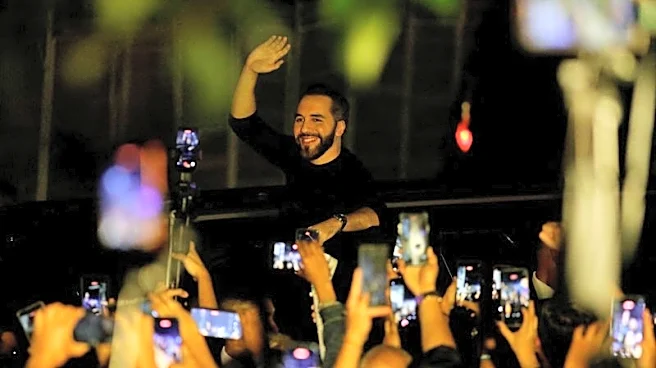
Nov 28 (Reuters) - Haitians have welcomed El Salvador President Bukele's rapid military intervention, heartened that someone is finally tackling the entrenched gang warfare that has claimed over 20,000 lives in the small Caribbean nation in four years.
But a month into Bukele's surge of some 2,000 soldiers, security experts say the Salvadoran force has not achieved concrete territorial gains and that Bukele's efforts to crush Haiti's powerful gangs – in the way he did in his home country
– could run into roadblocks and put civilians at risk.
"There's a theatrical component and that's part of the shock and awe," said Robert Muggah, a Haiti advisor to the UN. "But it's not yet resulting in the securing and holding of territory."
Before October, El Salvador had some 120 non-combatants in Haiti as part of a UN-backed security force. But after four of the Salvadoran contingent went missing on October 18, Bukele rushed in more than 2,000 soldiers under a separate mission operating outside the UN mandate.
Bukele said this mission aims to recover his missing countrymen, but he's since launched airstrikes far from where the four Salvadorans disappeared. Both Haiti and El Salvador have been silent on the terms of their bilateral security agreement.
Neither government responded to requests for comment. Both say that crushing the gangs is paramount to protecting civilians.
MORE CLASHES, MORE CASUALTIES
Haitian gangs have for years controlled over 80% of the capital Port-au-Prince, as well as checkpoints along key roads and swaths of Haiti's central and breadbasket regions. They are accused of dozens of massacres, mass kidnappings and systemic gang rapes.
The US-based armed conflict monitoring group ACLED found that since Bukele deployed, clashes between all security forces and gangs have become both deadlier and more frequent.
In addition to Bukele's troops, Haiti's national police and fledgling army, the UN-backed mission, and a private military contractor are also on the ground. Security experts say Bukele's forces' flashy arrival triggered an uptick in security operations across the board.
Sandra Pellegrini, who leads ACLED's work in Latin America, said the group recorded 317 deaths between October 18, when the Salvadorans went missing, and November 20. That's more than double the 135 deaths recorded during the same period the previous month. At least 26 of the victims were civilians, the group said.
In mid-November, at least 10 more civilians were killed by gangs in Croix-des-Bouquets, in the outskirts of the capital where the Salvadoran technicians went missing, ACLED estimated. As security forces ramped up operations in the area following the Salvadorans' disappearance, gangs attacked residents and searched their phones for evidence of support for Bukele, security experts said.
Romain Le Cour Grandmaison, Haiti director of the Global Initiative against Transnational Organized Crime NGO, said escalating violence leaves both civilians in the crosshairs and unwilling gang recruits with little way out.
Bukele weakened Salvadoran crime groups by imprisoning tens of thousands of suspected gang members in a crackdown that rights groups say came at the expense of due process and innocent lives.
Haiti announced a plan to build Salvadoran-style prisons after its security minister visited one of El Salvador’s notorious incarceration facilities last week.
But security experts say Haiti's frozen judiciary - which has not prosecuted a single massacre since 2018 - isn't equipped to prosecute a wave of suspected gang members.
"The judicial system, corrupt to the bone, needs competent judges to thoroughly review cases to secure convictions," said Rosy Auguste Ducena, program director at Haiti's RNDDH rights group. "It is impunity that led us here."
TRIUMPH NARRATIVE
Back at home, as Bukele prepares for presidential elections in February, his Haiti deployment has been popular, according to a poll published days after it began.
A victory would further boost Bukele as a regional leader, experts say, as governments across the Americas shift to the right on the back of concerns over organized crime and interventions from the administration of US President Donald Trump.
But support for the deployment could wane if casualties rise without results, experts said. Last week, the Salvadoran army said three soldiers had died in Haiti, the first casualties since the troop surge.
Salvadoran security expert Luis Enrique Amaya said a protracted campaign would require a strong exit strategy.
"If the government withdraws from Haiti, it must do so with a narrative of triumph," Amaya said.
(Reporting by Sarah Morland in Mexico City; Additional reporting by Gerardo Arbaiza in San Salvador and Harold Isaac and Yves Surin in Port-au-Prince; Editing by Alistair Bell)