








By Lucia Mutikani
WASHINGTON, May 5 (Reuters) - The U.S. trade deficit widened in March as an artificial intelligence investment boom pulled in imports, more than offsetting an increase in exports, which were partly boosted by crude oil shipments amid the Middle East conflict.
The report from the Commerce Department on Tuesday confirmed that the trade shortfall was a drag on economic growth in the first quarter. Goods imports are likely to rise, driven by capital goods amid the AI spending spree. But
the increase in imports could be mitigated by petroleum exports, which economists expected to rise further as the U.S.-Israeli war with Iran disrupts oil shipments.
"We expect the trade deficit to narrow in April as U.S. exports of oil and petroleum products have surged," said Grace Zwemmer, a U.S. economist at Oxford Economics.
The trade gap increased 4.4% to $60.3 billion, the Commerce Department's Bureau of Economic Analysis and Census Bureau said. Economists polled by Reuters forecast the trade deficit rising to $60.9 billion in March. Trade subtracted 1.30 percentage points from gross domestic product growth in the first quarter. The economy grew at a 2.0% annualized rate last quarter.
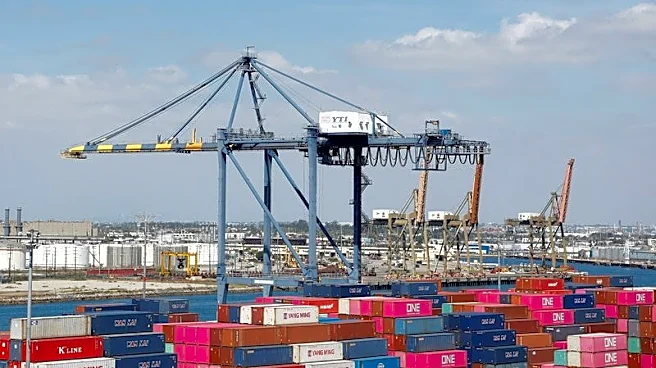
Imports increased 2.3% to $381.2 billion in March. Goods imports rose 3.6% to $302.2 billion, boosted by a surge in capital goods to a record high of $120.7 billion.
Businesses are rapidly investing in AI and data centers underpinning it, but most of the materials are imported. Imports of computer accessories increased $2.0 billion in March, though those of computers fell $2.3 billion. Industrial supplies and materials, which include petroleum, rose $2.1 billion. Consumer goods imports increased $2.4 billion while those of motor vehicles and parts advanced $3.6 billion.
Exports increased 2.0% to an all-time high of $320.9 billion. Goods exports surged 3.1% to a record-high $213.5 billion. They were driven by a $5.0 billion jump in exports of industrial supplies and materials to an all-time high, which reflected a $2.8 billion increase in crude oil.
Exports of other petroleum products increased $1.7 billion, while fuel oil shipments rose $1.6 billion. Exports of foods, feeds and beverages increased to the highest level since August 2022, mostly lifted by soybeans. But consumer goods exports decreased $1.7 billion.
The goods trade deficit widened 4.8% to $88.7 billion. When adjusted for inflation, it increased 6.7% to $90.8 billion.
Imports of services decreased $1.9 billion to $79.0 billion, pulled down by a decline in charges for the use of intellectual property as well as transport and travel. Services exports slipped $0.3 billion to $107.4 billion amid a drop in travel services. Exports of transport services increased as did those of financial and other business services.
The U.S. had goods trade deficits with several countries, including China, Taiwan, Vietnam, Mexico, Canada, India, South Korea, Saudi Arabia and Israel. Its shortfall with the European Union increased $4.1 billion to $9.2 billion in March.
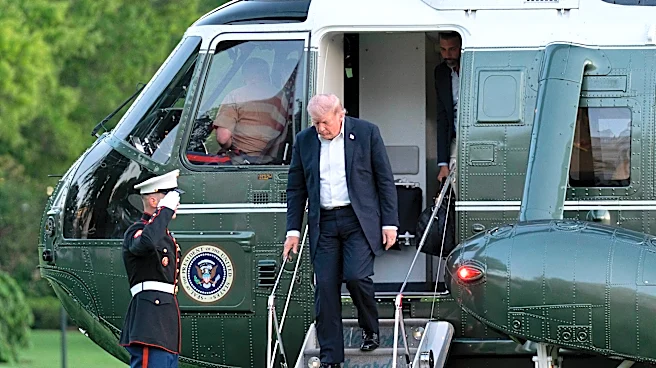
President Donald Trump has imposed tariffs on trade partners, citing the trade deficits.
(Reporting by Lucia Mutikani; Editing by Chizu Nomiyama and Andrea Ricci )