







By Lucia Mutikani
WASHINGTON, Sept 29 (Reuters) - US consumer confidence plunged to a near 12-1/2-year low in September, with households expecting a deterioration in business and labor market conditions over the next six months amid the Middle East conflict and rising interest rates.
The Conference Board survey on Tuesday mirrored other polls showing growing disenchantment over the economy heading into the November 3 midterm elections, which will determine control of Congress. The US-Israeli war has
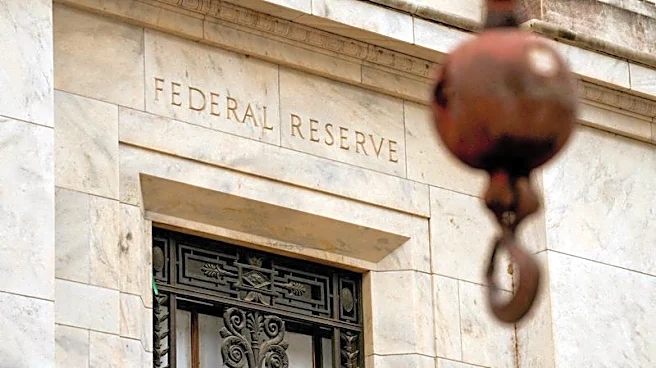
raised energy prices, stoking inflation and prompting the Federal Reserve to raise interest rates this month for the first time in three years.
The rising cost of living has manifested itself in higher prices at the pump and supermarket as well as mortgage rates. Diesel prices are at a record high. Economists say the war has created an uncertain business environment and hindered employers' ability to hire more workers.
"The economy is stagnant for the typical American household, which has been caused by the erratic public policy environment that makes it tough for businesses and households to plan for the future," said Kyle Moore, chief economist at The Century Foundation.
The Conference Board said its consumer confidence index plummeted 6.7 points this month to 81.9, the lowest level since April 2014. Economists polled by Reuters had forecast the index at 89.2. The deterioration in confidence was across political party affiliation, age and income groups.
The findings are similar to last week's University of Michigan's Surveys of Consumers report.
Dana Peterson, the Conference Board's chief economist, noted that consumers' write-in responses on the economy were mostly pessimistic, adding that "references to prices, the high cost of goods and services, and oil and gas prices in particular, rose to new heights."
Consumers had a dim view of current and future expectations, centered on business and labor market conditions. The share of consumers saying jobs were "plentiful" dropped to 23.6%, the lowest level since February 2021, from 24.5% in August. The proportion who viewed jobs as "hard to get" climbed to 21.9%, the highest reading since January 2021, from 20.3% in August.
The survey's so-called labor market differential narrowed to 1.7% from 4.2% in August. This measure closely correlates to the unemployment rate in the Labor Department's employment report. It raises the risk of the jobless rate rising in the months ahead, though the magnitude could be limited by a declining labor force amid an immigration crackdown and retirements.
Consumers' downbeat assessment of the labor market was despite job growth accelerating in August after hitting a speed bump through much of summer. Employment gains appear to be mostly driven by low layoffs, with hiring remaining tepid.
JOB OPENINGS DECLINE
A separate report from the Labor Department's Bureau of Labor Statistics showed job openings, a measure of labor demand, had dropped by 256,000 to 7.079 million by the last day of August. Economists had forecast 7.225 million open positions.
There were 1.01 job openings for every unemployed person, down from 1.06 in July. This ratio peaked around 2.0 in 2022.
The Job Openings and Labor Turnover Survey, or JOLTS report has been plagued by a low response rate, which has decreased considerably from prior to the COVID-19 pandemic. The decline in openings in August was led by a 119,000 decrease in unfilled jobs in the professional and business services sector. There were 115,000 fewer healthcare and social assistance vacancies.
State and local government open positions decreased 58,000, most of them in the state and local, excluding education, category. There were fewer job openings in manufacturing and construction sectors. But vacancies increased in the retail, leisure and hospitality as well as information sectors.
The job openings rate fell to 4.3% from 4.4% in July. Small businesses, with fewer than nine employees, made up all the decline in job openings. Hires increased by a marginal 46,000 to 5.192 million, mostly in state and local government.
Construction hiring fell by 50,000. The hires rate increased to 3.3% from 3.2% in July. Layoffs and discharges dropped 61,000 to a 17-month low of 1.641 million, with the rate dipping to 1.0% after holding at 1.1% for three straight months.
Fewer people are quitting their jobs, leaving the quits rate — viewed by policymakers as a gauge of labor market confidence — steady at 1.9%. This likely keeps wage inflation under control, but will probably not stop further rate hikes.
The US central bank raised its overnight benchmark interest rate by 25 basis points to the 3.75%-4.00% range and flagged further increases in borrowing costs in the months ahead. Financial markets are pricing in a roughly 68.1% chance of another rate increase in October, CME's FedWatch tool showed.
A Reuters survey of economists expects nonfarm payrolls to have advanced by 90,000 in September, with the unemployment rate forecast to have held steady at 4.1%. Payrolls increased by 162,000 jobs in August. September's employment report will be published on Friday.
"While the level of job openings has not been a good signal for hiring, changes in openings could be an important sign for whether labor demand is increasing or weakening further due to higher rates," said Veronica Clark, an economist at Citigroup.
The affordability challenge facing Americans was underscored by a third report from the Federal Housing Finance Agency showing single-family house prices increased 0.3% in July after being unchanged in June. Prices advanced 2.6% in the 12 months through July, after rising 2.3% in June.
The increase in home prices added to the strain from rising mortgage rates because of the Middle East conflict that are pushing homeownership further out of reach for many young adults. The rise occurred despite weak demand, which has increased housing inventory.
The average rate on a 30-year fixed-rate mortgage has soared more than 100 basis points since the war started in late February. It averaged 7.03% last week, the highest level since January 2025, data from mortgage finance firm Freddie Mac showed.
"Affordability challenges for first-time buyers will likely remain," said Michael Gapen, chief economist at Morgan Stanley. "We see little relief coming in the near term as a large move in rates is likely needed to change that dynamic."
(Reporting by Lucia Mutikani; Editing by Chizu Nomiyama and Andrea Ricci )