






By Bo Erickson
WASHINGTON, April 22 (Reuters) - Officials at the John F. Kennedy Center for the Performing Arts on Wednesday promised greater transparency about sweeping taxpayer-funded renovations of the Washington landmark, which have come under scrutiny after President Donald Trump added his name to the building and named himself chairman of its board.
Trump, whose efforts to remake Washington have become a defining feature of his second term, recently announced a two-year closure of the center
starting in July. The plan, approved by his hand-picked board, has drawn sharp criticism from some Democratic lawmakers, donors and artists. Preservation groups have sued to halt the project, arguing it requires congressional approval.
Against that background, Kennedy Center officials opened the doors for their first public media tour on Trump's renovations, seeking to highlight crumbling infrastructure while calming fears that politics will reshape a cultural institution long dedicated as a memorial to former Democratic President John F. Kennedy.
“I know there’s been a lot of turmoil and worry about what we’re doing to the building,” said one official, who was granted anonymity to speak candidly about the plans. The official pledged to be “more transparent” and “communicative” on the planned structural and cosmetic renovations.
Much about the changes to the historic performing arts spaces remained unclear on Wednesday, however.
Standing in the famed Opera House, which includes a balcony viewing box for the U.S. president, the official said the seats and carpet will be updated but the deep red color scheme will remain.
Overall plans for the cosmetic changes have not been finalized, the official said. Asked about the extent of the demolition, the official said: "You're not going to be able to stand in Georgetown and look over the river and see through the building. That's not what's going to happen."
TRUMP 'IS IN THE DETAILS'
Trump, who is in the midst of a high-stakes, weeks-long war with Iran, is “quite frequently” engaging in discussions about the renovations, the official said, without elaborating.
“He is in the details,” the official said.
During a March 2025 tour of the center, Trump said it was in “tremendous disrepair," casting its condition in political terms and calling it “emblematic of our country” that he was positioning himself to fix. At a White House meeting in December, he suggested adding white marble armrests to the center's seating.
Congress dedicated the center to Kennedy after his assassination in 1963, and photos of the former president and first lady Jackie Kennedy decorate the building. The official said no changes were planned to those tributes, including the famous 3,000‑pound Kennedy statue in the center's hall.
Unlike Trump's privately funded White House ballroom project, which will involve hundreds of millions of dollars in anonymous donations, the remodeling of the Kennedy Center will be paid with tax dollars. Republicans approved about $257 million for the work in Trump's 2025 tax and spending law.
Draft budget documents submitted in a lawsuit by Democratic U.S. Representative Joyce Beatty, an ex-officio board member, show $78 million earmarked for “safety and building systems” and $48.5 million for performance venue “revitalization,” with the largest share going to “front of house” renovations.
The center official said additional corporate and private donations are being sought to renovate the center's lounges.
DEEP STAFF CUTS
Officials acknowledged the center’s staff will be cut back to “pretty bare bones” during the renovation but were not as forthcoming about how ticket sales were impacted by Trump’s takeover, saying sales are not something the institution has publicly disclosed in the past.
“There was a shift in attendance by D.C. locals upon our arrival here,” a second official said.
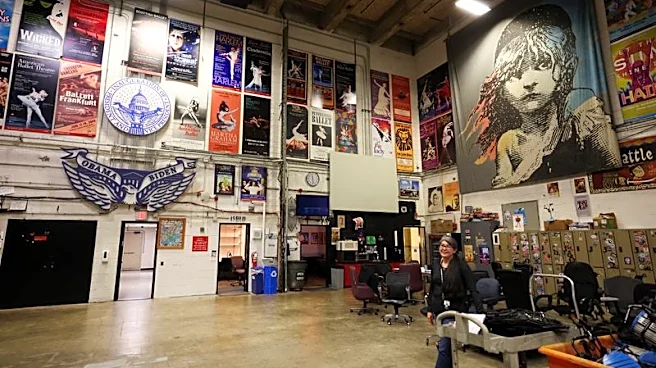
During the tour, center officials moved from the building's marble facade to the storied stages, which will both be updated, and then throughout the bowels of the building, where the bulk of the renovations will focus on issues such as eroding support beams and corroded electrical vaults.
A cobwebbed filtration system meant to pump in water for cooling from the nearby Potomac River sat broken down, the process hampered by rising river temperatures. A large, black pipe was leaking near a poster for the musical Wicked that read, “So much happened before.”
(Reporting by Bo Erickson; Editing by Colleen Jenkins and Daniel Wallis)