
By Sarah N. Lynch
WASHINGTON, Dec 17 (Reuters) - As President Donald Trump's crime crackdown got underway in Washington, D.C., in August, federal agents and police spotted a man named Torez Riley tugging at his backpack inside a Trader Joe's store, searched it and recovered two firearms.
But federal prosecutors were forced to dismiss the charges after video surveillance revealed the search lacked probable cause and was unlawful.
In a subsequent legal opinion, a federal magistrate judge said the errors
were part of a broader pattern of unprecedented prosecutorial missteps, resulting in a 21% dismissal rate of the D.C. U.S. Attorney's office's criminal complaints over eight weeks, compared to a mere 0.5% dismissal rate over the prior 10 years.
"It appears prosecutors charged and detained Riley before properly investigating the circumstances of his arrest," wrote the magistrate judge, Zia Faruqui.
In years past, it was relatively rare for a federal court to question the Justice Department's competency or good faith. But such questions are becoming more common, thanks to a growing pattern of legal missteps that have dogged the department since January, according to a Reuters review and legal experts.
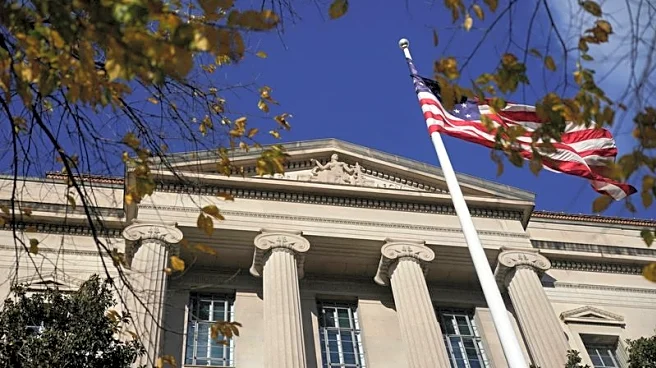
The Justice Department declined to comment on any pending cases but a department spokesperson said:
"This Department of Justice is winning in court on behalf of the Trump Administration and the American People with 24 successful rulings at the Supreme Court emergency docket so far and multiple prominent indictments of transnational terrorists, violent criminals, and even politicians who have allegedly engaged in corruption."
A spokesman for the D.C. U.S. Attorney's office, Tim Lauer, said: “This office enforces the law as written and brings cases where the facts warrant action. While judges and juries decide outcomes, this office’s role is to hold offenders accountable.”
UNDERMINES TRUMP'S OWN AGENDA
The errors have sometimes undermined the department on civil and criminal matters it cares about, from the prosecutions of Trump's political foes, to cases about immigration, violent crime, gender-affirming care and voting rights. At times, they came about after senior officials made public statements about pending cases on social media or television that strayed from the allegations made in sworn court filings, violating department rules designed to ensure a fair trial.
These mistakes are causing department attorneys to lose credibility with federal courts, with some judges quashing subpoenas, threatening criminal contempt and issuing opinions that raise questions about their conduct. Grand juries have also in some cases started rejecting indictments, a highly unusual event since prosecutors control what evidence gets presented.
"As a government lawyer, you rely on your credibility and the Department of Justice relies on the presumption of regularity," said former federal prosecutor Alexis Loeb, referring to long-standing legal doctrine in which courts presume that government officials can be trusted.
"If those things are undermined, if you lose a court’s trust, it also makes it much harder to do your job."
COMEY CASE TOSSED
Perhaps the most high-profile case to garner headlines for its missteps is the Justice Department's prosecution of Trump critic James Comey, the former FBI director whom Trump fired in 2017, on charges of making false statements and obstructing Congress.
A federal judge in November dismissed the charges against Comey, finding the indictment was secured by an unlawfully appointed U.S. Attorney who was hand-picked by Trump after her predecessor expressed concerns about the strength of the evidence against Comey and New York Attorney General Letitia James.
Even before that ruling, the case was troubled: A magistrate judge said he uncovered a plethora of errors by U.S. Attorney Lindsey Halligan, from misstatements of law to the grand jury, to possible misconduct that included presenting evidence to grand jurors that was not filtered to remove privileged materials between Comey and his attorney.
After a different judge disqualified Halligan from serving as U.S. Attorney, the Justice Department circulated an email to prosecutors instructing them to still keep Halligan's name on the signature block for all pleadings and list her as holding the role -- with the word "Attorney" misspelled.
At least some of the legal blunders are being caused by a loss of institutional knowledge, legal experts said.
From January through November, public records show the department has lost more than 2,900 attorneys - triple the number of those who left in each of the previous four years.
"It is no coincidence that in the wake of a mass exodus of experienced federal prosecutors and federal agents that there have been more actual or perceived missteps by department employees," said Peter Lallas, a former federal prosecutor.
FOCUS ON THE COURT OF PUBLIC OPINION
Other mistakes have occurred in moments where department officials were trying to garner attention on social media or curry political support from Trump and his allies.
FBI Director Kash Patel posted on X about the arrest of Wisconsin Judge Hannah Dugan over charges she obstructed immigration enforcement while the case was sealed. Months later, he erroneously posted that the FBI had a suspect in custody for the assassination of Charlie Kirk, a claim he was forced to walk back.
The FBI did not respond to a request for comment.
Deputy Attorney General Todd Blanche made extrajudicial statements about the department's motivations for pursuing criminal charges against Salvadoran immigrant Kilmar Abrego Garcia that a judge has since found could bolster Abrego Garcia's efforts to dismiss the indictment on the grounds it is a vindictive prosecution.
In his remarks, Blanche told Fox News that prosecutors started investigating Abrego Garcia after a judge in Maryland questioned his removal from the United States and found the government had no right to deport him.
And a memo drafted by Attorney General Pam Bondi that equated gender-affirming care for youth with genital mutilation has come back to bite, with several federal courts quashing the department's subpoenas to obtain medical records from providers, saying the department is acting in bad faith.
"They shoot first, they aim later, and even then, they miss," said former prosecutor Gene Rossi. "Because there is no wall between the White House and the Justice Department in terms of interaction and political process, this is what happens."
(Reporting by Sarah N. Lynch; additional reporting by Brad Heath; editing by Scott Malone and Alistair Bell)