






By Jonathan Stempel
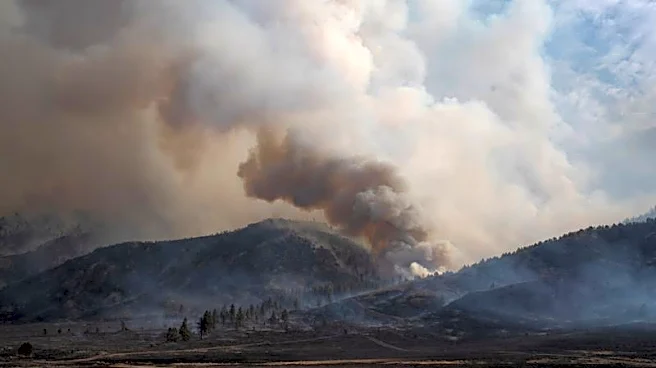
Nov 3 (Reuters) - The Oregon Supreme Court on Tuesday struggled with whether to revive a jury verdict that could expose Berkshire Hathaway's PacifiCorp utility to tens of billions of dollars of potential damages over its role in four Oregon wildfires in 2020.
Oregon residents and business owners are seeking to reverse a decision by a mid-level state appeals court that wiped out $1.25 billion of awards to 201 plaintiffs against PacifiCorp because of an error in how jurors were instructed.
More than 2,400 plaintiffs blamed the Portland-based utility's equipment and alleged negligent failure to shut down power lines during a Labor Day weekend windstorm for damaging more than 2,000 properties.
During the litigation's first phase, jurors in 2023 found PacifiCorp at fault for the Santiam Canyon, Echo Mountain Complex, South Obenchain and 242 fires, after Judge Steffan Alexander in the Multnomah County Circuit Court said they "may assume that the evidence at trial applies to all class members."
During oral arguments, Ted Boutrous, a lawyer for PacifiCorp, told Oregon's highest court that the instruction and the resulting jury verdict were mistakes.
“Wildfires are tragic. They’re terrible and they’re chaotic," Boutrous said. "But this class action, this mammoth class, no court in the country has certified a class anything like this."
Nicholas Rosinia, a lawyer for the plaintiffs, said jurors reached the right result.
"It wasn’t a situation where one fire just went to one place and another went to another place," he said. "Common to everybody was the fact that PacifiCorp’s conflagration of fires was a substantial factor ... in the resulting harm.”
GEOGRAPHIC SEPARATION
PacifiCorp has denied negligence, and said fire victims should not sue as a group because the fires were more than 100 miles (161 km) from each other.
Justice Stephen Bushong suggested that jurors might not have felt compelled to rule against PacifiCorp.
"It said ‘you may assume,'" he told Boutrous, referring to the jury instruction. "That means 'you may not' as well."
But Bushong and two other justices noted the geographic disparity among the fires, and questioned whether jurors took that into account when holding PacifiCorp liable for all of them.
"Do you really think the jury would think that a fire burning 100 miles away proved a different fire?" Chief Justice Meagan Flynn asked Boutrous.
"They could have, your honor," he replied. "They’re not class action experts.”
The court typically rules within a few months.
Fire victims were appealing the Oregon Court of Appeals' April 8 decision setting aside the jury's liability verdict and the judgments.
That court also suggested that Alexander reconsider class certification, effectively returning the litigation to square one.
Class actions can allow greater recoveries at lower cost than if plaintiffs must sue individually.
UNDERMINING THE 'REGULATORY COMPACT'
Berkshire Chief Executive Greg Abel has said large wildfire payouts endanger the "regulatory compact" under which utilities accept close government oversight, as a condition of being allowed to generate reasonable returns on invested capital and spend more on infrastructure that customers need.
Letting utilities charge customers more, however, often draws opposition from regulators and politicians who do not want rates to go up.
Lawyers for fire victims said the evidence common to the Oregon fires included PacifiCorp's decision to skimp on safety by failing to insulate power lines, trim trees and vegetation, or have any plan to proactively shut off power before it was too late.
Through June 30, PacifiCorp reached about $2.9 billion of settlements with claimants outside the certified class, and with the federal government over wildfires that burned federal land.
Berkshire, then led by Warren Buffett, bought PacifiCorp for $5.1 billion in 2006.
(Reporting by Jonathan Stempel in New York; Editing by Aurora Ellis and Stephen Coates)