




By Stella Qiu and Medha Singh
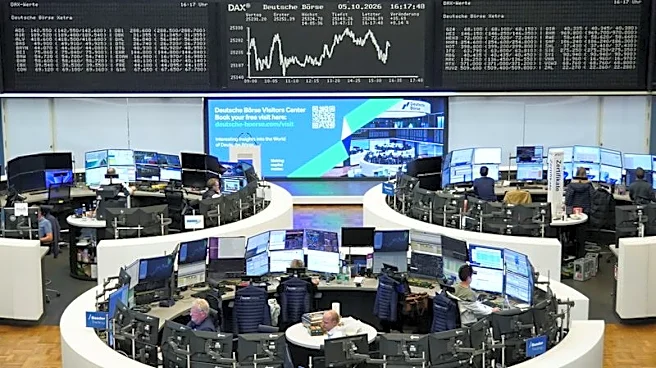
Oct 6 (Reuters) - European stocks rose on Tuesday, extending a global equity rally as investors turned more optimistic ahead of earnings season, while easing pressure in longer-dated bonds and lower oil prices helped calm markets after last week's fixed-income turmoil.
The euro rose 0.2% to 1.1239 after sliding to a 17-month low overnight, although concerns about the euro zone's fiscal outlook persisted.
A selloff in French bonds triggered by last week's unpopular budget
proposal showed signs of spreading across the euro zone at the start of this week. Political uncertainty also increased after Spanish Prime Minister Pedro Sanchez called a snap election on Monday.
Bond markets stabilised on Tuesday. France's 10-year bond yield fell 9 basis points to 4.77% after surging to its highest since the 2000s last week. Far-right leader Marine Le Pen, the frontrunner in next spring's presidential election, said she wanted to cut France's budget deficit to 3% by 2030.
"European sovereigns have had a little bit of pressure coming off and France is looking in a better position overnight," said James Klempster, deputy head of multi-asset at Liontrust in London.
"On the one hand you've got quite material pressure being felt on the government bond side. But elsewhere the corporate side of things actually don't look too bad. You've got companies whose earnings remain very robust. We're getting into the earnings season fairly soon, expectations for that are pretty high."
The pan-European STOXX 600 rose 1%, its third straight session of gains. Nasdaq futures and S&P 500 futures added about 0.2% after a technology-led rally lifted the Nasdaq to a record close on Monday.
Third-quarter earnings season begins next week. Goldman Sachs estimates consensus forecasts imply 27% growth in S&P 500 earnings, with more than half that coming from companies benefiting from AI infrastructure spending.
Nvidia, the world's most valuable company and a bellwether for the AI trade, rose 1% in premarket trading, putting it on track for a market value of about $5.8 trillion.
Brent crude fell 0.4% to $99.91 a barrel after dropping 1.9% overnight as resilient Middle East crude exports and a G7 emergency stockpile release eased supply concerns, though ongoing security risks in the region limited losses.
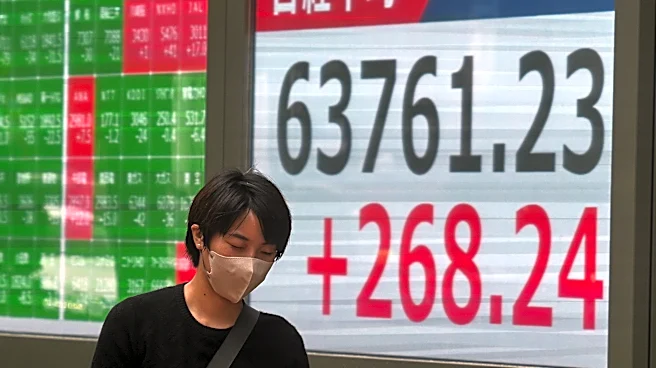
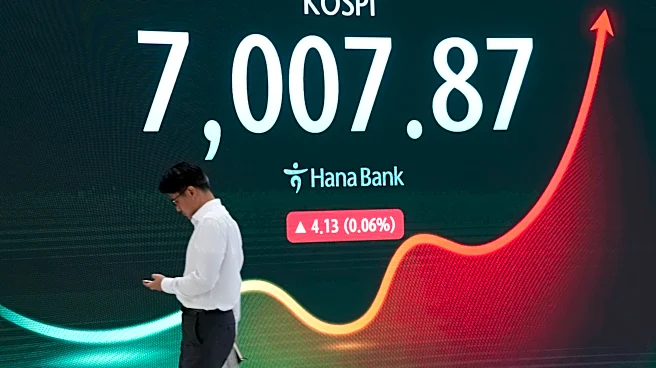
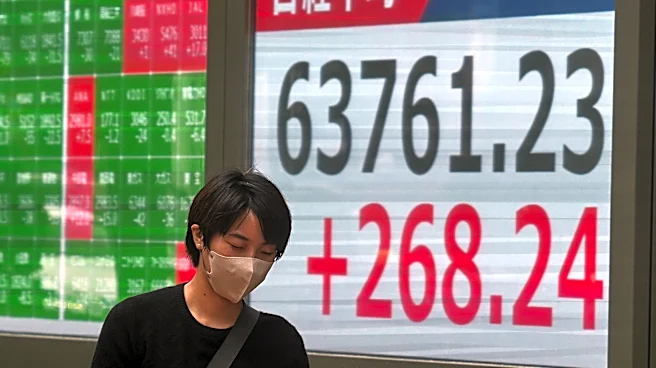
Most Asian markets rose. Japan's Nikkei gained 1.1% and Hong Kong's Hang Seng index added 0.7%, while South Korean shares fell nearly 1% after reopening following a holiday.
BOND WORRIES LINGER
Although the bond selloff showed signs of easing, sovereign yields remained near multi-year highs as investors grappled with persistent inflation and debt concerns.
The premium investors demand to hold French 10-year bonds over safer German debt narrowed to 129.79 bps after widening last week to its highest level since the euro zone debt crisis in 2011.
German 10-year bond yields, the euro zone benchmark, dropped 5 bps to 3.44%.
"We don't think there's a similar crisis happening as 15 years back with Greece and the European Union," said Christian Nolting, global chief investment officer at Deutsche Bank Private Bank, adding that the European Central Bank now has some backstop tools to deal with episodes of market stress.
Long-dated US Treasury yields also eased after touching fresh 24-year highs overnight. The 10-year yield fell 3 bps to 5.2815%, while the 30-year yield dropped 2.8 bps to 5.6356%.
Yields have risen sharply even as markets scaled back expectations of a Federal Reserve rate increase this month to 22% from 71% a week earlier, following a soft US jobs report and policymakers' calls for more evidence before further tightening.
The dollar weakened broadly against most major currencies. The dollar index fell 0.16% to 101.99 after rising 3.5% over the past month.
Spot gold rose 0.3% to $4,152.97 an ounce. [GOL/]
(Reporting by Stella Qiu, Tom Westbrook and Medha Singh. Editing by Thomas Derpinghaus and Mark Potter)