





By Kentaro Okasaka and Maki Shiraki
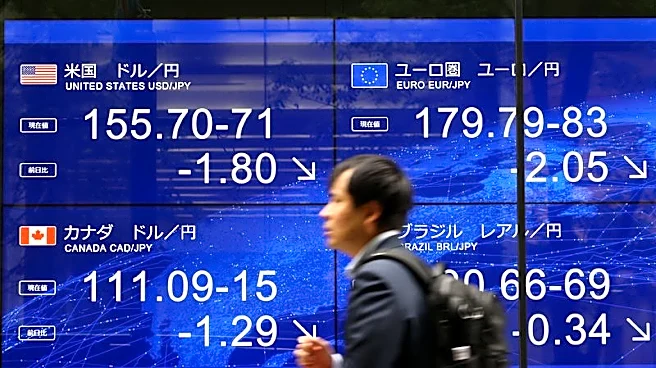
TOKYO, Aug 10 (Reuters) - Japanese executives are increasingly warning that currency swings and a persistently weak yen pose risks to the economy, highlighting concerns that triggered last week's joint Japan-U.S. intervention to support the currency.
Their comments underscore growing unease over the strain a weak yen places on Japan's import-dependent economy, even among exporters that have enjoyed a boost from a cheaper yen in global markets.
In July the yen hit
a 40-year low at nearly 164 to the dollar, prompting a joint Japan-U.S. currency intervention that lifted the yen by around 5%.
"Problems affecting the entire Japanese economy affect us too," chief financial officer of Mitsubishi Electric Kenichiro Fujimoto told Reuters in an interview last week.
"A weak yen does not necessarily mean all is well," Fujimoto said.
Higher costs for energy, materials and food weigh on domestic demand, threatening Japan's gradual emergence from decades of deflation.
"While a weaker yen has real advantages for exports, Japanese companies import almost all their raw materials," said Norihiko Ishiguro, chairman of the Japan External Trade Organization (JETRO) at a press conference in July.
"At a certain exchange rate costs actually increase, so we can't say exporters always win from a weak yen," Ishiguro said.
Sharp currency moves also upend earnings forecasts and complicate investment decisions for companies with global operations, even if a weaker yen ultimately lifts their bottom line.
"More than anything I'd like the market to stabilise and volatility to come down," said Makoto Tanaka, CFO at trading house Mitsui & Co, which booked record first quarter earnings this week, buoyed by the weak yen that boosted overseas income.
"We're really feeling the impact of very high volatility and will revise our current assumed rate of 150 yen to the dollar as necessary," CFO of rival trading house Mitsubishi Corp, Yoshihiro Shimazu, said.
A JETRO survey published in March found a rate of 120–124 yen to the dollar was the most desirable exchange rate range, selected by nearly a fifth of companies. Only 11% of firms preferred a rate above 150 yen to the dollar.
However, hope that the yen will strengthen to these levels may be waning.
"Considering Japan's fundamentals and that the trade balance isn't recovering, perhaps we won't see a rate of 120 to 130 yen to the dollar again," Mitsubishi Electric's Fujimoto said.
(Reporting by Kentaro Okasaka and Maki Shiraki; Writing by Anton BridgeEditing by Shri Navaratnam)