





SAO PAULO, April 10 (Reuters) - Brazil's 12-month inflation rose more than expected in March, official data showed on Friday, driven by higher transportation costs, particularly gasoline prices, amid heightened uncertainty linked to the U.S.-Israeli war on Iran.
The rise highlighted risks to the central bank’s new rate-cut cycle even as economists still expect further easing.
Annual inflation in Latin America's largest economy rose to 4.14% last month from 3.81% in February, statistics agency IBGE
said. Economists polled by Reuters had expected it to come in at 4.00%.
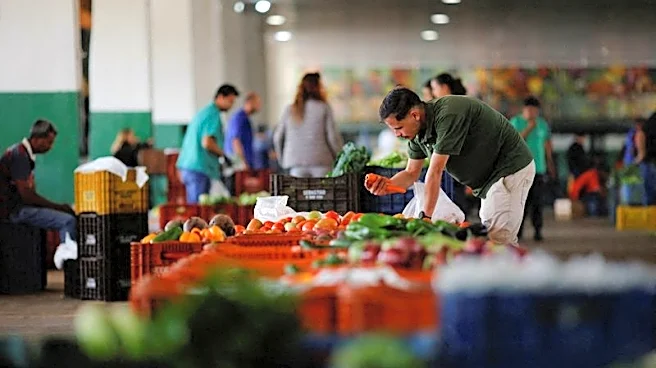
On a monthly basis, consumer prices as measured by the IPCA index were up 0.88%, more than the 0.77% increase that was forecast, mainly driven by transportation costs and closely watched food and beverage prices.
The biggest increase within transportation came from gasoline prices, which jumped 4.59%, according to IBGE.
IBGE research manager Fernando Gonçalves said the effects of international geopolitical uncertainty were already being felt, especially in fuel prices.
Last month, the central bank began a long-awaited easing cycle with a 25-basis-point cut, while refraining from providing explicit guidance on next steps amid the risk of an oil shock linked to tensions in the Middle East.
Despite the uncertainty, economists still see room for the central bank to continue cutting rates.
"(The) overall picture corroborates our expectation of a continued pace of interest rate cuts of 0.25 p.p. at the next meeting," Daycoval economist Julio Barros said in a statement.
Cuts have begun, but the terminal interest rate now looks higher, Pantheon Macroeconomics' chief Latin America economist Andres Abadia said.
(Reporting by Isabel Teles; Editing by Nia Williams)