




By Anushree Mukherjee
Sept 4 (Reuters) - Oil prices were on course to gain more than 6% for the week as the United States and Iran resumed military exchanges in the seventh month of their conflict, while U.S. diesel prices hit a record high.
Brent crude futures were up 6.1% for the week and U.S. West Texas Intermediate crude futures had gained 8.3%.
Both contracts nudged lower on the day, however, with Brent down 75 cents or 0.79% at $94.77 a barrel by 1230 GMT, and WTI down 95 cents, or 1.04%, at $90.35.
The rally in oil prices combined with a much steeper increase in fuel prices has pushed inflation and government borrowing costs higher around the world and intensified warnings that the global economy might be heading for a hard landing.
"All sectors of the economy are affected by diesel. This is one of the reasons why the government bond yields in the United States are so high, it's the expectation that inflation will continue to go up," said Claudio Galimberti, chief economist at Rystad Energy.
Average U.S. diesel prices hit record highs as renewed U.S.-Iran hostilities and Ukrainian attacks on Russian refineries increased supply disruptions.
ANALYSTS AND TRACKERS INDICATE OIL FLOWS STILL DISRUPTED
The U.S. government has said Middle Eastern oil flows have returned to near normal levels in recent weeks, but analysts and tanker trackers have said flows remain seriously disrupted.
U.S. attacks this week that killed and wounded dozens, including Iranian civilians, were the fiercest clashes between the two countries since July.
Defence Minister Israel Katz renewed warnings that Israel would "cripple" Iran's military and civilian infrastructure, including energy facilities, if Tehran attacked it.
A U.S. campaign to throttle Iran's economy by blockading its oil exports and stopping sanctions evasion is growing increasingly difficult to withstand, three senior Iranian sources said.
"The combination of renewed U.S.-Iran hostilities and ongoing uncertainty around the Strait of Hormuz has been enough to reprice risk higher," said Tim Waterer, chief market analyst at KCM Trade.
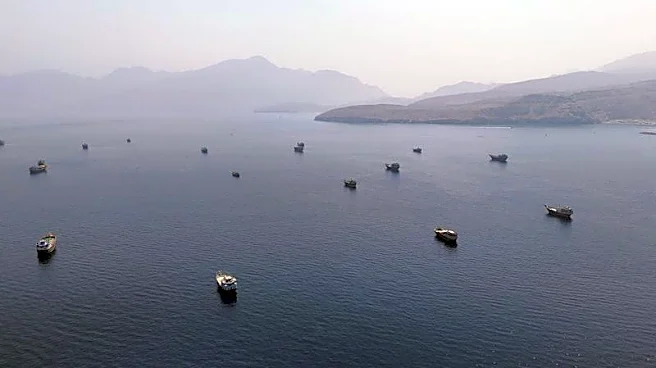
Four commodity vessels transited the Strait of Hormuz on Thursday, well below the 10-day average tally of about 15, preliminary shipping data showed.
Iraq increased its August oil exports to about 2.34 million barrels per day from about 1.35 million bpd in July, two Iraqi energy officials said on Wednesday.
Citi raised its average Brent crude price forecast for the third quarter to $86 a barrel from $80, saying the reopening of the strait was taking longer than previously expected.
ANZ analysts also raised their Brent crude forecast, to $95 a barrel in the short term, with upside risk if the Middle East conflict intensifies.
(Reporting by Sudarshan Varadhan and Florence Tan in Singapore, Anushree Mukherjee in Bengaluru; Editing by Kevin Liffey, Kirsten Donovan)