








SAO PAULO, May 27 (Reuters) - Brazil's 12-month inflation in early May exceeded the upper end of the central bank's target range for the first time since October 2025, official data showed on Wednesday, raising questions over how far its monetary easing cycle can continue.
Annual inflation in Latin America's largest economy stood at 4.64% in the first half of May, statistics agency IBGE said, up from 4.37% a month earlier and above the 4.55% forecast by economists in a Reuters poll.
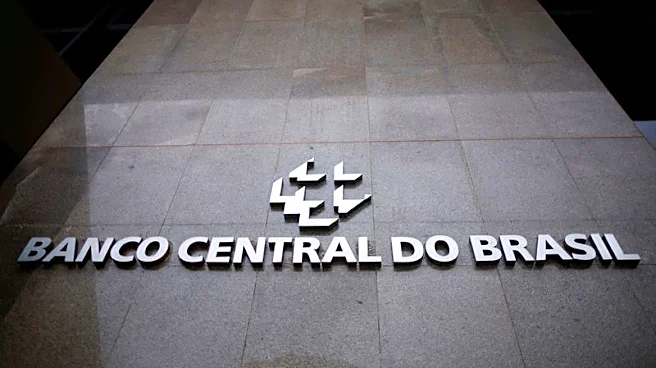
Brazil's central
bank has flagged discomfort with rising inflation expectations as it seeks to bring the annual consumer price index back to its 3% target, with a tolerance band of plus or minus 1.5 percentage points.
Economists polled weekly by the bank currently expect inflation to end this year at 5.04% and 2027 at 4.01%, as the U.S.-Israeli war with Iran drags on and fears of a supply shock tied to a strong El Nino weather pattern grow.
The central bank last month cut its benchmark interest rate by 25 basis points for a second straight meeting, to 14.50%, but left its next move on June 16-17 open given the uncertainty.
While the bank's survey still points to borrowing costs at 13.25% by year-end, some economists now expect a shallower easing cycle, also reflecting resilient economic activity.
Citi earlier this week forecast a year-end rate of 13.75% and sees further cuts only in the second half of 2027, citing the de-anchoring of inflation expectations and a more hawkish central bank tone.
In the month to mid-May, consumer prices rose 0.62%, slowing from a 0.89% increase a month earlier. Economists in the Reuters poll had expected a 0.53% rise.
The increase was driven mainly by food and beverage prices, which rose 1.38%. Housing and healthcare costs also increased, while transport prices fell after the March oil price shock linked to the Middle East conflict.
(Reporting by Gabriel Araujo. Editing by Mark Potter)