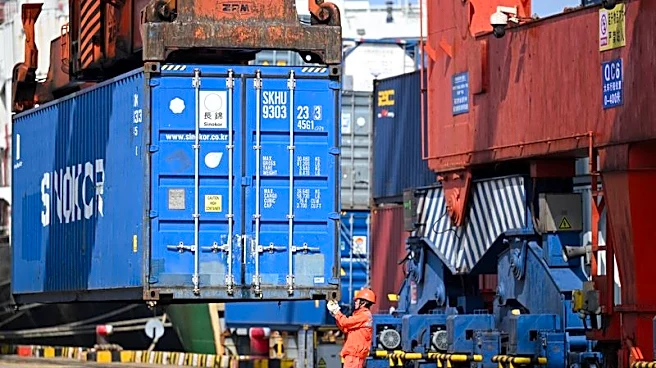

April 16 (Reuters) - China's economy expanded 5% in the first quarter compared with a year earlier, according to official data on Thursday, surpassing analysts' expectations as policymakers prepare for
potential fallout from the Iran conflict.
Economists polled by Reuters had projected a 4.8% year-on-year expansion for the January-March period, following a three-year low growth rate of 4.5% in the fourth quarter.
On a quarterly basis, GDP grew 1.3% in the first quarter, matching forecasts and just ahead of the 1.2% gain in the previous quarter.
KEY POINTS
* Q1 GDP +5% y/y (forecast +4.8%, Q4 +4.5%)
* Q1 GDP +1.3% q/q (forecast +1.3%, versus +1.2% in Q4
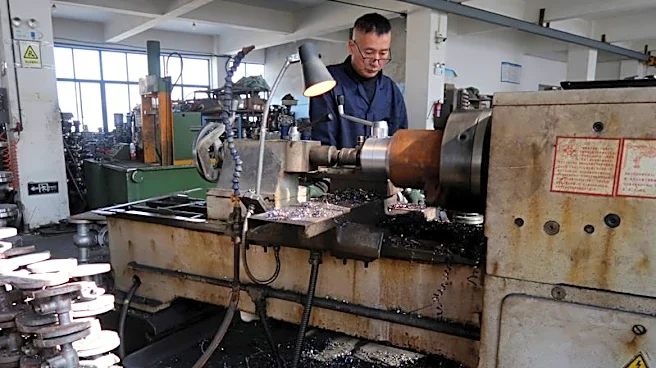
* March industrial output +5.7% y/y (forecast 5.5%)
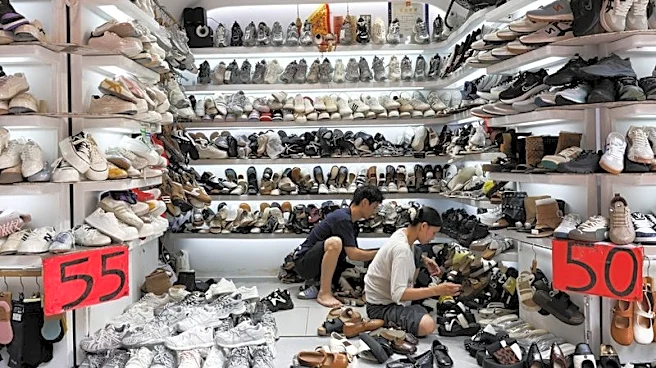
* March retail sales +1.7% y/y (forecast +2.3%)
* January-March fixed asset investment +1.7% y/y (forecast +1.9%)
* January-March property investment -11.2% y/y
MARKET REACTION
Both China's blue-chip CSI300 Index and the Shanghai Composite Index extended gains after the data release, up 0.7% and 0.4%, respectively, as of 0220 GMT. China's onshore yuan was little changed in response to the data.
COMMENTARY
CHRISTOPHER WONG, STRATEGIST, OCBC, SINGAPORE:
"A solid GDP but focus will shift to potential disruptions in coming months. RMB was little changed in response to GDP, which comes as no surprise. RMB stability is likely to persist. In fact, since the onset of Iran war, the RMB is the best-performing FX, outperforming even the USD. We are expecting RMB to continue its path of measured appreciation."
VINCENT CHAN, CHINA STRATEGIST, ALETHEIA CAPITAL, HONG KONG:
"It seems that the strong GDP was largely due to the strength of the economy in the first two months, particularly exports. Going into March, it seems that everything has weakened, retail sales, FAI (fixed-asset investment) and exports. The Iran war is probably having an impact on the Chinese economy."
KHOON GOH, HEAD OF ASIA RESEARCH, ANZ, SINGAPORE:
"It's very clear that the Chinese economy has been fairly well-insulated from the Middle East conflict. We do know this is partly because they probably incurred less of an oil supply disruption as they're able to access oil from Russia and partly Iran. And they've also curtailed their exports or refined products, so there's no issue about potential shortages onshore. As a result, their factories and production capability continue to function as normal, and that's been reflected in the growth numbers.
"But retail sales came in weaker than expected and this suggests that the road ahead in trying to get consumption to pick up and become a bigger, important driver of growth is still some way off."
BACKGROUND
* China has struggled to mount a strong and sustainable post-COVID economic rebound, burdened by a protracted property downturn, massive local government debt and weak private-sector spending.
* The world's second-largest economy is expected to cool over the rest of 2026 as the Middle East crisis threatens to choke corporate profits and sap overseas demand.
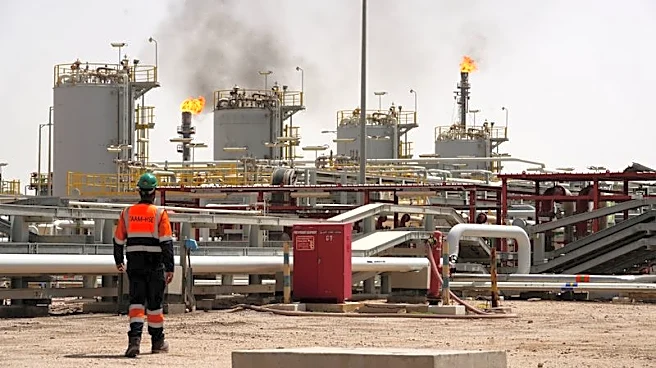
* China has so far absorbed the economic shock from the Iran war with limited disruptions, cushioned by large oil reserves, a diversified energy mix and tight price controls. But economists said that persistently higher oil prices are already lifting input costs and squeezing profits at a time when domestic demand remains weak.
* Economists warn that a shift to inflation driven by higher costs rather than stronger demand could leave Beijing boxed in, crimping growth and narrowing room for stimulus at a time when the economy is already fragile.
* An input-cost shock to the world's largest manufacturing base, which employs hundreds of millions, threatens to pile pressure on jobs and wages. Already, a quarter of manufacturing firms are operating at a loss after years of industrial overcapacity sparked relentless price wars.
* Chinese exports have been surprisingly strong despite the trade war with the U.S., helping to offset weak domestic demand. But strains are starting to show. Data this week showed China's export engine slowed sharply in March as the Iran war triggered shocks to energy and transportation costs, exposing the risks in Beijing's strategy of leaning on manufacturing to sustain growth.
(Reporting by Reuters Asia bureaus; Compiled and edited by Sherry Jacob-Phillips)