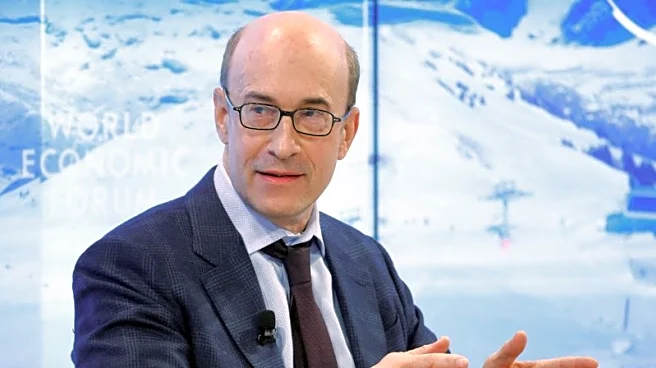




LONDON, Jan 28 (Reuters) - A key tool used by the U.S. central bank to stabilise global financial markets in times of crisis could be weaponised by the Trump administration, Kenneth Rogoff, a former IMF chief economist said, when asked if that was a possibility.
The Federal Reserve's swap line facilities, which lend dollars to other central banks during bouts of market turmoil, function as a crucial lifeline and were heavily deployed during the global financial crisis almost 20 years ago.
Concerns
about erratic U.S. policy have risen since President Donald Trump returned to office last year, with his tariff threats against European allies shaking long-held assumptions.
Rogoff, who teaches at Harvard University, said the administration could potentially use swap lines as leverage.
DOLLAR UNDER PRESSURE
"The weaponisation of the dollar is not new, this has been happening since the 1950s, but I would not be surprised if the Trump administration used the weaponisation, for instance with swap lines," he told Reuters during a visit to London.
"For instance, they could use it against Mexico if there was a disagreement on tariffs."
Already last year, Trump's sweeping import tariffs triggered debate among European officials over whether to build an alternative to Fed backstops by pooling dollars held by non-U.S. central banks to reduce reliance on Washington.
The U.S. benefits from massive global demand for its assets, including its currency - a long-standing advantage often described as "exorbitant privilege".
More recently, analysts watched geopolitical developments around Argentina after the U.S. extended a lifeline to the country which already had an $18 billion standing swap line arrangement with Beijing.
However, rhetoric over potential U.S./China tensions linked to their respective support tools did not escalate. U.S. Treasury Secretary Scott Bessent said late last year that Washington had made money from the arrangement.
Asked about Europe's efforts to increase its resilience, Rogoff said: "Swap lines have more meaning once the back-office infrastructure is developed."
The dollar has come under renewed pressure after Trump said on Tuesday the currency's value was "great", when asked by a reporter if he thought it had declined too much.
Rogoff said the dollar's long-term decline pre-dated the Trump administration's wish for a weaker currency.
Since Trump took office in January last year, the dollar has lost about 10% against a basket of major currencies and is around its lowest in four and a half years.
(Reporting by Dhara Ranasinghe and Alun John. Additional reporting by Karin Strohecker. Editing by Amanda Cooper and Mark Potter)