
MELBOURNE, Dec 19 (Reuters) -
Australia on Friday revised its expected resources earnings up 4% to A$383 billion ($252.5 billion) for the current financial year thanks to record gold prices, resilient iron
ore prices and the failure of its currency to rise against the U.S. dollar as expected.
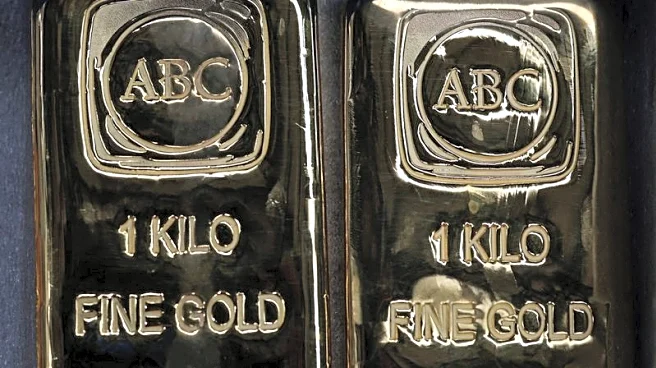
Gold is set to become the country's second most valuable resource export after iron ore in the 2025-26 financial year, displacing liquefied natural gas, as concerns about geopolitical instability fuelled demand for the safe-haven metal, Australia's Department of Industry said in its September report.
Since then, the outlook for Australia’s exports of resource and energy commodities has "improved markedly," it said in its December report.
The department raised by A$14 billion the country's expected resource export earnings for the current financial year, which will bring earnings close to 2024-2025's A$385 billion.
While that is still shy of the immediate post COVID-era peak of A$466 billion in 2022–2023, resources export earnings remained robust in historical terms, it noted.
Support is coming from easier monetary and fiscal policy, investment driven by rising artificial intelligence usage as well as the energy transition, it said.
Most of the revision was attributable to gold's record run. Australia expects the value of its gold exports to rise to A$69 billion in 2025–2026, driven by higher volumes and prices, up 15% from its September forecast of A$60 billion. It expects gold's export earnings to be A$74 billion in 2026–2027.
Prices of gold hit a record of more than $4,350 a troy ounce in October. They are likely to remain strong at around $4,000 an ounce over 2026, the report said, before falling in 2027.
Iron ore is expected to remain Australia’s largest earner, accounting for around a quarter of all resource and energy commodity earnings over the next two years.
"In trend terms, prices are expected to decline slightly because of abundant supply and moderating steel demand," the government said.
Iron ore prices for the current financial year are expected to be $87 a ton. For 2026-2027, the department raised its forecast by $1 to $83 a ton.
Copper demand will benefit from data centres, it said. It revised up by 12% its copper price forecast for 2025-2026 to $10,658 from a September forecast of $9,694 and by 10% to $10,896 in 2026-2027 from an earlier forecast of $9,906.
Elsewhere, the value of critical minerals exports is forecast to increase to A$14 billion in 2026–27 from around A$11 billion in 2024–25, due to a recovery in manganese exports, helped by rising exports of rare earths and antimony, it said.
($1 = 1.5168 Australian dollars)
(Reporting by Melanie Burton; Editing by Thomas Derpinghaus)