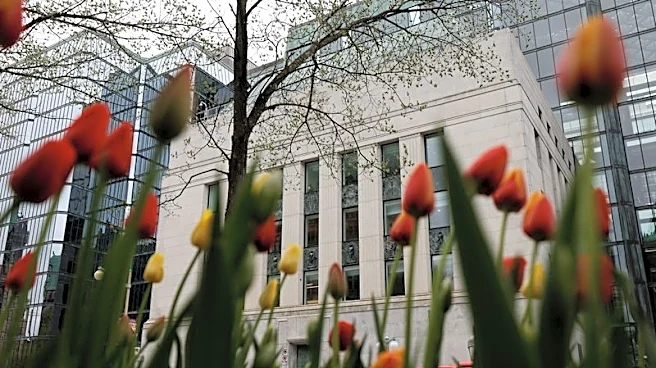





(Releads with details of policy decision) By David Ljunggren and Promit Mukherjee OTTAWA, June 10 (Reuters) - The Bank of Canada on Wednesday left its key interest rate unchanged as widely expected and said it was seeing limited evidence that higher energy prices were fueling broad-based inflation. But Governor Tiff Macklem reiterated that the bank would not hesitate to raise rates if need be to keep inflation in check. Wednesday's decision marks the fifth consecutive meeting at which the BoC has
left its key policy rate at the 2.25% level, as an array of factors have complicated the economic outlook. The U.S.-backed war with Iran, which has sent gasoline prices soaring, is squeezing household budgets, though Canada, as a net exporter of crude oil, is taking in more revenues. "So far there has been limited evidence of broad-based pass-through of higher energy prices to other consumer prices," the bank said in its rate announcement. "Governing Council is continuing to look through the war's near-term impact on headline inflation but will not let higher energy prices become persistent inflation." A Reuters poll of 34 economists had expected the bank to sit on the sidelines and more than 80% predicted it would stay on hold throughout the year. Money markets, however, are still pricing in one 25-basis-point rate hike in December. Canada's overall inflation rate in April rose to 2.8% and Macklem said the bank expected it to hover around the 3% before gradually easing towards the 2% target. Although Canada's unemployment rate fell to a five-month low in May as hiring strengthened, Macklem said the data had been choppy, noting there had been little change since January. Macklem said the war posed a dilemma for monetary policy makers. Raising rates to dampen inflation could further slow the economy while easing rates to support growth increases the risk of persistently higher inflation. "For now, holding the policy rate unchanged balances those risks," he said in opening remarks to reporters. Economists say the upcoming review of the North American free trade deal - the United States-Mexico-Canada Agreement - as the biggest uncertainty hanging over the economy. Macklem reiterated that if the United States imposed significant new trade restriction on Canada, the bank might have to cut rates. If on the other hand higher energy prices started leading to generalized inflation, "there may be a need for consecutive rises in the policy rate". (Reporting by David Ljunggren and Promit Mukherjee, editing by Dale Smith) ((Reuters Ottawa editorial; david.ljunggren@tr.com)) Keywords: CANADA CENBANK/