
By Jan Wolfe
April 15 (Reuters) - Justice Ketanji Brown Jackson has stepped up her criticism of the conservative-majority U.S. Supreme Court for increasingly deciding cases on an emergency basis without
letting them play out in lower courts - a path the nation's top judicial body has taken in multiple rulings favoring President Donald Trump.
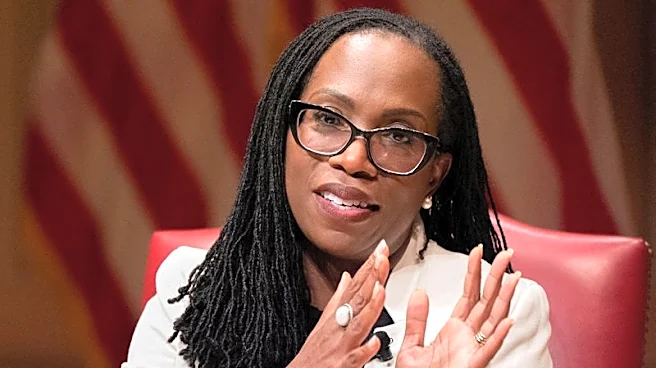
Jackson, one of the nine-member court's three liberal justices, made her comments about the emergency docket, sometimes called the "shadow docket," during a speech on Monday at Yale Law School in Connecticut. The event was closed to the general public, but Yale made a video available on Wednesday.
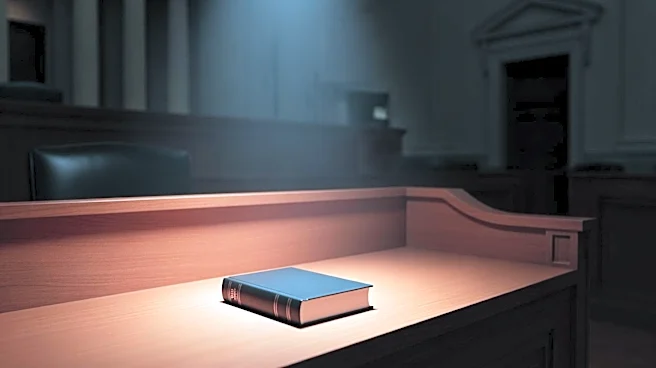
The court typically decides cases taken up on its emergency docket without the usual public oral arguments and extensive written briefings of the other cases it handles. Rulings in emergency docket cases - often brief and unsigned - are issued on an expedited basis outside the usual appeals process.
Jackson said the conservative justices are intervening too quickly and too frequently in matters that can be handled by lower courts. Jackson said the increased use of the emergency docket has had a "corrosive effect" on the U.S. judicial system, including by creating "zombie proceedings" in lower courts when the justices intervene while cases are still pending there.
"There is value in avoiding having the court continually touching the third rail of every divisive policy issue in American life," Jackson said, using a metaphor referring to the subway rail that carries lethal voltage.
"Today, the court routinely opts to enter the fray, and it fails to acknowledge the harms that follow when the Supreme Court of the United States consistently and casually divests the lower courts of their equitable authority," Jackson added.
The Supreme Court's emergency docket once was a rarely used pathway. It now has become commonplace, and its use has surged since Trump returned to office in January 2025.
In emergency docket cases, the court has let Trump implement various policies impeded by lower courts amid questions over their legality including in matters such as immigration, banning transgender people from the military, removing certain federal agency officials, mass federal layoffs and foreign aid cuts.
There is more transparency in the roughly 70 cases heard on the court's standard docket every year, with arguments for all to see and a detailed decision laying out the legal reasoning.
The Supreme Court has been criticized, including by lower court judges, for using the emergency docket to make substantive policy changes - often favoring conservative interests. Prior to about 2015, the justices had used emergency orders to address more mundane procedural issues.
Trump, a Republican, appointed three of the court's six conservative justices. Jackson was appointed in 2022 by Trump's Democratic predecessor Joe Biden.
Jackson said that when she served as a Supreme Court clerk in 1999, the emergency docket was used almost entirely by death row inmates seeking to prevent an execution.
"But, in recent years, the Supreme Court has taken a decidedly different approach to addressing emergency stay applications," Jackson said. "It has been noticeably less restrained, especially with respect to pending cases that involve controversial matters."
At the time she served as a clerk, Jackson said, the justices were reluctant to decide high-profile cases on an emergency basis.
The justices had "hoped that those cases would stay away from the Supreme Court as long as possible," Jackson said, and they "understood that very little good comes from taking an institution that is supposed to be operating outside of the political realm and routinely steering it into the fray."
Justice Neil Gorsuch, one of Trump's three appointees, wrote in a court opinion last year that emergency docket orders should be treated as precedent.
"Lower court judges may sometimes disagree with this Court's decisions, but they are never free to defy them," Gorsuch wrote.
Jackson made clear her disagreement.
"It simply does not make sense for the Supreme Court to create lock-in effects with respect to legal issues while deciding emergency stay applications," Jackson said at Yale. "The point of an emergency application is just to avoid the real-world harms that can come from litigation delay."
(Reporting by Jan Wolfe; Editing by Will Dunham)