



By Gwladys Fouche
OSLO, Jan 21 (Reuters) - NATO is facing difficult times due to the crisis over Greenland, but Western allies must remember their common adversary is Russia, which is increasing its military presence in the Arctic, Norway's defence minister said on Wednesday.
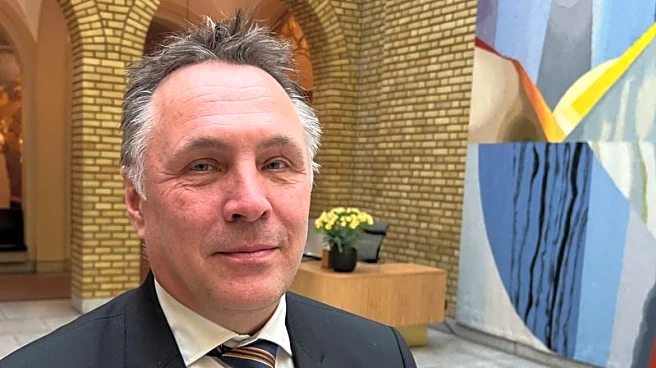
Tore Sandvik was speaking as the Western military alliance is fraying under the pressure of U.S. President Donald Trump's relentless push to acquire Greenland from fellow NATO ally Denmark.
"The dimensional threat for the West,
for NATO, (for) all members of NATO, still is Russia," Sandvik told a meeting with foreign correspondents in Oslo. "These are demanding times. The situation in NATO is difficult."
Trump was expected to repeat his demands to take control of the Arctic island later on Wednesday, when he speaks at the World Economic Forum meeting in Davos, Switzerland.
MONITORING RUSSIA IN THE EUROPEAN ARCTIC
NATO-member Norway shares a border with Russia in the Arctic. It has long advocated increased NATO attention on the polar region and the challenges posed by the Russian military there.
On land, Norway spies on military installations on the Kola Peninsula, which hosts about two-thirds of Russia's second-strike nuclear capabilities - its ability to answer a nuclear attack with its own.
The area is also home to Russia's Northern Fleet, headquartered in Severomorsk, which operates six of the country's 12 nuclear-armed submarines.
The only way for the Northern Fleet to access the North Atlantic is via the shallow waters of the Barents Sea, between the Norwegian Svalbard archipelago and the northern coast of Europe.
MILITARY BUILD-UP IN THE ARCTIC
Sandvik said that Russia had been increasing its presence in the Arctic over the years by, for instance, increasing the number of frigates and submarines available to the Northern Fleet despite the demands of the war in Ukraine.
"With all the losses and the resources spent in Ukraine and the suffering of the Russian economy, he (Russian President Vladimir Putin) is building up in the Kola Peninsula," he said.
Still, Oslo did not see an imminent threat from Russia because Moscow was so focused on fighting in Ukraine, Sandvik said. Nor did he see an increased threat to Norway's Arctic archipelago of Svalbard.
"Even though they're building up the capacities in the Kola Peninsula ... they are occupied in Ukraine," he said. "Really occupied in Ukraine."
(Reporting by Gwladys Fouche in Oslo, editing by Terje Solsvik and Alex Richardson)