



By Daniel Wiessner
June 1 (Reuters) - A U.S. appeals court on Monday said President Donald Trump's administration could for now bar transgender people from enlisting in the military, but blocked the expulsion of current service members while a lawsuit plays out.
A panel of the U.S. Court of Appeals for the District of Columbia Circuit in a 2-1 ruling said the 2025 policy was unlawfully motivated "by the bare desire to harm a politically unpopular group."
But the Pentagon has broad powers to set enlistment
standards, the court said, and can continue to ban transgender people from newly entering the military pending the outcome of a lawsuit by transgender current and would-be service members.
"It appears to us to be a much greater hardship to end a military career than to delay the start of one," wrote Circuit Judge Robert Wilkins, an appointee of Democratic President Barack Obama.
Circuit Judge Justin Walker, a Trump appointee, in a dissenting opinion said courts "have neither the expertise nor the authority to decide whether the military can exclude the plaintiffs from its ranks."
Jennifer Levi of LGBTQ rights group GLAD Law, who represents the plaintiffs, applauded the decision.
“This decisive ruling confirms that the Trump Administration has no legitimate basis to discharge transgender service members who have met every demanding standard and proven, time and again, their fitness and dedication to serve," Levi said in a statement.
The Pentagon did not immediately respond to a request for comment.
The ruling partially upholds a 2025 decision by a Washington, D.C.-based federal judge who had blocked the entire policy from being implemented pending further litigation. The judge said the policy amounted to sex discrimination and likely violated the U.S. Constitution's guarantee of equal protection under the law.
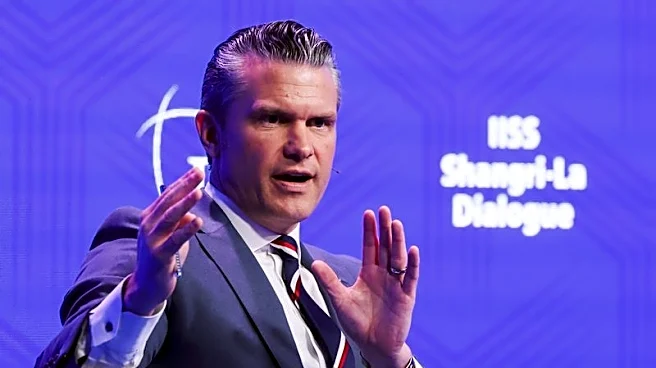
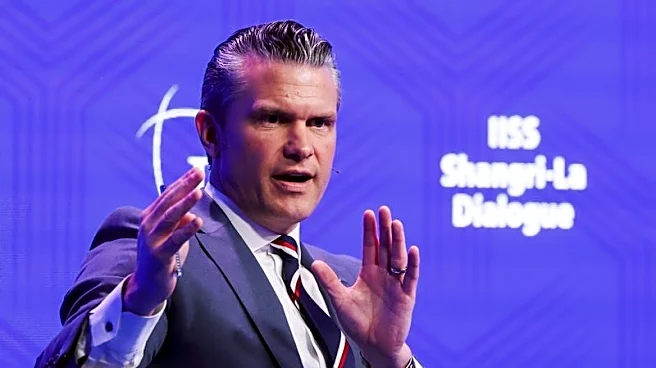
Trump in a January 2025 executive order said that adopting a transgender identity "conflicts with a soldier's commitment to an honorable, truthful, and disciplined lifestyle." Defense Secretary Pete Hegseth implemented Trump's order soon after, prompting legal challenges.
The ban on military service is part of a broader effort by the Trump administration to eradicate the recognition and accommodation of transgender people throughout American life.
Federal agencies have dropped lawsuits filed on behalf of transgender workers, ended settlements that benefited transgender students and launched investigations into hospitals and doctors for providing gender-affirming treatment to minors.
The military has about 1.3 million active-duty personnel, according to Department of Defense data. While transgender rights advocates say there are as many as 15,000 transgender service members, officials say the number is in the low thousands.
The U.S. Supreme Court in May 2025 allowed the policy to be implemented, lifting a judge's ruling in a separate case out of the state of Washington that had temporarily blocked the ban.
But the Supreme Court did not explain its reasoning and may have been ruling on a technicality rather than the merits of the case, Wilkins wrote for the D.C. Circuit on Monday.
(Reporting by Daniel Wiessner in Albany, New York, Editing by Alexia Garamfalvi and Bill Berkrot)