
By Jan Strupczewski, Lili Bayer and Andrew Gray
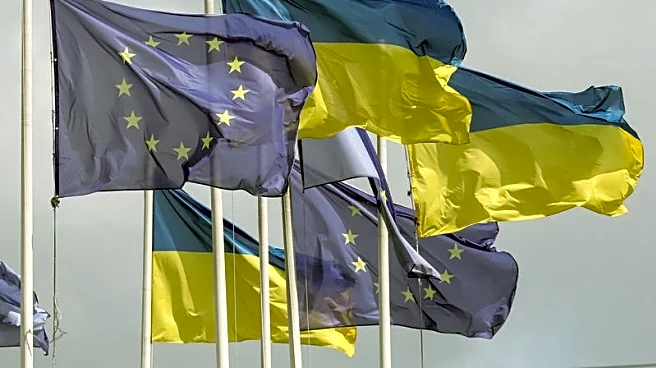
BRUSSELS, Jan 16 (Reuters) - The European Commission is considering ways to allow Ukraine's quick accession to the EU as part of a peace deal with Russia
but without giving Kyiv full membership rights, which would only be "earned" after transition periods, EU officials said.
The idea, which is at a very early stage, is intended as a possible gesture to Ukrainians who are seeking EU membership as part of a post-war security guarantee from Europe and who after four years of fighting off a Russian invasion want a credible promise that they are on the path toward economic stability and integration with the West.
Ukrainian EU membership in 2027 was pencilled into a 20-point peace plan discussed between the United States, Ukraine and the European Union, diplomats said, as a measure to ensure Ukraine's economic prosperity after the war ends.
But many EU governments believe that date, or any other fixed date, is completely unrealistic, because EU accession is currently a merit-based process, moving forward only when there is progress in adjusting a country's laws to EU standards.
Joining the bloc also requires signoff from the national parliaments of the EU's 27 member states.
The idea floated by EU officials would see the traditional process reversed, though even limited membership would still require the consent of EU governments and national parliaments.
"We have to recognise that we are in a very different reality than when the (accession) rules were first drawn up," one EU official said.
Ukraine - and potentially other candidates - would join the EU quickly and then get 'staged access' to voting rights, depending on their progress towards meeting the full membership criteria, the official said.
YEARS OF NEGOTIATIONS
Ukraine has been battling a full-scale Russian invasion since February 2022 and became a candidate to join the EU in June that year, with negotiations opened at the end of 2023.
Normally accession talks take years: Poland, with a similar population to Ukraine, needed 10 years, without being at war, to complete negotiations and all the necessary legal changes to be able to join in 2004 along with nine other countries.
But some in the Commission argue that, politically, Ukraine does not have that much time, because a peace deal between Ukraine and Russia could entail territorial losses for Kyiv and be hard for Ukrainians to accept in a possible referendum.
EU membership, even if limited, could make that more palatable and establish the stability needed to complete the necessary reforms to gain full EU rights, officials said.
"It is Europe’s interest to have Ukraine in the EU, because of our own security," an EU diplomat said.
"It is why we need to look for creative solutions - how to get Ukraine in the EU quickly. The reversed membership concept reflects this idea - to have Ukraine joining the EU politically and then getting full rights and full-fledged membership once all conditions are met," the diplomat said.
Membership without full rights on the first day of accession is nothing new -- most countries from the 2004 enlargement and later faced long transition periods to achieve, for example, the right of their citizens to work across the bloc.
But officials are now floating a model that would include more far-reaching limitations. They acknowledged that it would raise a host of questions beyond Ukraine and would struggle to win the unanimous support required.
"It will be a hard sell," a second EU official said. "It also has an impact on countries that have gone the good old traditional way and are close to accession after doing all the homework, like Montenegro or Albania."
(Reporting by Jan Strupczewski, Lili Bayer and Andrew GrayEditing by Gareth Jones)