







Unpacking the Habit
Psychology suggests that individuals who maintain a clean workspace while cooking are exhibiting sophisticated prospective thinking and enhanced executive
functions. This isn't merely about being tidy; it's a subconscious demonstration of an ability to anticipate future needs and manage tasks proactively. Consider two individuals preparing the same meal: one leaves a trail of clutter, planning to address it later, while the other integrates tidying into the cooking process. The latter, according to cognitive and behavioral psychology, is engaging in a complex mental feat of planning several steps ahead in real-time, often without conscious effort. This trait is linked to innate foresight and superior planning capabilities, indicating a mind that effortlessly stays ahead of potential issues. The act of cleaning while cooking, therefore, transcends mere tidiness and points to a deeper cognitive advantage.
Cognitive Functions at Play
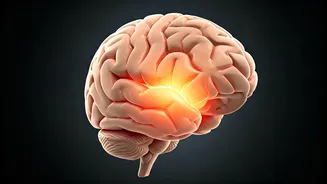
The practice of cleaning as one cooks is deeply intertwined with prospective cognition, which is the brain's capacity to mentally envision future scenarios and take preparatory actions in the present. When you rinse a utensil or wipe a surface while a dish is simmering, you are not just reacting to immediate mess. Instead, you are pre-empting future tasks, effectively consolidating potential future effort into the current moment with remarkable ease and often without deliberate thought. This capability is closely related to executive function, the suite of mental processes responsible for planning, impulse control, and task management. Individuals who excel in executive functions tend to perform better across various life domains, including work and stress management. Interestingly, those with higher scores in these cognitive traits often display similar behaviors in low-stakes settings, such as domestic tasks, without recognizing the underlying cognitive skill they are employing.
Neuroscience and Foresight
Neuroscience explains this phenomenon as 'action-effect anticipation.' The brain intuitively predicts the negative consequences of delaying tasks – like facing a massive clean-up after a meal – and subtly motivates the body to act preventatively. This process often occurs beneath conscious awareness, making it a telling indicator of cognitive predisposition. It's crucial to distinguish this from perfectionism, which is typically driven by anxiety about outcomes. The behavior observed in 'clean-as-you-cook' individuals aligns more with a natural foresight, a low-anxiety approach to task management. The key difference lies in the ease of execution: a perfectionist might worry about the mess, whereas a prospectively-thinking individual simply eliminates it while their hands are free. This also connects to the 'minimal footprint' principle, an unconscious drive to leave environments in a near-neutral state as one navigates through them, a trait observable in various contexts from hotel rooms to shared workspaces.
Cultivating the Skill
For those who naturally clean as they cook, this habit represents an unconscious development of a valuable mental aptitude. However, the benefits are not exclusive to those already possessing this trait. By consciously adopting the practice of tidying up immediately after completing a task, or 'closing the loop' on small actions promptly, individuals can actively strengthen their prospective thinking abilities over time. The human brain is remarkably adaptable and trainable. The kitchen, in essence, serves as an honest reflection of one's cognitive processes. Embracing this habit, even with deliberate effort, can enhance foresight and improve overall task management. Therefore, if you find yourself wiping down surfaces while your meal rests, you are engaging in a sophisticated mental process, demonstrating a quietly extraordinary cognitive advantage.