








Nature's Masterpiece
The Indian Pariah Dog, often overlooked on our streets, boasts an astonishing lineage stretching back 15,000 years, predating modern, human-engineered
breeds. Unlike Labradors, Pugs, or German Shepherds, which were selectively bred in recent centuries for specific appearances and traits, the Pariah Dog is a natural landrace. This means it evolved organically, shaped by the environment and the principle of survival of the fittest across South Asia. Through millennia, these dogs adapted remarkably to the local climate, diverse terrains, and the human lifestyle of the subcontinent. Nature acted as the ultimate breeder, ensuring only the strongest and most adaptable individuals passed on their genes. The result is a dog possessing exceptional resilience, characterized by a robust immune system, keen intelligence, and a natural aptitude for problem-solving. Crucially, they exhibit remarkable heat tolerance and a low propensity for genetic diseases, a testament to their unadulterated, evolutionary journey. This genetic robustness starkly contrasts with many modern breeds burdened by inherited health issues stemming from extensive artificial selection.
Ancient Roots Revealed
Evidence points to the Indian Pariah Dog being one of the planet's most ancient canine lineages, with an existence exceeding 15,000 years. Archaeological findings suggest that dogs closely resembling today's Pariahs coexisted with early human settlements in the Indian subcontinent millennia ago. Even ancient cave paintings, early sculptures, and historical texts depict canines that bear a striking resemblance to the modern Indian Pariah. Long before the advent of pedigreed dogs gracing royal courts or becoming subjects of European breeding programs, these indigenous dogs were integral to human society. They served vital roles, such as guarding settlements, alerting communities to approaching dangers, and scavenging around villages to help manage waste. Their historical significance as human companions is deeply ingrained, existing as a testament to an enduring interspecies bond that predates formal breed classifications and kennel clubs.
Distinctive and Adaptable
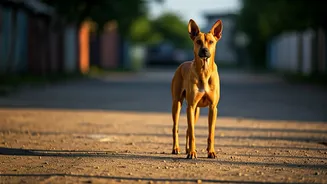
Despite the common misconception of them being nondescript 'strays,' Indian Pariah Dogs possess a consistent and recognizable set of physical attributes that set them apart across South Asia. Known also by local names like 'desi dogs' or 'INDogs,' their appearance is remarkably uniform, even when separated by vast distances. Key identifying features include a distinct wedge-shaped head, upright and perpetually alert ears that convey their attentiveness, and a tail that typically curves upwards. Their coat is short and highly resistant to the elements, a perfect adaptation for varying weather conditions. Furthermore, they possess a lean, athletic physique that enables impressive speed and agility. These characteristics are not coincidental but are the direct result of thousands of years of environmental adaptation and natural selection. The short coat is ideal for managing tropical heat, while their slender build enhances maneuverability. Their sharp senses and vigilant ears make them exceptionally capable guardians, a trait honed through generations of survival.
Adoption's Undervalued Gem
Ironically, the very dog that thrives resiliently on the streets often faces neglect when it comes to companionship. Many individuals gravitate towards imported breeds, harboring the misconception that foreign dogs are inherently more intelligent, affectionate, or simply more 'premium.' However, those who have opened their homes and hearts to Indian Pariah Dogs consistently report a profoundly different reality. These dogs are often described as exceptionally loyal family members, highly responsive to training, and remarkably low-maintenance. They adapt seamlessly to various living environments, from bustling apartments to spacious houses, and excel as vigilant watchdogs. Their local evolution means they are naturally suited to India's climate and living conditions, requiring less intensive grooming and fewer veterinary interventions compared to many pedigree breeds, often leading to longer lifespans. Animal welfare organizations are increasingly championing the adoption of Indian Pariah Dogs, advocating for them over the purchase of expensive foreign breeds. The true tragedy lies not in their street existence, but in the label of 'stray' which unfairly implies inferiority. This ancient companion dog, deserving of recognition and kindness, is India's oldest canine partner.