





Introducing Economy Skynest
A significant shift is occurring in the airline industry, spearheaded by Air New Zealand's introduction of 'Economy Skynest' on its Boeing 787-9 Dreamliner
aircraft. This groundbreaking initiative provides economy class passengers with access to lie-flat sleeping pods, a luxury previously reserved for premium cabin travelers. Previously, only first and business class passengers could experience the comfort of a lie-flat bed, which often comes with a prohibitive cost. These innovative sleeping pods are scheduled to become available for booking starting May 18th, with initial deployments planned for select flights later in the year. The airline aims to enhance passenger comfort on ultra-long-haul routes, making extensive journeys more manageable and less arduous for a broader segment of travelers. This move is poised to redefine expectations for comfort and rest in the economy cabin, potentially setting a new standard for air travel.
Pod Features and Booking
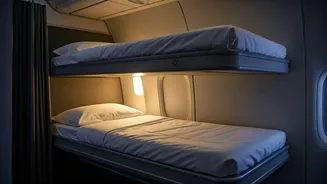
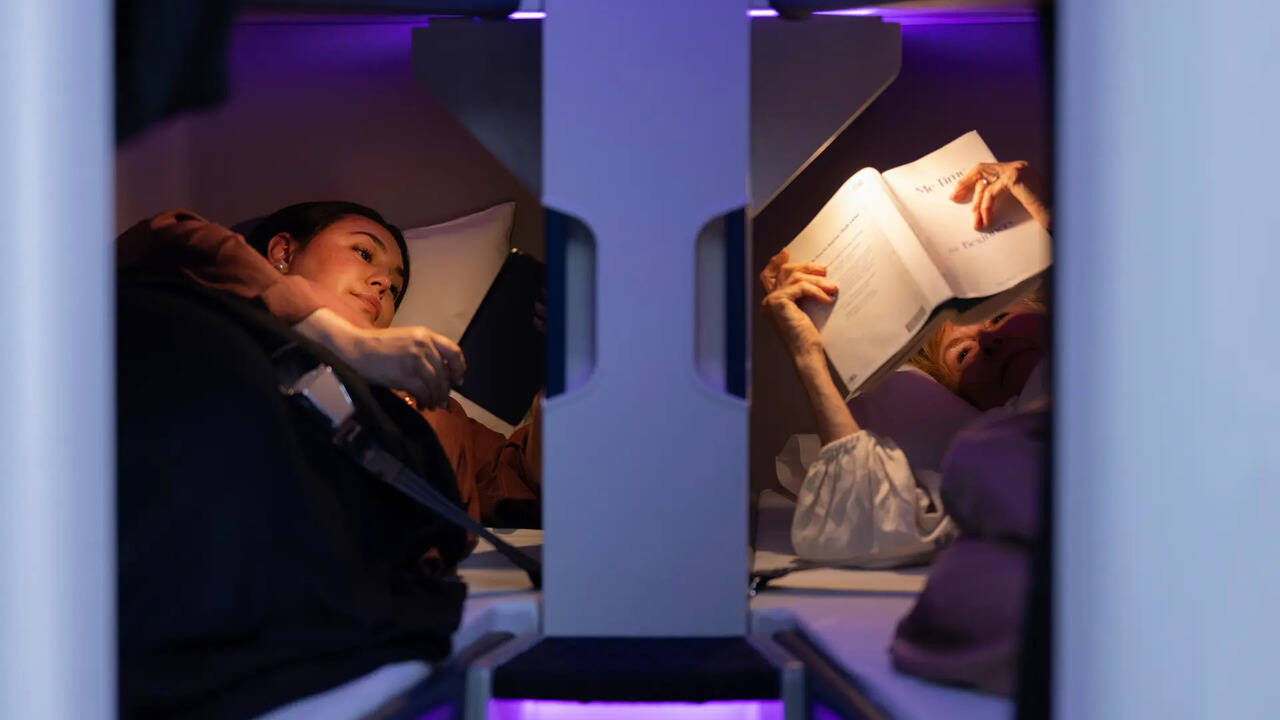
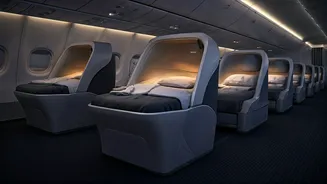
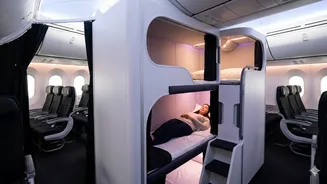
Each of the six 'Economy Skynest' pods, arranged in a bunk-bed configuration, is equipped with essential amenities designed for a restful experience. Passengers will find a comfortable mattress accompanied by fresh bedding, a privacy curtain for seclusion, a seat belt for safety, a personal reading light, and convenient charging ports. An amenity kit is also provided. The airline has committed to ensuring hygiene by changing pillows, sheets, and blankets before each new flight. Passengers can book these pods during their flight, choosing specific time slots that are coordinated to minimize disruption. These sessions are strategically scheduled around meal times, with passengers receiving notifications on their screens when their designated pod time is approaching. Notably, the pods do not have individual screens, requiring passengers who wish to watch or listen to media to use headphones exclusively. The pods are strategically placed in areas that previously housed galleys, with five economy seats removed and another galley expanded to accommodate the new sleeping compartments. Even the two pods situated on the floor level will maintain a high degree of privacy for their occupants.
Booking and Utilization Details
The 'Economy Skynest' pods operate on a first-come, first-served booking system, and priority is not given to premium cabin passengers; economy travelers are equally eligible. A total of twelve passengers per flight can utilize these sleeping pods. Upon completion of the allocated four-hour session, a gradual increase in cabin lighting will alert passengers that their rest period has concluded. Flight attendants will also provide gentle reminders to passengers who are wearing sleep masks. The airline's Chief Executive, Nikhil Ravishankar, highlighted the pods' purpose: to allow customers to 'stretch out, lie flat and get a few hours’ proper rest in the air,' thereby making ultra-long-haul travel more feasible. He expressed hope that this innovation would spark a 'revolution in economy class travel,' making sleep accessible to more passengers. The first flights to feature the Skynest will be the New York to Auckland route, one of the world's longest at 17 hours. Each four-hour booking for a pod is priced at $495. Critically, only one passenger is permitted in a pod at any given time, and the facility is not available for children. Bringing outside snacks into the pods is also prohibited, as the airline has conducted research into sleep cycles, suggesting that a four-hour window allows for adequate winding down, sleeping, and waking.
The Future of Air Travel?
While the concept of 'bunk beds' may not entirely replace traditional aircraft seating, it certainly points towards a significant evolution in passenger comfort, especially on extended flights. Airlines have explored various configurations, including stacked seating and overhead compartments, to enhance the passenger experience without compromising capacity. However, substantial challenges, such as stringent safety regulations for emergency evacuations, weight considerations, cost implications, and the potential loss of revenue from fewer seats, need to be addressed for widespread adoption. Consequently, bunk-style sleeping arrangements are more likely to be implemented selectively, particularly on ultra-long-haul routes where the opportunity for quality sleep is a paramount concern for travelers. The future of flying appears to be a hybrid model, where standard economy seats remain the norm, augmented by innovative add-ons like the 'Skynest' that offer a chance for substantial rest without the expense of a business class ticket. Air New Zealand's previous innovation, the 'SkyCouch' introduced in 2011, which allowed passengers to convert an empty row into a bed, demonstrates a history of pushing boundaries in economy class comfort.