







Strategic Acquisition Unveiled
Amazon has made a substantial move in the satellite communications arena by announcing its intent to acquire Globalstar, a company positioned as a rival
to Starlink. This strategic acquisition, valued at approximately $11.57 billion (Rs 1.08 lakh crore), is set to significantly impact the future of satellite-to-smartphone connectivity. By integrating Globalstar's established infrastructure and expertise with Amazon's vast customer reach and innovative drive, the e-commerce giant aims to elevate its nascent low Earth orbit (LEO) satellite business. The goal is to offer a more robust and dependable service that keeps users connected across a wider geographical range, particularly in underserved regions. This deal underscores the growing importance of satellite technology in bridging communication gaps and enhancing user experience in an increasingly connected world. Amazon's ambition extends beyond mere competition; it signals a deep commitment to shaping the direct-to-device satellite market for years to come.
Deal Mechanics and Spectrum Focus
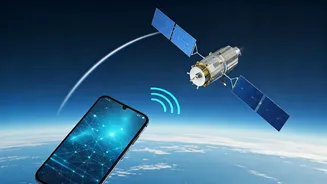
The financial structure of the acquisition outlines a significant payout for Globalstar shareholders. Amazon is offering approximately $90 per share, with the transaction anticipated to finalize by 2027, subject to regulatory approvals. Shareholders have the choice to receive either a cash payment of $90 per share or a portion of Amazon shares. A key driver behind this considerable investment is Globalstar's valuable wireless spectrum. This spectrum is essential for enabling direct-to-device (D2D) satellite connectivity, allowing communication directly between satellites and smartphones without relying on terrestrial cell towers. Globalstar's network is specifically engineered for efficient, low-data rate transmissions suitable for mobile devices. This makes it a crucial asset for Amazon's future plans, particularly for applications like emergency services and providing connectivity in remote or low-signal areas. Amazon has been actively deploying its own satellites, rebranding its satellite initiative as Leo, and this acquisition solidifies its position in the D2D spectrum race.
Customer Impact: Short and Long Term
For current users, the immediate impact of Amazon's acquisition of Globalstar will be minimal. Globalstar currently provides the crucial satellite backbone for safety features on Apple devices, including Emergency SOS and Find My. Amazon has affirmed its commitment to maintaining these services under an existing agreement with Apple, which itself has invested significantly in Globalstar to bolster its iPhone communication capabilities. Looking ahead, the long-term implications for customers are substantial. With Amazon's backing, users can anticipate improvements in the reliability and reach of satellite connectivity. This includes potentially expanded coverage, especially in remote locations where traditional cellular service is scarce. Furthermore, the acquisition could pave the way for innovative new features beyond emergency services, such as enhanced messaging capabilities or even basic satellite data plans. The integration of Globalstar's infrastructure and technology is expected to accelerate the widespread adoption of satellite connectivity as a mainstream smartphone feature.
Competitive Landscape and Future Outlook
Amazon's strategic move occurs within a rapidly evolving satellite communications market, notably characterized by the aggressive expansion of Starlink, operated by SpaceX. SpaceX is preparing for a major Initial Public Offering (IPO), highlighting the immense commercial potential of satellite constellations. Amazon's acquisition of Globalstar is seen as a critical step to enhance its competitive standing, particularly in the direct-to-device (D2D) sector where it aims to catch up with or surpass rivals. Amazon's Project Kuiper, now Leo, aims to deploy a vast constellation of 3,200 satellites by 2029, indicating a determined effort to scale its network rapidly. Analysts suggest that consolidation within the satellite industry is likely to continue as companies strive to compete with the sheer scale and launch capacity of SpaceX. The regulatory environment, overseen by bodies like the US FCC, is signaling an 'all gas, no brakes' approach to foster growth in this next-generation technology sector, indicating a supportive climate for such strategic expansions and innovations.