





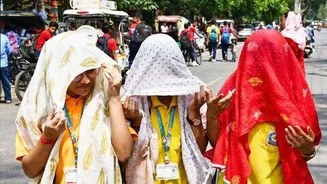
The Invisible Threat
While India braces for an onslaught of extreme heat, with meteorologists forecasting above-normal heatwave days, a less visible but equally potent danger
is lurking: humid heat. This phenomenon, characterized by the uncomfortable combination of high temperatures and elevated moisture levels in the air, is making summers increasingly unbearable and poses a significant threat to public health. Unlike dry heat, which allows for easier evaporation of sweat, humid conditions severely impede the body's natural cooling mechanisms. As summer progresses, the atmosphere's capacity to retain water vapor increases, exacerbating this issue. The implications are far-reaching, affecting daily life and the well-being of millions across the nation.
How Humidity Hinders Cooling
The human body relies on perspiration to regulate its temperature. When the air is dry, sweat evaporates efficiently from the skin, carrying away heat and providing a cooling sensation. However, on a humid day, the air is already saturated with water vapor, making it far more difficult for sweat to evaporate. This inefficiency means the body struggles to dissipate heat, leading to a rapid increase in core temperature. Scientists often use the wet-bulb temperature (WBT) as a more accurate measure of heat stress, as it accounts for both temperature and humidity, reflecting how effectively the body can cool itself. When WBT levels rise significantly, the body's ability to cope diminishes, increasing the risk of heat exhaustion, heat stroke, and other heat-related illnesses.
Coastal India's Growing Risk
Recent research indicates a significant intensification of heat stress along India's coastlines, driven by the confluence of rising temperatures and humidity. A long-term study analyzing data from 1981 to 2020 revealed a notable increase in wet-bulb temperatures across different seasons, particularly since the early 2000s. The analysis by IMD scientists found a more pronounced surge in humidity along the east coast with each degree of warming compared to the west coast. This amplified humid heat poses a critical threat to human health and safety, especially for those in coastal regions. The elderly, individuals with pre-existing health conditions, and outdoor laborers are identified as particularly vulnerable to these oppressive conditions, as their bodies find it even harder to endure the heat.
Global Trends and Local Impacts
The surge in extreme humid heat is not an isolated Indian phenomenon; it's a global trend with significant implications. Studies have shown rapid increases worldwide, with some regions approaching or even exceeding limits where human survival is possible. In India, a significant portion of districts, home to a large population, face high to very high heat risks. Experts note that India is entering an era where heat risks are becoming more complex, encompassing not just extreme temperatures but also humidity, nighttime heat, and the duration of heat events. The southwest monsoon, for instance, plays a crucial role in shaping the timing and geography of moist heatwaves, placing areas like Kerala, with its extensive coastline and monsoon-driven climate, at a heightened risk of thermal stress.
Adapting to Humid Heat
The increasing prevalence of humid heat poses a substantial economic threat, with projections suggesting a potential 30-40% reduction in India's work performance by the century's end. This alarming outlook necessitates an urgent update to existing heat response systems. Public health specialists advocate for a shift beyond temperature-based alerts, urging the integration of heat index and wet-bulb temperature into early warning systems, especially in humid regions. Enhancing public awareness is equally crucial, as moist heat remains less understood than dry heatwaves. Advance warnings for humid heatwaves can empower event organizers to reschedule activities and bolster medical preparedness, ultimately safeguarding the health and safety of the population against this intensifying threat.