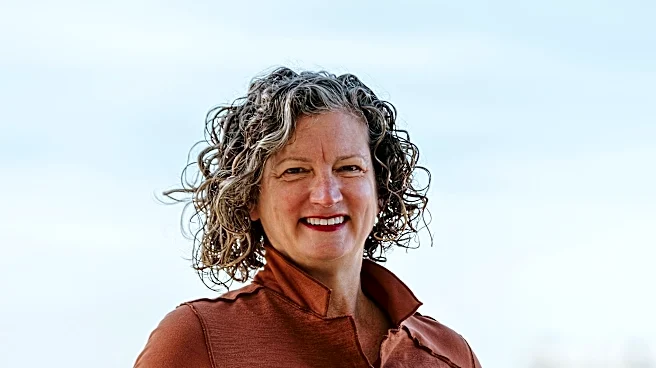




MARS HILL - When Shelton Laurel resident Natasha Pumphrey first saw Marshall on the Sunday after Tropical Storm Helene came roaring through Western North Carolina, she couldn’t believe her eyes.
The initial flood waters had subsided, but the town that was left behind was devastated.
“It looked like every post-apocalyptic or war movie I've ever seen. Everything was covered in rubble and muck,” Pumphrey said. “Everyone was hugging and crying and wandering around in shock, like zombies. But Madison County is full of resilient people, and they were also starting to sift through the debris and pick up things, even though there was nowhere to put it yet.”
The next day, Pumphrey did the only thing she could think of to help: she grabbed the thawing bear
meat in her freezer and made a stew, as well as some vegetable soup, and started handing out food to her friends and community members who were downtown sifting through the rubble of their businesses. That evening, she and her friend and neighbor, Jeramy Stauffer, decided they had to do more. With more neighbors, they loaded up supplies the following day and set up a distribution hub at Nanostead, LLC, Stauffer’s construction business just up the hill from downtown Marshall.
Almost two years later, Pumphrey and other members of the Marshall Relief Alliance are still doing all they can to fulfill that desire to “do more” to help their neighbors repair and restore their town after the hurricane.
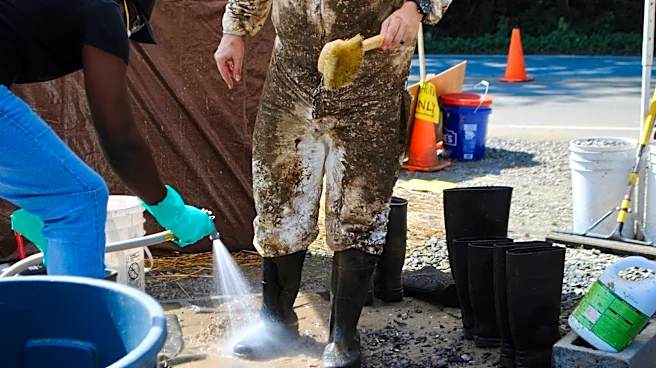
Pumphrey is executive director of the group, which became a nonprofit in October 2024. In the last two years, Marshall Relief Alliance, or MRA, has coordinated more than 12,700 volunteers and more than $2.5 million in labor value, tools, and materials for Helene-impacted households and small businesses; supported 20-plus downtown businesses; stabilized 35 residential properties; and addressed urgent winter needs for more than 1,500 people.

Two grants from the North Carolina Community Foundation have helped significantly with those efforts. In 2025, a $40,000 grant was recommended from the Madison County Community Foundation.
The award went toward the early work of the organization: helping to defray the costs of food, clean water, tools, personal protective equipment, building materials, and the other items necessary to help clean up and rebuild Marshall and its surrounding areas. Grant monies also went toward micro-grants for business owners struggling to rebuild and reopen.
An additional $75,000 grant in February 2026 funded organizational costs and salaries.
“The grant money we have received means we can continue serving our community. We’ve had lots of donations, but the grants from the Madison County Community Foundation have been one of our biggest contributors for disaster relief work. So, the grants have meant that we get to keep going with volunteer projects,” Pumphrey said.

Even now, with the two-year anniversary of the storm approaching, Marshall is still in need of the work of MRA and the volunteer projects it coordinates.
“There are still buildings that haven't been mucked out because they weren't allowed to be touched for one reason or another,” Pumphrey said.
Furthermore, relatively small problems from the initial storm have compounded over time: mold and rot from hidden water damage and unseen leaks continue to compromise structures in the area.
“There are ongoing leaks, damage, shifts in the soil, foundations that were damaged, and other things that happened during the hurricane but have only become apparent now. And we still have large groups coming in, people from outside wanting to do things for our community. Those projects need coordination, and that’s what Marshall Relief Alliance is here for,” she said.
In addition to ongoing projects, the alliance has an emergency heating and utility assistance program. Another issue that came to light after the hurricane, Pumphrey said, was homelessness in Madison County. While addressing homelessness is not the primary mission of the alliance, the group has helped some homeless individuals find temporary, safe, emergency housing, especially during volatile weather.
“Homelessness in Madison County looks different than homelessness in Buncombe County. We have so many people who are living in sheds, in vehicles, in campers, and who are facing extreme weather conditions. So, as our weather gets volatile, when we have those extreme storms or extreme cold, they don't have the resources to protect themselves in those situations.”
Although the Marshall Relief Alliance formed in response to Hurricane Helene, the staff members see no end in sight to its work in Marshall. They plan at this point to continue operating as a nonprofit in the area as long as necessary.

Marshall Relief Alliance now has three paid staff members and a board of directors. But according to Pumphrey, that was not the plan. There was, in fact, no plan at all.
In those days right after the hurricane, the people who would go on to make up the alliance were simply trying to do the next thing to help their community members.
“Our staff and our board are made up of the people who were physically there doing the work after the hurricane,” Pumphrey said.
The people who now make up the staff and board of MRA initially worked together to create a hub of supplies, tools, and information in the parking lot of Nanostead. They also created a feeding station in the barn on the business property. As they began to get donations for their work, Pumphrey said, they decided they needed to be a 501(c)(3). Stauffer filed the paperwork, and Marshall Relief Alliance was born.
“We did not go into this going, ‘We're going to become a nonprofit.’ It was literally neighbors, friends, and community members who saw our community suffering and said, ‘We're not going to leave. We're here with you. This is our town. This is our home,’” Pumphrey said.
Douglas Carr is the program director for Marshall Relief Alliance. Rachel Bennett is community assistance/volunteer coordinator, and Shruthi Dhoopati is administrative. Stauffer now serves on the MRA board, with Anne Schneider, Jacob Oakes, Kevin Ward and Tim Nylander.
The North Carolina Community Foundation transforms the collective generosity of its donors into a permanent source of community support, with a focus on the state's rural areas.
NCCF partners with donors and a network of affiliates—including the Madison County Community Foundation—to sustain over 1,300 endowments totaling nearly $600 million in assets. More than $360 million has been awarded as grants to charitable organizations and scholarships to students, creating stronger communities for generations to come.
To learn more about how NCCF turns generosity into impact, visit nccommunityfoundation.org.
This article originally appeared on Asheville Citizen Times: Grants aid Marshall Relief Alliance in ongoing Helene recovery