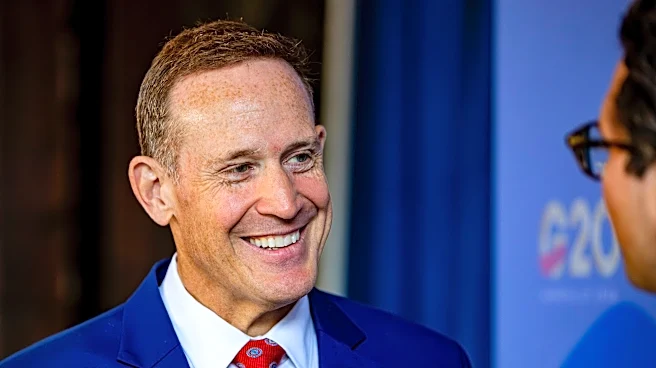





ASHEVILLE - Cameron Hamilton, administrator of the Federal Emergency Management Agency, visited Asheville with one of Western North Carolina’s most consequential rebuilding projects underway along Tunnel Road and a broader argument that the agency helping pay for it needs substantial changes of its own.
Hamilton toured work at Asheville Buncombe Community Christian Ministry’s Veterans Restoration Quarters, where Tropical Storm Helene sent 5 to 6 feet of mud through the bottom floor of the 250-bed transitional housing facility on Sept. 27, 2024. The planned $32 million rebuild and expansion includes a $22 million first phase with a new residential building and commercial kitchen. FEMA is expected to cover roughly 75% of that phase, although the final
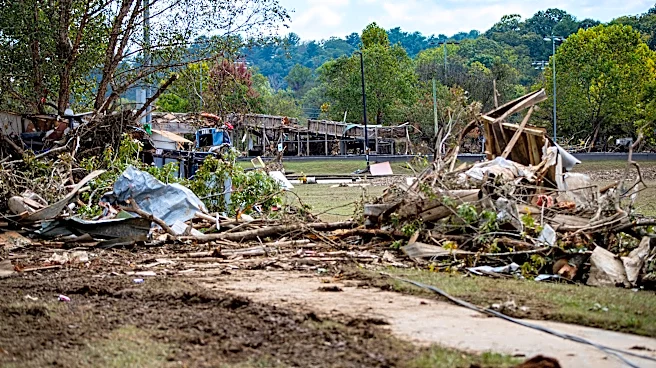
federal share had not been determined as of August.

The rebuilt campus is planned around 250 transitional housing beds, 65 emergency shelter beds, workforce training and education facilities and a veterans resource center. Across Tunnel Road, ABCCM also purchased a former hotel after initially spending about $180,000 a month to keep veterans together after Helene displaced them. That property is planned for 134 permanent supportive housing units.
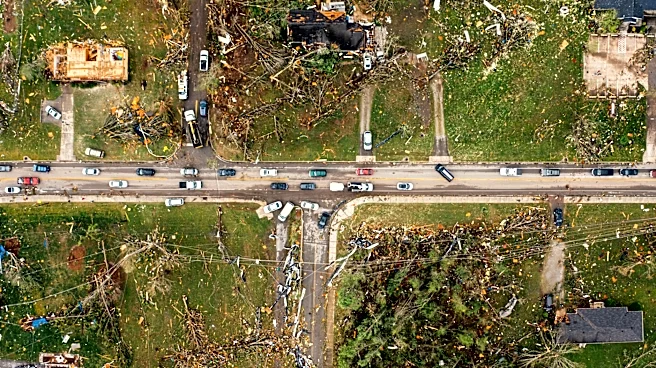
The project puts Hamilton near the center of the recovery system he says needs improvement. Nearly two years after Helene, local governments are still seeking reimbursements for recovery work, homeowners remain in lengthy buyout processes and policymakers are debating how much responsibility FEMA should retain in future disasters.

Hamilton acknowledged legitimate shortcomings at the agency while pushing back against the idea that every failure associated with disaster recovery originates there.
“I think FEMA has a lot of things it can improve on,” Hamilton told the Citizen Times Sept. 2. “I think there's also areas that FEMA has been blamed for things that aren't its fault. It's a bit of a mixed bag.”
A different FEMA
The Trump administration’s FEMA Review Council has proposed changes ranging from greater state responsibility to different methods for calculating disaster assistance.
Hamilton expressed support for several of those ideas. One would allow greater use of estimated costs rather than requiring recovery payments to rely so heavily on actual costs incurred, an approach he compared with the way insurers assess damage and settle claims. Such a system could help federal assistance move faster when a state has been overwhelmed.

He also backed a larger role for states and changes to the National Flood Insurance Program, which he described as fiscally insolvent.
The NFIP is a federally backed program that covers many properties private insurers are reluctant to insure, accounting for about 90% of U.S. flood insurance policies while taxpayer subsidies help hold down rates on high-risk properties. Critics of shifting more policies to private insurers have warned that premiums could rise substantially and coverage could become less affordable or available in flood-prone communities.
Proposals for parametric triggers based on measurements such as wind speeds or water patterns also deserve consideration, Hamilton said, although those estimates could not replace inspections necessary to determine actual damage.

“My hope is that the final outcomes will be ways to truly reform emergency management as an entire industry to make it better, faster, and more efficient with how it delivers,” He said.
Hamilton’s current position also comes with an unusual history at FEMA.
In May 2025, Hamilton testified before a House Appropriations subcommittee that he did not believe eliminating FEMA was in the best interest of the American people. He was fired the following day. Trump nominated Hamilton to return as FEMA administrator May 11, and he was sworn in again Aug. 10.
Hamilton did not repudiate that position. Instead, he emphasized preserving disaster authorities held by the president, saying those powers allow the chief executive to provide assistance quickly where circumstances warrant it. He also aligned that position with a greater role for states.
Critics say that approach could shift substantial financial and operational burdens to states and local governments while shrinking FEMA’s workforce and moving federal responders into a supporting role. A draft of the Review Council plan also proposed requiring states to meet annual spending thresholds and additional preparedness requirements before qualifying for some federal disaster assistance, potentially making federal help harder to obtain.

Getting recovery money moving
That balance between federal authority and state responsibility carries immediate consequences in WNC, where billions of dollars have been announced, allocated or approved for Helene recovery while local governments continue waiting for portions of the money needed to pay for completed and ongoing work.
Hamilton said states initiate key portions of the FEMA process, including preliminary damage assessments and Public Assistance projects. FEMA’s responsibility, he said, is to make its side of that system move faster and provide the personnel and resources necessary to help states advance projects.
The goal is not simply to approve more money but to reduce the delay between identifying a recovery need and getting funding closer to the communities doing the work.

“We are looking for every way to ensure that the administrative process on our end is faster, and that we put more hands (and) more resources, empowering the state so that then they can dole out for specific projects quicker,” Hamilton said.
The Veterans Restoration Quarters offers one example of the relationship Hamilton describes.
ABCCM plans to rebuild a larger facility than the one Helene destroyed, meaning some costs will not qualify for FEMA reimbursement. The nonprofit is seeking money from the state, churches, foundations and private donors to cover costs beyond the federal share. ABCCM Chief Operating Officer Brandon Wilson previously credited FEMA with helping make the project possible while describing the work as a partnership rather than a wholly federal undertaking.
Rethinking buyouts
Hamilton would go considerably further with another major piece of Helene recovery.
Buyout programs allow governments to acquire repeatedly damaged or high-risk properties, preventing reconstruction in places likely to flood again. Local officials across the region have raised concerns about restrictions governing those properties after acquisition, including limits on future development and the permanent loss of property from local tax rolls.

Some restrictions, Hamilton said, are imposed by law and cannot simply be eliminated administratively. His larger objection is institutional. Stressing FEMA’s role as an emergency management agency, he does not believe FEMA should necessarily be running the program in the first place.
“I personally don't foresee buyouts as an emergency management capability,” Hamilton said.
Hamilton views buyouts as part of long-term housing, redevelopment and community recovery rather than immediate emergency management. He pointed to the U.S. Department of Housing and Urban Development and other federal agencies as potentially better equipped to handle issues involving mortgages, insurance and long-term housing decisions.

The underlying economics can be difficult to escape. Hamilton said buyouts often occur where disaster risk makes insurance difficult to obtain, which can in turn prevent homeowners from qualifying for mortgages. In such places, preventing reconstruction can cost less than repeatedly paying for future losses.
However, the system intended to prevent the next disaster can leave survivors waiting long after the previous one.
“Buyouts can take a lot of time,” he said. “That's not really serving the needs of the individual survivor.”
Hamilton said states are better positioned to exercise some of the powers needed to resolve those problems. States control building codes and many municipal requirements, while governors can waive or influence requirements that FEMA cannot. State environmental and historic preservation requirements can also remain in effect alongside federal rules.
That division of authority is central to Hamilton’s broader vision for disaster recovery. FEMA would remain capable of directing federal emergency assistance while states take a larger role and agencies with greater expertise in housing and redevelopment assume work that stretches years beyond the disaster itself.
Cory Vaillancourt is the Helene Recovery/Investigations Reporter for the Asheville Citizen Times. Find him on X at @The_CoryV or on Signal, via email at cvaillancourt@citizentimes.com or at 912-508-5640.
This article originally appeared on Asheville Citizen Times: Exclusive: FEMA chief wants buyout overhaul, bigger state role