





I met some new neighbors last week while walking my dog. This couple — with an apple in one hand and straps to their baby carrier in the other — are clearly still adjusting to life with a newborn. We shared a laugh about it as I introduced myself and welcomed them to the neighborhood.
I love having friendly new neighbors. But according to the City of Asheville’s Unified Development Ordinance, this charming family shouldn’t be here. The duplex they live in is not an allowed housing type in most neighborhoods in the city, and hasn’t been for decades. The duplexes that are around, providing opportunities for couples, small families or single folks not yet ready to buy or happy to rent, were built prior to the current UDO’s adoption. But in 1997,
the city deemed these homes “undesirable”, effectively banning new development of these crucial “middle housing” types in most of the city.
Fortunately, we could change that this week.
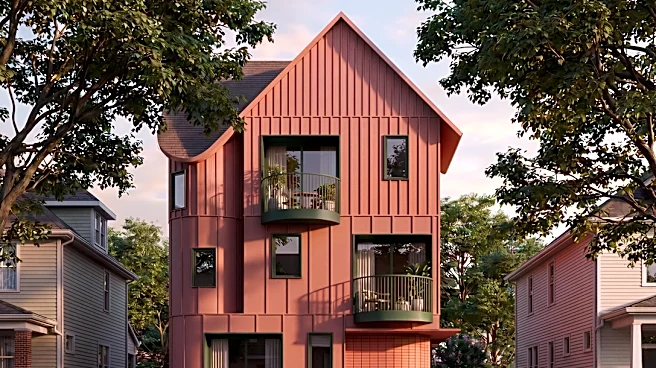
On Tuesday, August 25, Asheville City Council is poised to vote on two zoning amendments that would make it easier to create more housing options for families like my new neighbors. The first would legalize the construction of duplexes on any lot in the city. Currently, 66% of all residentially-zoned land in the city outlaws these housing types, so the rule change could make a big difference for other young families hoping to live in neighborhoods like mine. The second amendment on the table would legalize slightly larger accessory dwelling units, or ADUs — commonly known as mother-in-law suites — which would add flexibility to their configuration and make them more feasible to construct.
Increasingly, folks from all types of backgrounds prefer the smaller, more affordable housing that duplexes and ADUs provide over renting apartments in large complexes. These options can provide a home in a more connected, residential neighborhood where tenants can access more open space and be more connected to their community.
I want people to have these options in our city. Joe Archibald, board member for the Asheville-Buncombe Community Land Trust and former chair of Asheville's Planning and Zoning Commission, lives in another duplex nearby. He told me he enjoys living upstairs from his “adopted family” and is grateful to spend his money on things other than a mortgage.
On the west side of town, Jessica Bachman’s duplex gives her and her husband, a resident at MAHEC, just what they need at this point in life. While buying a home isn’t realistic for them right now, a duplex gives them “something that traditional apartment living often can’t: our own front door, a small sense of permanence, and a place that truly feels like home,” she says.
As the housing and transportation director for MountainTrue, I advocate for policy reform that would allow more homes in the city as an alternative to our current sprawling land-use patterns that decimate our region’s farms and forests. Small homes that share walls, like duplexes or townhomes, are more energy efficient than single-family homes and therefore reduce a household’s carbon footprint. The more we create homes like this within the fabric of our existing neighborhoods, the less we have to spend to stretch services like bus routes, sidewalks, and water pipes into new undeveloped forest and farmland. Duplexes and ADUs are good for the environment, good for our neighborhoods and good for potential neighbors.
Living in a duplex or an ADU is usually much more affordable than a detached single-family home and it affords many of the same benefits. Housing choices like these create opportunities for people who want or need a smaller space, but who don’t want to have to live in a large apartment complex. We used to create these options for people, which is why my neighborhood has them hiding in plain sight on every block. We can bring these choices back while maintaining Asheville’s unmistakable charm.
I hope you’ll join me in telling our city council members to support these changes. Let’s make Asheville a little more sustainable and get us back to being a place that makes room for our neighbors. For more information on how adding neighbors improves sustainability, go to blockpartyavl.org.

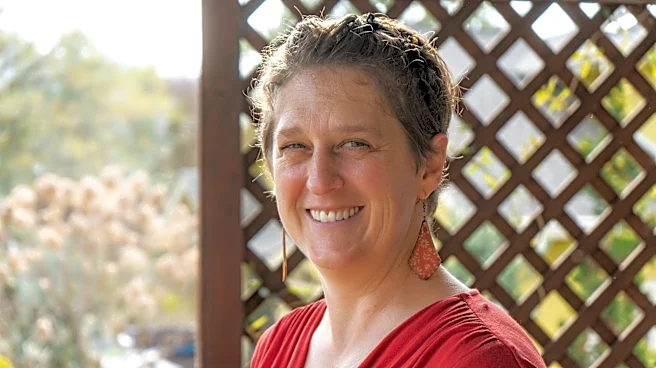
Susan Bean is the housing and transportation director for MountainTrue, an Asheville-based nonprofit that champions resilient forests, clean waters and healthy communities in the Southern Blue Ridge.
This article originally appeared on Asheville Citizen Times: Opinion: Hiding in plain sight: Duplexes and ADUs enrich neighborhoods for all