






ASHEVILLE - Tropical Storm Helene left Western North Carolina with wrecked homes, disputed insurance claims and billions of dollars in government spending. Now, two candidates for the state's highest court are offering competing visions of how to protect the rights of disaster victims — while a convicted sex offender turned Republican fundraiser has become an unexpected flashpoint in their campaign.
Democratic incumbent Anita Earls and Republican challenger Sarah Stevens are competing for an eight-year term on the North Carolina Supreme Court in the Nov. 3 election, a contest that could expand the court's existing 5-2 Republican majority to 6-1.
Both candidates have extensive legal backgrounds but arrived at their respective positions through
dramatically different careers.
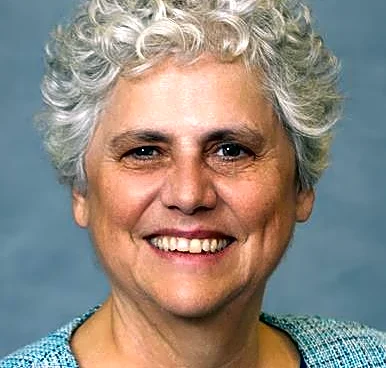
Earls was born in Seattle, Washington, where her Black father and white mother moved from Missouri because interracial marriage was illegal in their home state. A Yale Law School graduate, she began practicing civil rights law in Charlotte before serving in the U.S. Department of Justice under President Bill Clinton and later founded the Southern Coalition for Social Justice and won election to the Supreme Court in 2018.
Stevens, a graduate of Campbell University School of Law, practiced law for four decades in Mount Airy, primarily handling family law cases. She spent more than 17 years in the General Assembly, including eight as House speaker pro tempore, before resigning in June to pursue the judicial seat.

Their differences extend beyond party affiliation to fundamental questions about judicial authority, constitutional protections and the government's obligations following a catastrophe.
Helene recovery tests constitutional protections
The unprecedented destruction caused by Helene has prompted lawmakers to enact emergency measures governing rebuilding, floodplains, private infrastructure and disaster funding. Such measures could eventually force courts to decide whether the government's response to an emergency infringes on individual property rights.
Earls emphasized the judiciary's independent responsibility to evaluate government action, even when lawmakers are responding to an extraordinary crisis.
"The Constitution is supreme, and I have a record of demonstrating the willingness to do that, even if it means finding that a law passed by the General Assembly was unconstitutional," Earls said.

Stevens stressed the presumption that legislation is constitutional and the importance of distinguishing between laws passed by the General Assembly and regulations imposed by administrative agencies.
"If the legislature passed it as a law, and it is clear and concise and not inconsistent with the Constitution, then you're required to follow it," Stevens said.
Both candidates cited the state's controversial Map Act, which allowed the Department of Transportation to designate private property for potential future highway construction, restricting its use without immediately compensating owners. Courts ultimately found that those restrictions could constitute unconstitutional government takings.
Stevens also questioned government restrictions imposed during the COVID-19 pandemic, particularly the closure of churches while certain businesses remained open. For Earls, emergencies cannot justify suspending constitutional safeguards.
"I don't think we would be saying you can suspend the state constitution because it's an emergency," she said.
Disaster spending and insurance fiascos under scrutiny
Billions of dollars in Helene recovery funding have raised questions about government transparency and accountability.
Stevens pointed to state Auditor Dave Boliek's investigation of costly emergency relief contracts, arguing that questionable spending decisions primarily fall under executive oversight rather than judicial intervention.

Insurance disputes present another potential judicial battleground. A Yancey County homeowner's lawsuit against State Farm illustrates the difficulties facing disaster survivors seeking compensation, with a federal judge allowing a breach-of-contract claim to proceed while dismissing allegations of bad faith and unfair claims practices.
Stevens emphasized that insurance disputes depend heavily on contractual terms, evidence of damages and findings made in trial courts. Earls cited North Carolina's protections against bad-faith insurance practices and its Unfair and Deceptive Trade Practices Act, which can provide substantial remedies for proven violations.
"I have sought to make sure that state laws against unfair and deceptive trade practices are fully enforced," Earls said.
Earls also criticized Stevens' role in legislation redirecting roughly $12 million in annual Interest on Lawyers' Trust Accounts funding away from civil legal aid, arguing that the resulting loss of resources has especially harmed rural residents seeking assistance after Helene.
Harvey West controversy shadows judicial race
The campaign has also been marked by controversy surrounding Harvey West Jr., a former Republican Party official and judicial fundraiser who served prison time after pleading guilty to offenses involving indecent liberties with children.
Stevens attended a 2025 judicial fundraiser hosted by West and his wife at their Plymouth home, an association Democrats and outside political groups have highlighted in attacks against her. Stevens disputed suggestions that she maintained a close relationship with West, saying the fundraiser was the only time she met him and that she was unaware of his criminal history.

"I'm being treated very unfairly there, and I've tried to tell that from the beginning,” Stevens said. “But no one really cares about the facts."
Earls distanced her campaign from the controversy, saying she has not raised West's name in communications with voters. Instead, she criticized Stevens' legislative record, pointing to laws Stevens supported that courts subsequently found unconstitutional. Stevens accused Earls of judicial activism and argued that judges should interpret laws rather than pursue preferred policy outcomes.
"I believe that a judge is a referee, not a king," Stevens said.
Earls countered that protecting constitutional rights sometimes requires courts to reject laws enacted by elected officials, regardless of the political consequences.
The distinction could prove consequential long after Helene's immediate recovery ends, as disputes involving property rights, insurance coverage and government authority continue moving through North Carolina's courts.
Cory Vaillancourt is the Helene Recovery/Investigations Reporter for the Asheville Citizen Times. Find him on X at @The_CoryV or on Signal, via email at cvaillancourt@citizentimes.com or at 912-508-5640.
This article originally appeared on Asheville Citizen Times: NC Supreme Court race tests Helene recovery rights, judicial independence