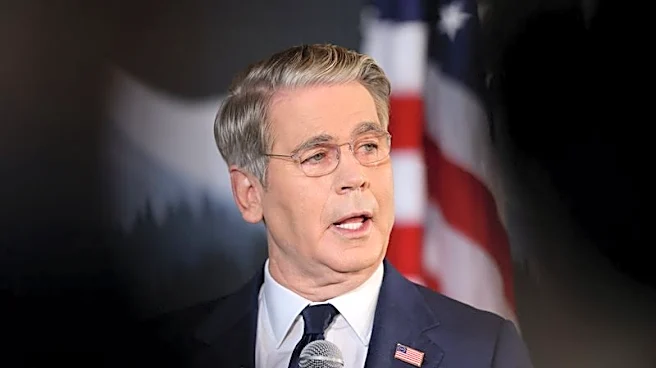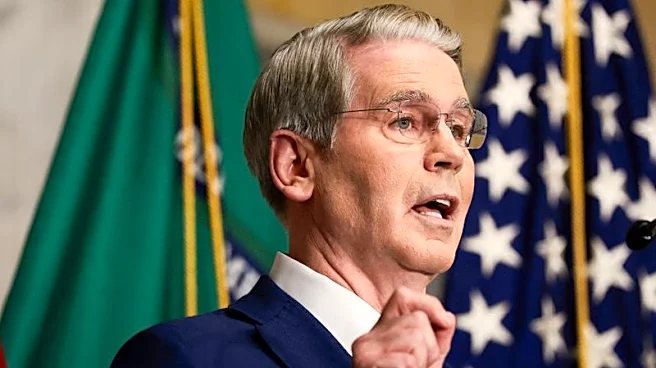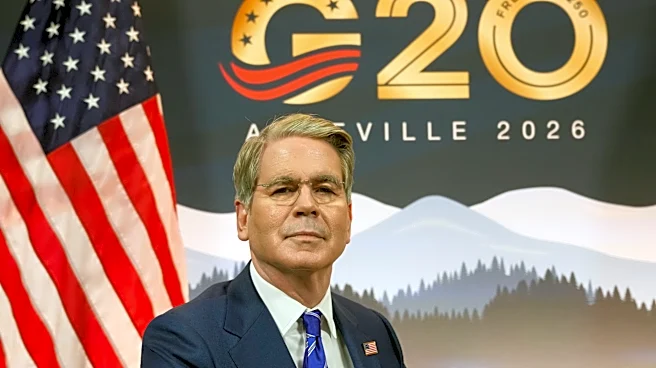

ASHEVILLE - The G20 finance meetings ended in Asheville without the unanimous agreement U.S. Treasury Secretary Scott Bessent had hoped to announce, as China rejected the group’s closing consensus and
European unease over Russia exposed deeper geopolitical divisions behind the economic talks.
The break came after discussions about economies that Bessent said distort competition through state-driven exports.
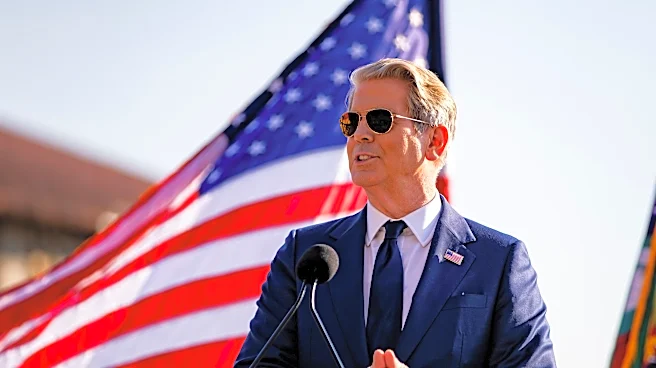
“Non-market based economies pushing out a never-ending stream of cheap exports is not sustainable,” Bessent said during his closing press conference on the terrace of the Omni Grove Park Inn Sept. 1.
That divide did not stop Washington and Beijing from talking elsewhere. U.S. officials held quiet conversations with China and Russia about Iran, Bessent said, including on the Strait of Hormuz and Iran’s nuclear ambitions.
“With China on Iran, we have more in common than we have differences,” Bessent said. “China agrees Iran cannot have a nuclear weapon. China agrees that there has to be free maritime trade in the Strait of Hormuz. China gets 50% of its energy from the Gulf, so I believe it’s up to China, or incumbent upon China, to work toward a solution.”
Iran remained a point of tension throughout the summit. Bessent said the administration was tightening financial pressure on Tehran by targeting the channels that allow Iranian oil revenue to move through the Gulf financial system.

He described payments in Chinese currency, neighboring shipping networks, banks and cash houses as parts of that system, arguing that restricting Iran’s ability to convert those proceeds would increase pressure on the government.
The international disputes unfolded alongside a broader economic agenda built around stronger growth, private investment and energy production, however Russia presented a separate fracture.
Asked about European concerns over inviting Russia’s finance minister while the war in Ukraine continues, Bessent defended engagement and noted the official he met had not been the target of sanctions that have landed on many regime figures.
“I know that some Europeans had a sour taste, but I think it’s very important to engage,” Bessent said. “Otherwise, if both fighters go in a corner, then there will never be a resolution to this horrible conflict.”
Coming together
Still, Bessent portrayed the meetings as evidence that most members remained aligned on the need for stronger economic performance.

“Every discussion brought us back to the same conclusion — growth is a condition upon which durable prosperity depends, and with America once again leading this forum, the days of settling for subpar growth are over,” Bessent said.
Domestic economic conditions provided another test for Bessent’s emphasis on growth. Mortgage rates and other borrowing costs remain elevated, while higher energy prices continue to affect household budgets. Bessent pointed to private-sector employment, low unemployment and wage gains, while maintaining that elevated energy prices would eventually subside.
“The economy is strong, and importantly, we are creating private sector jobs here. These are not government jobs,” he said. “Unemployment remains low. Consumer confidence remains high. These energy prices will come down, and then we will see very large real wage gains again.”

Artificial intelligence dominated much of Bessent’s closing economic discussion. He described AI as a potential source of productivity gains and small-business formation while also emphasizing continued U.S. competition with China, but he placed responsibility on the industry to make a stronger case to communities confronting data center construction and other rapid changes associated with AI.
“I think that the AI companies, whether it is the builders of the data centers, whether it is the labs themselves, have done a horrendous job, horrendous job of explaining themselves to the American people, and I think we need a big reset on this,” Bessent said.
For Western North Carolina, the global economic agenda intersected with a much more immediate concern. Nearly two years after Tropical Storm Helene caused $60 billion in damage North Carolina, Bessent offered no new federal recovery commitment for a region that has actually seen very little money — around $2.5 billion — hit the streets.
Instead, Bessent pointed to money spent locally during the G20, “earned media” exposure and an estimated $20 million in benefits from the international exposure Asheville received by hosting the gathering.
“I’ve grown up coming to this area my entire life,” said Bessent, a South Carolina native. “I believe America knows about Asheville, but now I think today the world — or in the past few days, the world — has discovered Asheville.”
Cory Vaillancourt is the Helene Recovery/Investigations Reporter for the Asheville Citizen Times. Find him on X at @The_CoryV or on Signal, via email at cvaillancourt@citizentimes.com or at 912-508-5640.
This article originally appeared on Asheville Citizen Times: G20 talks in Asheville end without deal as China rejects consensus