






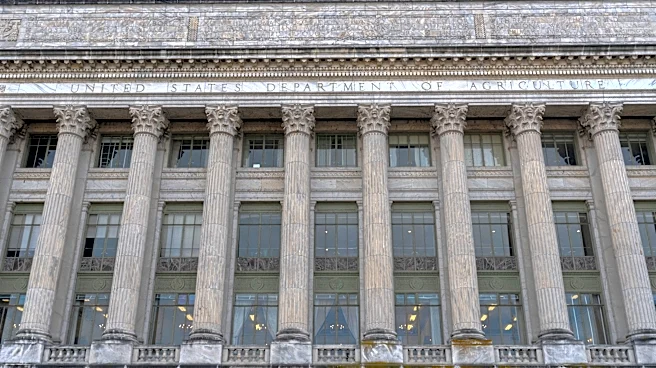
A few weeks ago, the U.S. Department of Agriculture released the draft environmental impact statement for its plan to open the remaining pristine roadless areas of our national forests to mining, logging and road building.
Pushed by anti-public lands corporate and industry interests, this raid on the lands that belong to all Americans raises the alarm about the ability to pass an irreplaceable resource down to future generations.
Tom Schultz, a former timber industry lobbyist and executive, is chief of the U.S. Forest Service, a sub-agency of the USDA. He is at the forefront of calling for the rescission of the Roadless Area Conservation Rule. It's no surprise that the political appointees of this administration look at the national forests and other
public lands through the lens of raw materials to enrich corporate America, putting this above the common good
They apply misleading terminology in their arguments like “forest health,” a code phrase for seeking to manage complex ecosystems and rich biodiverse lands for maximum timber output. Anything else to them is “waste.” They also mislead the public over the threat of wildfire dangers.
By now, we're used to the modus operandi of using scare tactics to push the dismantling of public lands, and the overblown concern about managing wildfire risk is no exception. However, this reason is refuted by recent studies that show roadless and undisturbed forest land actually helps minimize wildfire risk. Science-backed data also points to increased frequency of human-caused fires along access roads.
The 2026 study Aplet et al. Fire Ecology looked at three decades of fire data from national forests, finding the results "suggest that building roads into roadless areas is likely to result in more fires.”
Ever since the rule was adopted in 2001, industrial logging interests have tried to roll it back in defiance of the will of the people who are, ultimately, the ones who "own" these lands. An analysis of the history and purpose of the roadless rule, published by the Pew Charitable Trusts earlier this year (Busse, Blake; Feb. 18, 2026), reinforces its widespread popularity and notes that the public and political outcry that led to its creation was driven by large-scale industrial logging occurring at the time. The study's summary states “In the decades prior to the roadless rule’s implementation, industrial-style logging, including clearcutting of large areas, led to wildlife habitat loss and clean water degradation for downstream communities.”
It's likely the Forest Service won't be able to manage upkeep of additional roads, adding to the threat new roads pose to habitat and water quality, as well as the increased risk of fire. According to 2024 data, the agency's road maintenance backlog has ballooned to about $6.4 billion of unmet need.
More than 172,000 acres in North Carolina are in the inventory of roadless areas taken when the rule was being developed. These include forest lands in the Pisgah, Nantahala and Croatan national forests. The majority of these areas lack any protection other than their roadless status under the roadless rule, and they will be at risk of logging and destructive roadbuilding if it is eliminated. These areas include popular spots for hiking, hunting, fishing and other recreation, and places where some of the last undisturbed rich, biologically diverse habitats survive.
Near Asheville, the South Mills River, Laurel Mountain, Big Ivy, and the Blacks (adjacent to Mt. Mitchell) are a few of the outstanding inventoried areas. Further west on the Nantahala there are gems such as Tusquitee, Wesser Bald and areas surrounding Joyce Kilmer and Southern Nantahala wilderness areas. These places and others provide outstanding backcountry experiences and habitat protections for threatened and endangered species.
The release of the draft environmental impact statement opened a 30-day public comment period with a now-past deadline of midnight Sept. 21 – less than half the traditional 60- to 90-day comment period traditionally provided for proposed actions of this magnitude. Conservation organizations and others are formally requesting an extension, but past behavior shows the current administration is not interested in what you or I think.
That’s why it is vital to raise your voice in support of the Roadless Rule before Oct. 6. These are YOUR public lands ― not the raw materials for industrial and corporate interests to enrich their bottom line. Submit your comment at sc.org\roadlessrule.

David Reid is the national forests issue lead for the North Carolina Chapter of the Sierra Club, and past chapter chair. He has been a volunteer activist on the Pisgah and Nantahala national forests since the late 1980s. More recently, he has coordinated the club's participation in the forest plan revision process for these Western North Carolina forests. He is retired from the Mountain Area Health Education Center, where he was director of information technology. He and his wife, Jane, live in Swannanoa.
This article originally appeared on Asheville Citizen Times: Guest Opinion: Dropping roadless rule means disaster for public lands