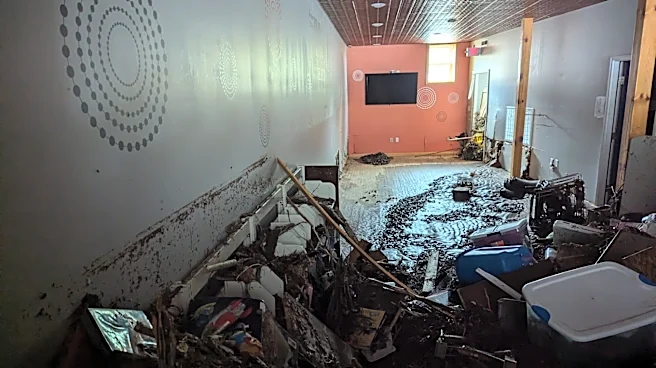








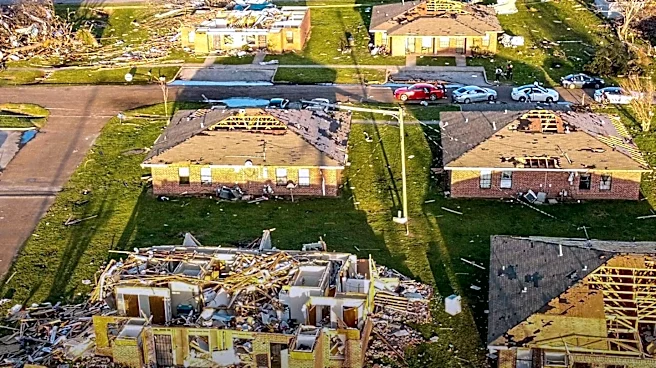
ASHEVILLE - Nearly two years after Tropical Storm Helene, Western North Carolina’s recovery is showing two realities at once — billions of dollars are moving into housing, infrastructure and mitigation, while housing needs still outstrip available aid, employment and tourism remain below pre-storm levels, and key recovery programs face looming deadlines.
Those competing trends surfaced Aug. 21 during a virtual meeting of the Governor’s Advisory Committee on Western North Carolina Recovery, where officials from the state Department of Commerce, U.S. Department of Agriculture and the Governor’s Recovery Office for Western North Carolina detailed progress in housing, business activity, infrastructure, and long-term recovery programs.
Stephanie McGarrah,
deputy secretary of community revitalization at Commerce, said Renew NC has completed 120 single-family homes, with another 122 under construction and more than 1,000 in pre-construction or award determination. According to a slide presented during the meeting, Renew NC had received 7,924 submitted applications, of which 2,393 remained active.

Housing availability itself has complicated construction. Some mountain counties have rental vacancy rates at or near zero, and 638 applicants have been approved for a $40 million temporary relocation program designed to help families move out while work is underway.
Other Renew NC programs are moving toward construction of more than 800 affordable rental units through low-income housing tax credits, while a $53 million workforce housing program is intended to help low- and moderate-income households buy homes.
![Debris and damage behind the Biltmore McDonald's near the Hendersonville Road Bridge, seen Sunday, Dec. 15, 2024, eleven-weeks after Tropical Storm Helene hit.[Matthew Dae Smith/USA Today Network]](https://www.gannett-cdn.com/authoring/authoring-images/2024/12/16/PLSJ/77019175007-biltmore-village-4702.jpg)
But McGarrah said estimated need for ownership housing is between $2 billion and $3 billion in the hardest-hit counties alone and exceeds $5 billion when other state-designated disaster counties are included. Demand has also exceeded available funding in commercial revitalization and infrastructure programs.
“I would say across all of our programs, the federal funding we have so far does not seem like it will meet the full need in Western North Carolina,” McGarrah said.
Business activity rebounds, but jobs lag
The region’s economy presents a similarly uneven picture. Andrew Berger-Gross, a senior economist with Commerce’s Labor and Economic Analysis Division, said aggregate taxable sales in the 16 counties designated by the U.S. Department of Housing and Urban Development as most impacted and distressed fell below 2023 levels only in September and October 2024 before rapidly rebounding. Sales are now about 16% above pre-storm levels, he said.
The sales figures are not adjusted for inflation, and Berger-Gross’ assessment of a rapid aggregate recovery contrasts with a recent Mountain BizWorks survey that found three in four small businesses are still earning less revenue than before Helene. Employment also remains about 1% below pre-storm levels.
According to a slide presented during the meeting, the region added just 821 residents from July 2024 to July 2025 while its labor force shrank by 8,149 people. Another slide showed Buncombe County lost 3,144 jobs from March 2024 to March 2026, including 1,696 in accommodation and food services. Berger-Gross said Buncombe accounts for roughly 85% to 90% of the region’s employment losses, while lodging sales there remained 5% below 2024 levels as recently as April.
“I can't pinpoint precisely, but it's clear looking at the data that even if the economy in aggregate has recovered, the tourism economy is still struggling,” Berger-Gross said.
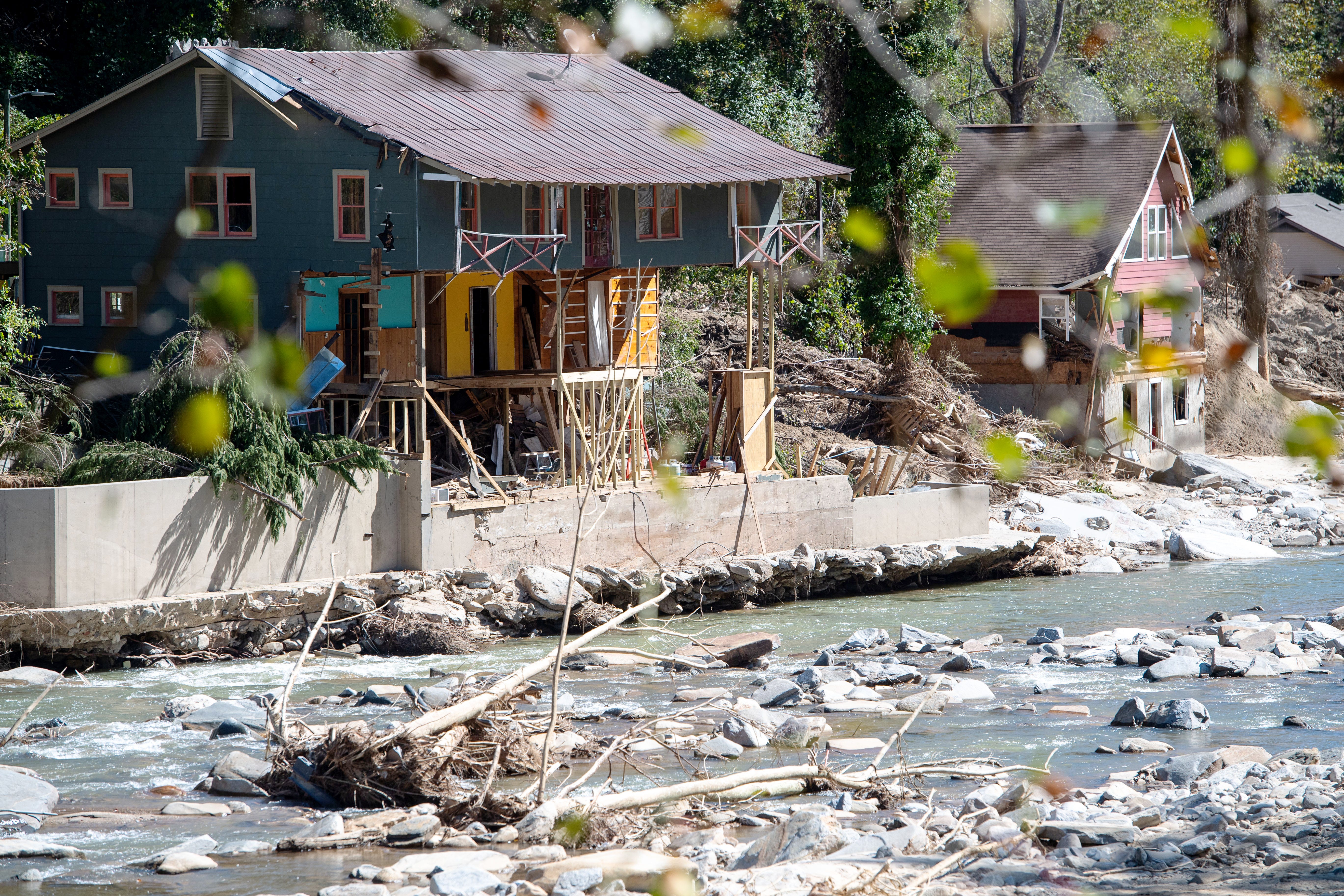
USDA Rural Development Director of State Operations Robert Hosford followed with a shorter update focused largely on housing and water infrastructure. Since Helene, USDA has built 40 homes for about $11 million and has another 107 homes worth roughly $35 million moving through various stages of construction. The agency has also committed $111 million to water and environmental projects in the mountains, with roughly another $120 million in projects under development.
Hosford said USDA is rebuilding its WNC workforce after a 2025 federal initiative that offered employees a form of voluntary separation from government service, so he is now working with regional councils of government to help deliver programs.
He also recently requested another $218 million specifically for water and environmental projects and said USDA is adding an engineer in the mountains to support work expected to continue for decades.
“This is a 25-year recovery on the short end,” Hosford said.
Mitigation, Parkway work and deadlines
GROW NC Director Matt Calabria and Deputy Director Emily Gangi closed with updates on several long-term recovery efforts. Calabria said the National Park Service remains on track to complete all three phases of Helene-related Blue Ridge Parkway repairs by the end of 2026. Phase one is complete, phase two is underway and phase three remains in planning and contracting, according to NPS.

The Federal Emergency Management Agency has made up to $1.5 billion available through its Hazard Mitigation Grant Program, with the state expected to provide an additional $500 million to draw down the full federal amount. According to another slide presented during the meeting, North Carolina had submitted 835 properties for voluntary acquisition as of July, with 446 approved by FEMA. Another 466 properties had been submitted for elevation, and 86 infrastructure applications had been submitted, but none in either category had yet received FEMA approval.
Gangi also highlighted $18 million in federal funding for debris removal not covered through other programs and more than $25 million still available from a $55 million state appropriation for infrastructure projects benefiting small businesses. She said the region has an estimated $250 million in stormwater infrastructure needs.
She also warned of an Aug. 31 deadline for survivors to enroll in full disaster case management. The program has been extended into January 2027, but new enrollment in intensive case management will close at the end of August so remaining cases can be completed or transitioned to other resources.
Cory Vaillancourt is the Helene Recovery/Investigations Reporter for the Asheville Citizen Times. Find him on X at @The_CoryV or on Signal, via email at cvaillancourt@citizentimes.com or at 912-508-5640.
This article originally appeared on Asheville Citizen Times: Helene recovery could take 25 years, USDA official says