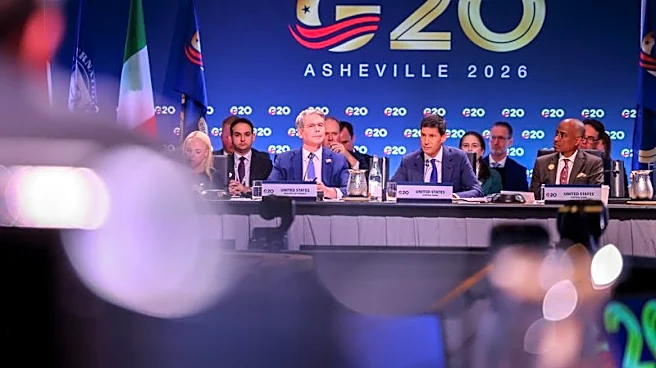






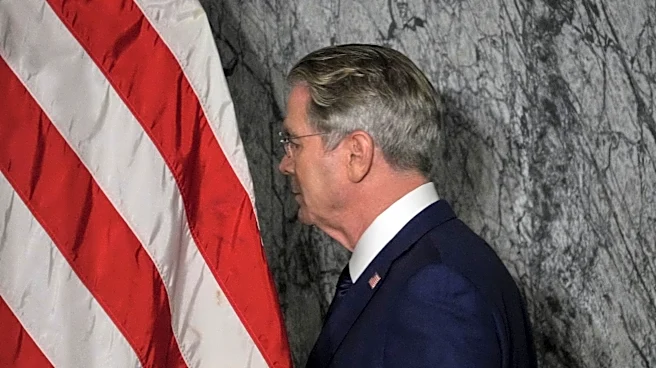
U.S. Treasury Secretary Scott Bessent had glowing words for Western North Carolina as he welcomed attendees to the G20 finance summit on Aug. 31. The region’s grit after Hurricane Helene, he told the leaders of the world’s top economies, was a testament to the strength of the American people.
“Greater Asheville reminds us what renewal looks like. It's a comeback city,” Bessent said. “A region tested by disaster responded with its resilience that has long defined the American experience. For 250 years, that spirit has sustained the most vibrant economy in the history of the world.”
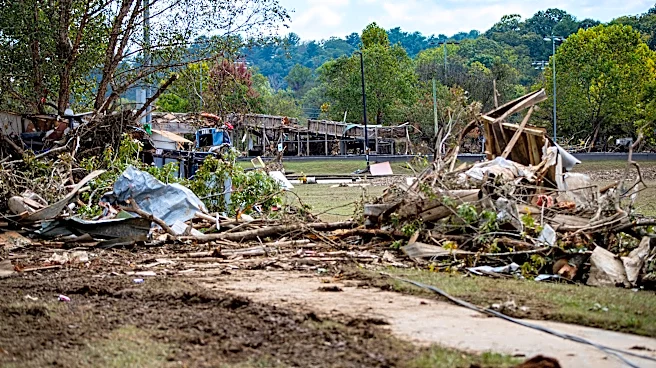
But Bessent, and the G20’s entire agenda under American leadership, have omitted a major reason why Helene caused such unprecedented damage to begin with: climate change,
driven primarily by burning fossil fuels.

Researchers with the Lawrence Berkeley National Laboratory estimated that roughly half of Helene’s rainfall over Georgia and the Carolinas could be attributed to climate change, with the event itself made “up to 20 times more likely” by a heating planet. Local activists, including members of the Sunrise Movement, have picked up that theme in their criticism of the G20. They argue that world leaders should do more to cut greenhouse gas emissions and mitigate climate change, thereby reducing the risk of future Helene-like events.
At the G20’s 2025 meetings, led by South Africa, world leaders issued a declaration backing a transition toward renewable energy and calling for finance to support recovery after climate-driven disasters. (The US boycotted those meetings, citing South Africa’s alleged mistreatment of white farmers, and did not invite the country to participate in the G20 this year.)
This year’s gathering of finance leaders in Asheville, however, included no session about climate. The G20’s working groups, as shaped by the Trump administration, instead include “energy abundance.” Its priorities focus “affordable, reliable, and secure energy,” with no mention of emissions reductions.
When Bessent did speak about U.S. energy policy in Asheville, as during a Sept. 1 “fireside chat” with Fox Business personality Larry Kudlow, he touted increases to America’s oil and gas production and other efforts to secure “energy certainty.”

On the sidelines of the Asheville G20 summit, the Citizen Times raised the link between Helene and climate change with Kush Desai, a senior deputy press secretary and special assistant to President Trump.
“Disaster happen — we can’t change that,“ Desai said. “What we can change is our ability to respond to that and to prevent the damage and the tragedy that they cause.”
Desai said that, by focusing on economic growth, the G20 under the Trump administration’s leadership would foster “material prosperity that augments our ability to respond to disasters.”
He added that the federal government remained committed to partnering with state and local governments on infrastructure investments like flood prevention measures.
Asked about the retreat from prioritizing climate at the G20, Desai argued that the federal government was pursuing “energy solutions that actually work.” He emphasized a push for the rapid development of nuclear energy, which critics have said is proceeding with limited safety oversight.
“Just because we’re not indulging in a status quo that’s fixated on climate doesn’t mean that we’re not doing our part to address disaster resilience and provide clean air and water for our people,” said Desai.
Daniel Walton is the City Government Watchdog Reporter for the Asheville Citizen Times. Email him at dwalton@gannett.com.
This article originally appeared on Asheville Citizen Times: G20 in Asheville ignores climate's role in Helene