






On Sept. 27, 2024, Tropical Storm Helene turned Western North Carolina’s “normal” into “nightmare.”
Roads vanished. Bridges buckled. Water and sewer systems failed. Electronic communications went silent. Homes became unlivable, businesses lost everything and exhausted volunteers pushed deeper into rural Appalachian communities that could no longer reach the outside world. Countless lives were affected. More than 100 people died.
Two years later, rugged Southern Appalachia is still living Helene’s long shadow. Only 14% of more than 2,900 projects submitted to the Federal Emergency Management Agency are in the "closeout" stage. Roughly $6 billion has been spent, but schools, nonprofits and local government units are still awaiting tens of millions
in reimbursements.
Another storm like Helene may not come tomorrow, but the question is no longer if the region will face one again — only when, and whether its unfinished $60 billion recovery will be complete when it does."Financially, the county has sufficient resources to respond if another major storm occurred tomorrow," said Bryant Morehead, Haywood County's manager. "However, the continued delay in receiving reimbursements for Hurricane Helene recovery costs does reduce our financial flexibility. We could respond, but receiving those outstanding reimbursements would make managing another major disaster considerably easier and would better position the county for the long recovery that follows."
When — not if
As the Helene recovery and investigations reporter for the Citizen Times since late June, I spent nearly three months focused on the progress, the shortcomings, the lives still touched by this thousand-year storm and, ultimately, the ability of the region to respond again.
When the region confronts another Helene-scale storm, its emergency-response system will be tested while agencies, hospitals, nonprofits and responders are still managing the last recovery.
When severe weather again closes the region's trails, park roads, campgrounds and recreation areas, it could cut off the visitors and spending that sustain the region’s multi-billion dollar tourism economy.
When the next storm reaches renters still crashing on couches, homeowners waiting on repairs or buyouts and families struggling to find affordable housing, many will face it without the security of a permanent home.

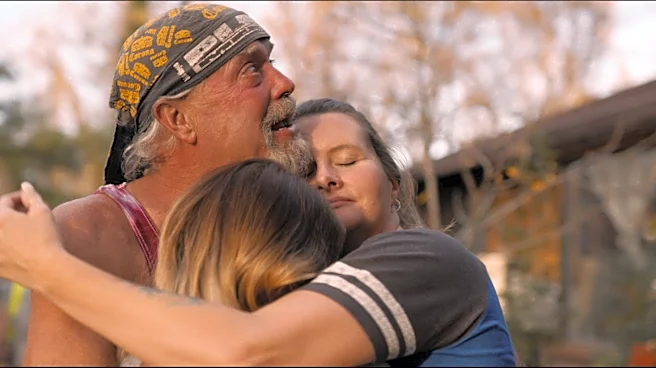
When disaster returns to lives already forever altered by Helene, a small-town mayor rebuilding a ruined business, a couple rebuilding a livelihood and parents raising a child born as the storm arrived will show how survival gave way to the more profound work of starting over.
When — not if — another Helene arrives before rebuilding is complete, the region may meet it with critical roads, bridges and public facilities still compromised, unfinished, temporarily repaired or rebuilt no stronger than before.
Recovery, by the numbers
The scale of that unfinished work becomes clearer in North Carolina’s own accounting of the recovery.
The NC Local Government Disaster Recovery Portal serves as a one-stop resource for local governments affected by Helene, bringing together funding opportunities, training, practical guidance, contacts and recovery resources. It is a joint effort of 11 organizations, including the Southwestern Commission, Land of Sky Regional Council, Western Carolina University and the North Carolina Association of County Commissioners.
As of Sept. 3, the portal’s recovery spreadsheet listed 2,942 FEMA Public Assistance projects across North Carolina involving 348 distinct applicants, including municipalities fire and rescue organizations, schools, colleges and universities, nonprofits or private organizations, county governments, utilities, special districts or cooperatives, state agencies or entities, health care or public health organizations, homeowners or property owners associations, regional authorities and one tribal government.
Together, those projects carry more than $2.69 billion in costs. FEMA had obligated more than $2.48 billion across 2,286 projects.
In this context, “obligated” means FEMA has formally approved a project and committed federal money to it. It does not necessarily mean the local government has received the money.

Emergency protective measures make up the largest project category, followed by roads and bridges, buildings and equipment, debris removal, parks and recreational facilities, utilities and water control facilities.
Far fewer have reached the end of FEMA’s process. Of the 2,942 projects, just 413 were listed as closed out — about 14%. FEMA describes closeout as the final Public Assistance step, after work is complete and costs are reconciled. Another 178 projects were pending closeout completion.
Interstate 40
The largest unfinished project is not a FEMA project at all, but it is perhaps the clearest expression of what Helene did to WNC, and what remains vulnerable when — not if — the next extreme storm arrives.
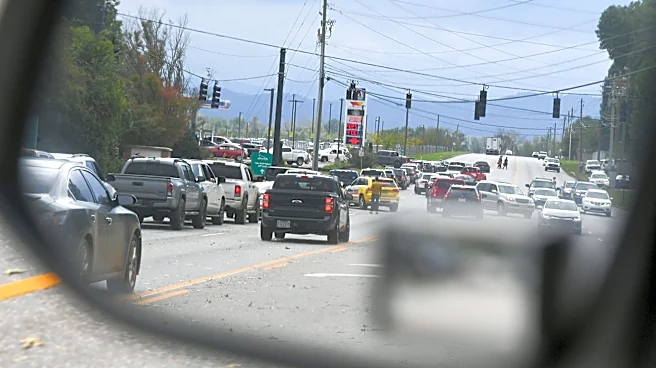
Interstate 40 snakes through the Pigeon River Gorge on a narrow shelf of earth wedged between sheer mountainsides and the restless river below. When Helene sent the Pigeon raging through that confined channel, the river simply took parts of the highway with it, destroying or severely damaging about five miles of interstate and severing one of WNC’s most important connections to Tennessee.
Roughly 10 million vehicles pass through the corridor each year, including about 3 million commercial vehicles.

I-40 reopened to limited traffic in March 2025, but the reprieve proved fragile. Flash flooding on June 18, 2025, triggered another slide just across the Tennessee line, again closing the interstate. Now, the scale of the permanent repair dwarfs the other unfinished projects across the region.
The North Carolina Department of Transportation estimates reconstruction will cost about $2.8 billion, up from roughly $2 billion earlier this year, with restoration of four lanes expected by late 2029. Testing has found bedrock more than 50 feet beneath the surface in places, requiring longer steel piles and pushing both costs and the schedule higher.
But the highway rising from the gorge is not intended merely to replace what Helene destroyed. It is being engineered for what may come next, with massive concrete and pile walls designed to withstand forces like those unleashed by the Pigeon in 2024.
“History shows us that I-40 in the Gorge is vulnerable to flooding and failure, and not addressing the vulnerabilities now would result in the same damages at some point in the future,” Wesley Grindstaff, NCDOT Division 14 engineer, said.
The nine-county core
Across Buncombe, Haywood, Henderson, Madison, McDowell, Polk, Rutherford, Transylvania and Yancey counties, the spreadsheet lists 1,201 projects spread among 157 applicants.
Those applicants include 32 municipalities, 32 fire and rescue organizations, 32 nonprofits or private organizations and 31 schools, colleges and universities, along with county governments, utilities, health care organizations, property owners associations and other public entities.
Combined, the projects total $637.7 million, with $558.1 million in federal funding obligated.
The region is only slightly further along than the statewide total. Of 1,201 projects, 882 were obligated, 83 were pending closeout completion and 197 had been closed out — about 16.4%.
Buncombe County leads by a wide margin with 420 projects totaling $247.2 million, including $195.6 million obligated.
Yancey is next, with $85.9 million, followed by Madison, Henderson, Rutherford, Haywood, McDowell, Polk and Transylvania.
Closeout rates vary sharply. Haywood leads at 26%, followed by Buncombe, Transylvania, Polk, Rutherford, Henderson and Madison. McDowell County brings up the rear with just 3.9% of projects completed.
Across the nine-county region, the largest projects still short of FEMA closeout reflect the broad range of damage Helene left behind, from utilities and public infrastructure to debris removal, water systems and community facilities.

Buncombe County
Buncombe County’s biggest project still short of closeout is Asheville’s temporary potable water pretreatment system at the North Fork and William DeBruhl reservoirs. The state recovery portal lists the project at $23.2 million and pending closeout, while city officials said Asheville has been reimbursed a little more than $17 million.
“Significant recovery work is still underway at both North Fork and William DeBruhl reservoirs, which includes substantial mitigation and resiliency components. The project FEMA is reporting as ‘pending closeout’ is for the temporary pre-treatment systems that were placed at both reservoirs and remained operational until Nov. 30, 2025,” Asheville Recovery and Resilience Director Bridget Herring said.

The temporary systems were installed after Helene washed out major transmission lines at North Fork and blocked access to DeBruhl. Even after crews restored enough infrastructure to begin moving water again, sediment and debris left both reservoirs with turbidity far beyond what the treatment plants were designed to handle. For many customers, potable water was unavailable for more than seven weeks.
Those temporary systems are only part of the work that remains. Asheville is designing permanent treatment improvements at North Fork intended to significantly increase its ability to remove turbidity from raw water and add water-storage capacity. The city has also replaced the reservoir’s auxiliary spillway fuse gate, completed removal of more than 6,500 tons of woody debris from the North Fork watershed and is developing a third transmission main routed away from flood-prone areas.
At DeBruhl, planned improvements would add conventional treatment technology designed to handle water of any quality. Debris removal is also underway at Bee Tree Reservoir. City officials said the projects are intended to make Asheville’s water system more resilient to future storms.
Haywood County
In Haywood County, a $13.9 million waterway debris removal project stands far above the rest. Finance Director Kristian Owen told the Citizen Times the county is still owed $4.5 million as of Sept. 10.
"We have also reduced some of our long-term flood risk," Morehead said. "The Tropical Storm Fred property buyouts (from the 2021 storm) have been completed, and the Helene mitigation process is underway, meaning fewer residents will ultimately be living in some of our most flood-prone areas."

Henderson County
Two debris removal projects dominate Henderson County’s list. Expedited debris removal totals $15.2 million, while waterway debris removal adds another $14.7 million, and both are pending applicant project review. A $9.4 million Hendersonville Affordable Housing Corp. project for Lincoln Circle units without flood insurance ranks third and remains obligated.

Madison County
Madison County’s top three include two major French Broad Electric projects and one hydroelectric facility. The largest is a $12.9 million project covering the cooperative’s electric distribution system, meters and broadband fiber across several counties. An $8.1 million Capitola Dam structure project and $6 million Capitola hydroelectric plant project will follow.
French Broad Electric’s General Manager and CEO Jeff Loven told the Citizen Times Sept. 8 that obligated money for the dam and powerhouse will instead support a new Buncombe County substation, upgrades to about 40% of transmission infrastructure in Mitchell and Yancey counties and replacement of older meter-reading technology with a faster fiber-based system.
“In the event of another major storm, undoubtingly we would lose electric and fiber service to our customers. (There is) nothing we can do to totally prevent a catastrophic storm from damaging our poles and wires," Loven said. "However, having additional electrical capacity and improving the physical strength of our electric grid does nothing but improve our chances of keeping the power on or getting it back on faster."

Separate from those top projects, Helene also destroyed wastewater treatment plants in Marshall and Hot Springs, two of the county’s most consequential infrastructure losses. The FEMA ledger includes a $737,000 Marshall plant relocation project still under environmental and historic preservation review and about $373,000 for temporary repairs at the Hot Springs plant. It also lists millions more for damaged sewer lines, lift stations and other wastewater infrastructure in both towns.The FEMA spreadsheet doesn’t capture the full cost of replacing those plants. Marshall’s actual wastewater-treatment-plant relocation is estimated at about $36.7 million, with major funding coming through state and federal clean-water programs rather than FEMA. The North Carolina Department of Environmental Quality awarded Marshall $4 million for the relocation in April.

McDowell County
Old Fort accounts for all three of McDowell County’s largest projects still outside closeout. A $1.6 million North Maintenance Shop buildings project is pending environmental and historic preservation review, narrowly ahead of a $1.6 million South Maintenance Shop and vehicle project pending applicant project review. The town’s $1.2 million Westerman Street water-line project is third and is pending project closeout initial review.

Polk County
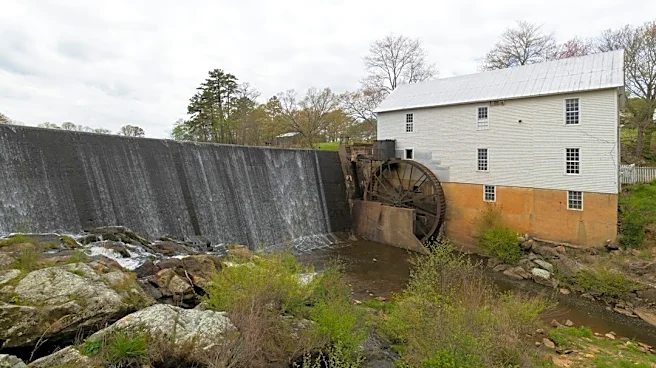
Polk County’s largest unfinished project is a $2.3 million access road and siphon system at Turner Shoals Dam. The road will run from Green Hills Road to the lake, allowing crews to install a siphon that can lower and control water levels for inspections, repairs and future storm response.
Work has not yet begun, according to a county spokesperson. Federal money has been obligated, but the county will seek reimbursement after construction. County officials said the notice to proceed was signed last week and construction should start soon. The siphon is intended as a mitigation measure, giving the county greater control over lake levels if another major storm causes problems at the dam.
Rutherford County
Rutherford County’s list is dominated by debris removal. A $25.3 million expedited debris removal project is the largest, followed by $4.5 million in countywide waterway debris removal and $4.2 million in right-of-way debris removal. Each remains obligated.
Transylvania County
In Transylvania County, Brevard’s $1.36 million Hillview Road culvert project ranks first among projects not yet closed out. A $998,000 Transylvania County emergency protective measures project follows, with Rosman’s $354,000 Main Street water-line project third. All three remain obligated.
Yancey County
Yancey County carries the two largest individual projects among the nine counties. Waterway debris removal totals $35.8 million, while right-of-way debris removal adds $23.3 million. A $2.9 million private-property debris removal project ranks third, and all three remain obligated.
Across the region, the unfinished work of recovery takes different forms. Together, they show that recovery is not simply a matter of replacing what Helene destroyed — it is a race to rebuild before the next storm tests that which remains unfinished.
Cory Vaillancourt is the Helene Recovery/Investigations Reporter for the Asheville Citizen Times. Find him on X at @The_CoryV or on Signal, via email at cvaillancourt@citizentimes.com or at 912-508-5640.
This article originally appeared on Asheville Citizen Times: Two years after Helene, recovery remains unfinished across WNC