







Authorities investigating the deaths of two separate University of Mississippi students that occurred on the same day confirmed that packaged kratom was found during their investigation.
As reported by the Clarion Ledger, part of the USA TODAY Network, the Lafayette County Metro Narcotics team in Oxford, Mississippi, said the kratom was purchased from a retail store and was found as investigators worked to determine what happened to the students. Authorities have not confirmed the causes of the deaths, whether the two cases are connected or whether kratom or any other substance played a role.
Kratom and its associated compounds are not federally regulated. However, this could soon change, with the U.S. Drug Enforcement Administration announcing
plans to temporarily classify 7-OH and three related substances as Schedule I controlled substances on July 1.
Additionally, the U.S. Drug Enforcement Administration has listed kratom as a Drug and Chemical of Concern, and the U.S. Food and Drug Administration has warned consumers not to use kratom because of the risk of serious adverse effects.
Here's what to know about kratom, the Mississippi case update, the legality of kratom in North Carolina and more.
What is kratom?

Kratom is a tropical tree native to Southeast Asia. Its leaves contain naturally occurring compounds called mitragynine and 7-hydroxymitragynine (7-OH) that can affect the brain and nervous system.
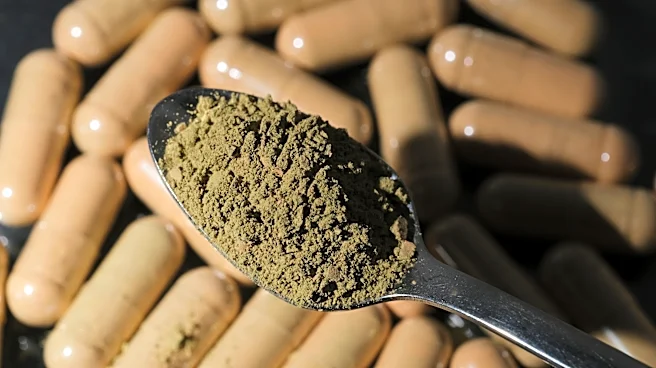
Kratom can be consumed by chewing the leaves or drinking them as a tea. It is also sold as a powder, capsule, tablet or extract. The effects can vary based on the amount consumed. Lower amounts may produce stimulant-like effects, while higher amounts can have sedating or opioid-like effects.
Kratom deaths in Mississippi: What we know
As reported by the Clarion Ledger, authorities looking into the deaths of two separate University of Mississippi students that occurred on the same day found packaged kratom during their investigation.
The Lafayette County Metro Narcotics team in Oxford, Miss., said the kratom was purchased from a retail store and was found as investigators worked to determine what happened to the students. Authorities have not confirmed the causes of the deaths, whether the two cases are connected or whether kratom or any other substance played a role.
Is kratom legal in North Carolina? NC kratom laws
CarolinaAttorneys.com offers a rundown on North Carolina's kratom laws on their website, explaining that possession of kratom or kratom-derived compounds mitragynine or 7-OH are not listed among the state's controlled substance schedules.
However, the website also notes that local rules may regulate sales, age limits and more despite the fact that there is no statewide ban. It also notes that, while the Tar Heel State has no kratom concentration considered comparable to .08 blood alcohol, kratom or 7-OH may qualify as an impairing substance when it affects physical or mental faculties, and lawful purchase or possession does not prevent a DWI charge.
Where is kratom banned in the U.S.?
According to the American Kratom Association, states where kratom is fully banned in 2026 include:
- Alabama
- Arkansas
- Connecticut
- Indiana
- Kansas
- Louisiana
- Tennessee
- Wisconsin
- Vermont
Are there federal laws about kratom?
There are no federal laws that place full bans on kratom. However, on July 1, the U.S. Drug Enforcement Administration announced that it plans to temporarily classify 7-OH and three related substances as Schedule I controlled substances, meaning they will be controlled as substances with no currently accepted medical use in the U.S. and high potential for abuse.
The DEA's action will not ban the kratom plant itself, as long as the plant contains less than DEA-specified amounts of 7-OH. The scheduling order has not yet been published, but could be issued at any time after Aug. 5 to take effect on the date specified in the order.
If the order takes effect, these substances would be categorized as Schedule I for up to two years, with the possibility of a one-year extension on scheduling if permanent scheduling proceedings are underway by that time.
Is kratom addictive?
MayoClinic.org explains that in a study testing kratom as a treatment for symptoms of opioid withdrawal, people who took kratom for more than six months reported withdrawal symptoms like those from opioid use.
The FDA has also received reports of harmful effects associated with 7-OH products, including anxiety, depression, gastrointestinal distress, insomnia, seizures and more.
Can you overdose on kratom?
The American Addiction Centers state that, while dying of a kratom overdose is "extremely unlikely," the substance has been linked to "a very small number of deaths." In numbers cited by the centers, the CDC linked kratom to 152 deaths between 2016 and 2017, with 87% of these deaths being associated with the use of more than one substance rather than kratom alone.
Iris Seaton is the trending news reporter for the Asheville Citizen Times, part of the USA TODAY Network. Reach her at iseaton@citizentimes.com.
This article originally appeared on Asheville Citizen Times: Is kratom legal in North Carolina? What to know after Ole Miss deaths