








North Carolina Wildlife Resources Commission reported a black bear swatted at a Western North Carolina resident after entering his home on Aug. 18. Here's a refresher on bear safety in the Tar Heel State.
An Aug. 19 news release from the N.C. Wildlife Resources Commission stated that a Buncombe County resident was injured by a black bear in north Asheville on Tuesday evening, Aug. 18. At around 8:30 p.m., an adult female bear entered a home through an unlocked door while her three cubs played on the front porch. The victim was injured while attempting to give the bear an escape route out of the home. The news release added that the victim sustained non-life-threatening injuries from the bear and was released after being treated at a local hospital.
While black bears are considered common in the mountain regions of North Carolina, bear attacks are extremely rare, with fewer than 100 fatal attacks having been reported throughout the state since the 1970s. Bear.org notes that even when a black bear attacks, it often does so via a "slap" featuring the animal's claws. However, the website adds that even these "slaps" are not generally damaging, usually just leaving welts.
"The damage from a slap is nothing close to the folklore that a bear can disembowel man or beast with a swipe of the paw," the website notes. "Black bear claws are strong for climbing trees, but not sharp for holding prey."
Here's what else to know about staying safe around bears in Western N.C. this summer.
Are black bears dangerous? What to do if you see a black bear
N.C. WRC BearWise coordinator Ashley Hobbs said in a 2024 news release that, while black bears are not generally dangerous and are rarely aggressive toward humans, people sharing territory with the animals should do their part to reduce the potential for conflict.
Black bear safety program BearWise recommendations include:
- Never feed or approach bears.
- Secure food, garbage and recycling.
- Remove bird feeders when bears are active.
- Never leave pet food outdoors.
- Clean and store grills and smokers.
- Alert neighbors to bear activity.
If you encounter a black bear, the National Park Service suggests:
- Remain watchful.
- Do not approach it.
- Do not allow the bear to approach you.
- If the bear is at a distance, feeding, or walking by and notices you but continues its natural behavior, no action is needed on your part. Proceed while continuing to observe the bear.
- If your presence causes the bear to change its behavior (stops feeding, changes its travel direction, watches you, etc.), you are too close.
- Being too close may promote aggressive behavior from the bear such as running toward you, making loud noises, or swatting the ground. The bear is demanding more space. Don't run, but slowly back away, watching the bear. Increase the distance between you and the bear. The bear will probably do the same.
How common are black bear attacks?
Black bear attacks are very rare, with bear-resistant tech company BearVault noting fewer than a dozen black bear attacks being reported each year.
How many people have been killed by black bears?
As of a 2024 report from BearVault, 66 fatal black bear attacks had been reported across the U.S. since 1974.
How many black bears live in North Carolina?
Described as common in coastal and mountain regions of the state but uncommon in the Piedmont region of North Carolina by the N.C. WRC, black bears are found in roughly 60% of the total land area of the state. As of 2012, an estimated 17,000 black bears lived in the state.

How big is the average black bear?
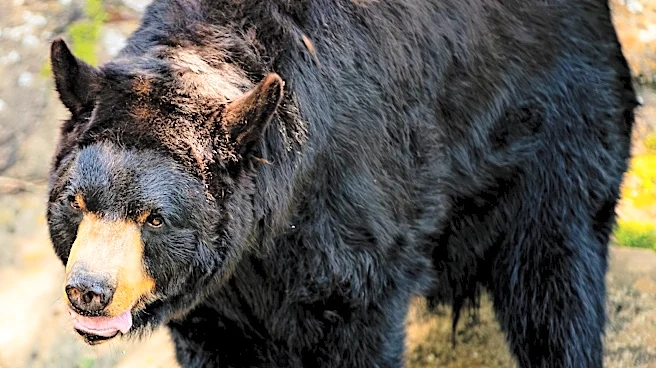
According to BearWise, the record weight for a black bear is over 800 pounds. Male black bears generally weigh between 130 and 500 pounds, while females are smaller at around 90 to 350 pounds.
How fast can black bears move?
Though they may not look it, black bears are surprisingly fast. They can sprint up to 35 miles per hour and climb 100 feet up a tree in 30 seconds.
Iris Seaton is the trending news reporter for the Asheville Citizen Times, part of the USA TODAY Network. Reach her at iseaton@citizentimes.com.
This article originally appeared on Asheville Citizen Times: Bear safety tips for Western North Carolina after bear attack