



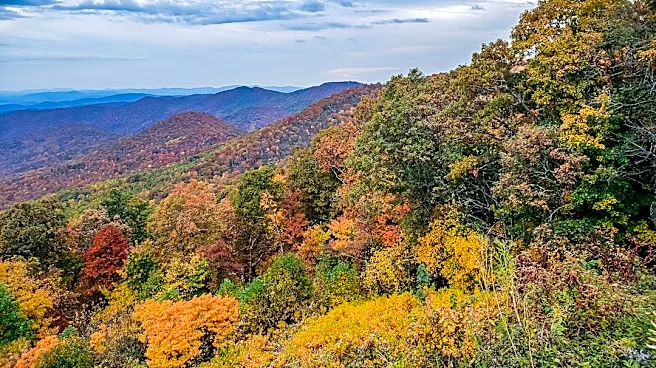

Three weeks after Hurricane Helene put western North Carolina through the worst days in its modern history, Buncombe County held an election in which turnout went up.
More than 116,000 people voted early – more than 53 percent of registered voters, and nearly 10,000 more early ballots than the county had ever recorded, at a time when much of Asheville still had nothing safe coming out of the tap. Corinne Duncan, Buncombe's director of elections, said at the time that she was “in awe that even amidst this storm recovery ... voting is still a priority.”
I have spent much of this year asking election officials how that happens. The answer is never the one people expect.
On the second anniversary of the storm, community members turned up to Pack’s
Tavern in downtown Asheville for Vet the Vote’s “Come Hell or High Water: Elections in the Wake of Natural Disasters” – the third stop in a series we’ve organized this year alongside hurricane anniversaries in Houston, Tampa Bay and now North Carolina. Our panel reflected on that fateful season in 2024: not the version that made national news, but the behind-the-scenes operations.
They recounted how Buncombe County entered October with roughly 80 Election Day polling places, every one of which had to be physically inspected before a single voter could use it. There was no realistic way to check them all, confirm they were usable, and staff each one on the schedule the calendar allowed. The State Board of Elections authorized modified procedures for the hardest-hit counties. Buncombe's board used that authority to build its plan around 10 early voting sites, open 9 a.m. to 5 p.m. every day, including weekends, from October 17 through November 2.
Read that as a scheduling decision and it sounds purely administrative. Read it for what it was, and a deeper reality emerges: the county reshaped an entire election around the number of trained people it could count on. Early voting requires fewer locations and fewer workers than Election Day does. That was the point.
This is the thread running through all three events. In Houston, in Tampa Bay, and now in Asheville, I have not once heard an election official say the rules failed them or the equipment let them down. What they describe instead is people: how many workers could be trained in time, how many of them still had a house, and how many stood at a check-in table at 6 a.m. anyway.
That last part is what I keep coming back to. The most important piece of election infrastructure in this country is not a machine or a statute. It is a neighbor who agrees to spend one long day helping other neighbors vote. Plenty of the people who ran those ten sites in Buncombe County were serving communities hit as hard as their own, sorting out insurance and mud in the same weeks. They showed up, and 116,000 people got to vote because they did. Vet the Vote exists to grow that group, especially our nation’s veterans and military family members who are unusually good at this work.
Election offices need people they can train quickly, assign where the need is greatest, and trust to run a written procedure exactly as written — no improvising at the margins. Service members spend their careers holding a standard when conditions are bad and the day is long. Military families spend years arriving somewhere unfamiliar and making themselves indispensable. They know how to be counted on and how to adjust when a plan changes at the last minute.
If you served, or your family served, your county board of elections would be glad to hear from you. Boards across Western North Carolina are filling seats for this November and building rosters for future elections. No experience required; a free day and a willingness to learn are the only prerequisites for the job. 6,855 veterans and military families in North Carolina have signed up through Vet the Vote to become poll workers.
Buncombe County proved something in 2024 that is easy to say and hard to earn: an election is only ever as strong as the number of people who decide, ahead of time, to be there for it.

Ellen Gustafson is the co-founder and executive director of Vet the Vote, a nonpartisan initiative of We the Veterans & Military Families that recruits veterans and military family members to serve as poll workers.
This article originally appeared on Asheville Citizen Times: Opinion: Buncombe County's voter turnout increased after Helene. Grit Is only half the explanation