








A notice issued by the U.S. Centers for Disease Control and Prevention has warned of a rise in reports of human exposures to rabid or possibly rabid animals in recent months.
The Health Alert Network Health Advisory was issued Sept. 10. The alert came weeks after the North Carolina Department of Health and Human Services issued a news release regarding a potential rabies exposure among four baby goats at Farm Adventures in Harmony on Aug. 27, as reported by the Citizen Times.
The infected baby goats were taken to at least seven North Carolina counties as part of a traveling petting zoo, resulting in potentially hundreds of exposures across the state. The incident was one of several mass exposure events reported in recent months by the CDC.
Are rabies cases rising in the U.S.?
While
a rise in confirmed cases of rabies in humans has not been confirmed, a Health Alert Network Health Advisory was issued by the CDC on Sept. 10 in response to increased reports of human exposures to rabid or possibly rabid animals and errors in the administration of rabies post-exposure prophylaxis, also known as "PEP."
According to the CDC, multiple U.S. jurisdictions have reported local increases in human rabies exposures since July 2026, particularly in exposures involving known rabies vectors or animals in which rabies is less commonly reported.
The alert noted that health departments "can help clinicians who provide rabies vaccination in their jurisdictions stay aware of the importance of rabies risk assessments before administering PEP," working to ensure that PEP is only given when appropriate and that human rabies immune globulin or "HRIG" and rabies vaccines are administered according to the proper recommendations.
What medications are given to treat rabies in humans?
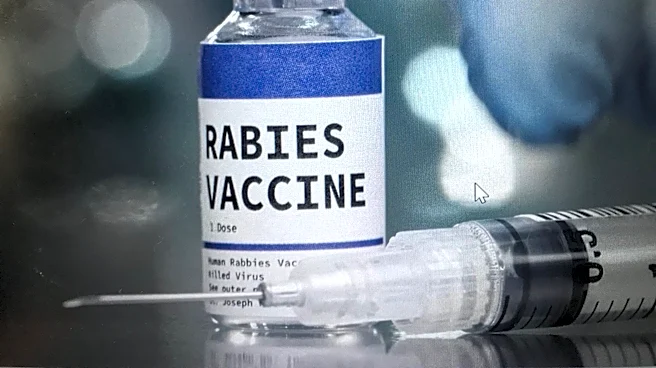
As explained in the CDC alert, rabies is almost 100% fatal, but is preventable when preventative medications are given appropriately before symptoms begin. Rabies PEP recommendations from the Advisory Committee on Immunization Practices include:
- Wound care
- A dose of HRIG, with U.S. approved medications including KEDRAB and HyperRab
- A rabies vaccine - U.S. approved vaccines include Imovax (HDCV) and RabAvert (PCECV) - given at the time of the first medical visit, with follow-up doses given on days 3, 7 and 14 after the first dose
The CDC reported that according to weekly pharmacy data from Sept. 2, utilization for U.S. licensed rabies vaccines and rabies immunoglobulins increased by an estimated 33% and 76%, respectively, compared with the same time period last year.
Can rabies be cured?
The Cleveland Clinic explains that there are no approved treatments for rabies once symptoms have begun.
Worms & Germs, a blog devoted to safe pet ownership, reported Jan. 12 that only 34 documented cases of rabies survival have been reported, with an even smaller number of people having survived without long-term neurological deficits.
In particular, a treatment regimen called the "Milwaukee protocol," in which anesthetic drugs used to put the patient in a coma and slow brain function are combined with antivirals and intensive care, has been successfully used to treat rabies.
Rabies cases in the U.S.
Between July and August 2026, the CDC received 17% more rabies-related inquiries during the same period in 2025, including reports of mass exposure events such as the event reported in the Tar Heel State in late August 2026.
The CDC reported that each year, an estimated 1.4 million people in the U.S. seek medical care after animal contact and undergo evaluation, and roughly 100,000 people receive rabies PEP following a potential exposure.
Rabies cases in North Carolina
A recent N.C. Department of Health and Human Services statement noted that human rabies infections are "extremely rare" in the U.S., and no human cases have been reported in the state since 2011.
How is rabies spread?
The N.C. DHHS states that rabies can be spread from wild animals to pets and people primarily through bites, scratches, or infected saliva touching broken skin or mucous membranes.
What animals can carry rabies?
Though any mammal can carry and spread rabies, Mayo Clinic states that pets and farm most likely to transmit the rabies virus include cats, cows, dogs, ferrets, goats and horses. Wild animals most likely to spread the virus include bats, beavers, coyotes, foxes, monkeys, raccoons, skunks and woodchucks.
Iris Seaton is the trending news reporter for the Asheville Citizen Times, part of the USA TODAY Network. Reach her at iseaton@citizentimes.com.
This article originally appeared on Asheville Citizen Times: CDC raises rabies concerns in US. Comes after NC baby goats test positive