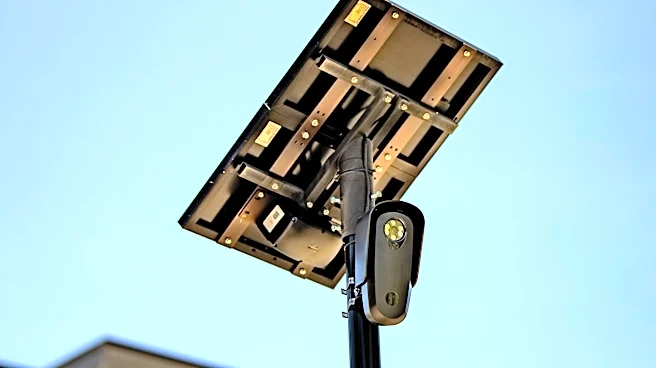





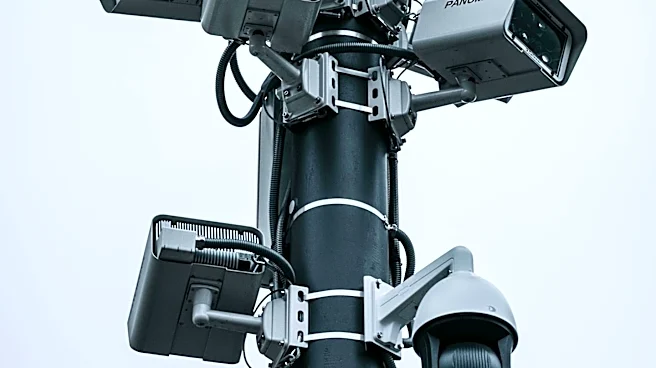



The Asheville Police Department’s policy manual assures readers that officers will use automated license plate recognition systems — cameras and software provided by companies like Flock Safety and Axon — “responsibly and professionally, in accordance with all applicable laws and directives.”
Among those promises is a quarterly audit of “ALPR system use and effectiveness.” But APD’s latest audit, released Aug. 6, failed to convince some community members that the department’s scrutiny is effective.
As presented during public comment at Asheville City Council’s Oct. 13 meeting by resident Rachel Cohen, the entire audit consisted of five sentences. It was prepared by Lieutenant Josh Meindl, the APD’s intelligence section lieutenant.
The document
noted that outside agencies had conducted over 2.75 million searches of the city’s ALPR system from April through June. While Meindl wrote that all of those searches had “provided a reason for the search,” he did not specify what those reasons were, nor which agencies had requested access.
Cohen called that lack of detail a serious oversight. She pointed to recent reporting by the Electronic Frontier Foundation, a nonprofit advocate for digital privacy, which found that dozens of officers had provided reasons like “I don’t know,” “TBD,” “LMAO,” and “gyghkkghghjkghjk” to justify their use of surveillance tools.
“Can you honestly guarantee that there was a valid reason for every search?” asked Cohen. “Are you 100% confident that none of the unidentified external agencies used information from these searches to racially profile residents, penalize immigrants, track someone traveling for an abortion, or investigate protesters whose speech they don’t like?”
Meindl’s audit also included information about the APD’s internal searches, finding that 100% of searches had included a reason and 90% were associated with a specific case. While it referenced a table with further information, that data was not included in the publicly available version of the report.
APD policy requires that “all users are appropriately trained” before accessing the system. It also says that “ALPR data will be shared with another law enforcement agency or prosecutor only for an official criminal investigation.” The audit did not provide details to verify that either of those policy mandates were met.

The Citizen Times provided a series of questions about the audit to APD spokesperson Rick Rice the morning of Oct. 14. On Oct. 15, Rice declined to provide an estimate for when the department would respond.
"There is a process with questions/answers that affect multiple departments. That process ensures accuracy and accountability, but it takes time," Rice wrote via email.
The criticism comes at a pivotal time for the APD, which just appointed Jackie Stepp as its permanent chief. City Council voted to end Asheville’s contract with Flock in late August, but it continues to build out a real-time intelligence center powered by Axon technology.
ALPRs also remain controversial at the national level, with the Senate Judiciary Subcommittee on Crime and Counterterrorism holding a hearing on the matter Sept. 23. Earlier this month, a federal district judge in Oklahoma ruled that Flock and similar systems represented “indiscriminate mass surveillance” that could violate the Fourth Amendment’s protection against unreasonable searches.
Asheville’s legal staff had issued a memo to City Council in August stating that ALPRs did not violate Fourth Amendment rights. Asked for comment on the new federal development, City Attorney Brad Branham wrote that the Oklahoma decision did not change Asheville’s position, which is based on case law from the federal court circuit covering Western North Carolina.
“This most recent decision out of Oklahoma does create an inconsistency in the law, raising the likelihood that the issue will need to be addressed by the U.S. Supreme Court,” Branham added.
Daniel Walton is the City Government Watchdog Reporter for the Asheville Citizen Times. Email him at dwalton@citizentimes.com, and connect with him on social media through Facebook, Instagram, or Reddit.
This article originally appeared on Asheville Citizen Times: Five-sentence "audit" raises questions on Asheville police tech use