



As July comes to an end, the full moon will rise over Western North Carolina.
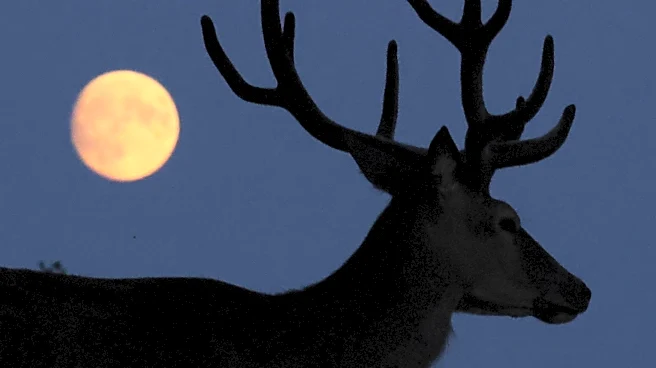
An exact month after June's full "Strawberry Moon" reached peak illumination on Monday, June 29. This month's full moon, often referred to as the "Buck Moon," will reach its peak, giving stargazers a dazzling view of the moon even after it reaches its peak during daytime hours.
And it isn't the only celestial event that is on the horizon for Western N.C.
Additionally, as previously covered by the Citizen Times, the Perseids meteor shower, considered one of the most spectacular yearly showers observable from the U.S., is underway. Peak activity for the shower is expected in several weeks during early August.
Here's what to know about July's full moon, plus a quick rundown
on how to view the Perseid shower in Western North Carolina.
When is the next full moon?
July's full moon will rise on Wednesday, July 29, reaching peak illumination at 10:36 a.m., according to the Old Farmer's Almanac.
When was the last full moon?
June's full "Strawberry Moon" reached peak illumination last month on Monday, June 29, at 7:56 p.m.
Why is July's full moon called the Buck Moon?
The Old Farmer's Almanac says that the 12 full moons each year are named by Native Americans, according to previous reporting by the Hendersonville Times-News. UNC Asheville Associate Professor of Astronomy Britt Lundren reminded readers that, when sharing the titles of the monthly moons, it's important to remember the cultural diversity of tribes in the U.S.
"Each tribe has a close relationship with the land, and their moon names will reflect the seasonal changes unique to their environments," Lundren said.
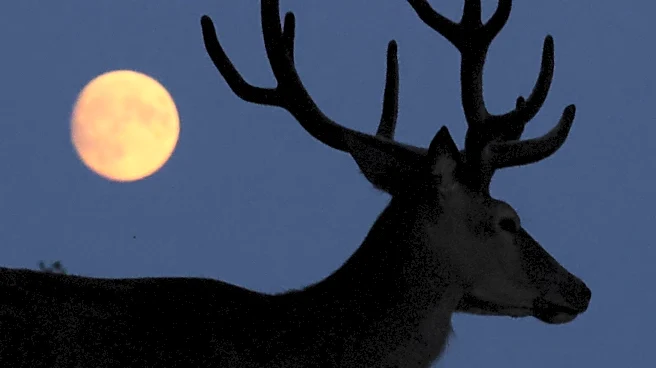
The Buck Moon refers to July being peak season for antler regrowth among many male deer. According to the Old Farmer's Almanac, some other names for the July full moon include:
- Feather Moulting Moon (Cree)
- Salmon Moon (Tlingit)
- Berry Moon (Anishinaabe)
- Moon When the Chokecherries are Ripe (Dakota)
- Month of the Ripe Corn Moon (Cherokee)
- Raspberry Moon (Algonquin, Ojibwe)
- Thunder Moon (Western Abenaki)
- Halfway Summer Moon (Anishinaabe)
Is there a supermoon this month? When is the next supermoon?
No, July's full moon is not a supermoon. The January Wolf Moon was the first supermoon of 2026, and the next supermoon will fall on Nov. 24.
How many supermoons are there in 2026?
The almanac lists three supermoons in 2026:
- Wolf Moon, Jan. 3
- Beaver Moon, Nov. 24
- Cold Moon, Dec. 23
When is the Perseid meteor shower?
As previously reported by the Citizen Times, the full moon isn't the only astronomical event of the month. The Perseids meteor shower will be visible July 14-Sept. 1, and are expected to peak at 9:53 a.m. on Aug. 13.
Full moon names 2026
Here's a list of the full moon names, courtesy of the Old Farmer's Almanac:
- January - Wolf Moon
- February - Snow Moon
- March - Worm Moon
- April - Pink Moon
- May - Flower Moon, Blue Moon
- June - Strawberry Moon
- July - Buck Moon
- August - Sturgeon Moon
- September - Corn Moon (also the Harvest Moon in 2026)
- October - Hunter Moon (was the Harvest Moon in 2025)
- November - Beaver Moon
- December - Cold Moon
Iris Seaton is the trending news reporter for the Asheville Citizen Times, part of the USA TODAY Network. Reach her at iseaton@citizentimes.com.
This article originally appeared on Asheville Citizen Times: July's 'Buck Moon' in Western North Carolina peaks. When to see it