





ASHEVILLE - A congressional race that began as a longshot Democratic challenge has become one of North Carolina’s most unpredictable political contests, with a censured incumbent, a hastily selected Republican replacement, a nationally recognized interview debacle and three candidates offering sharply different answers to the region’s affordability crisis — all as control of the U.S. House of Representatives hangs in the balance.
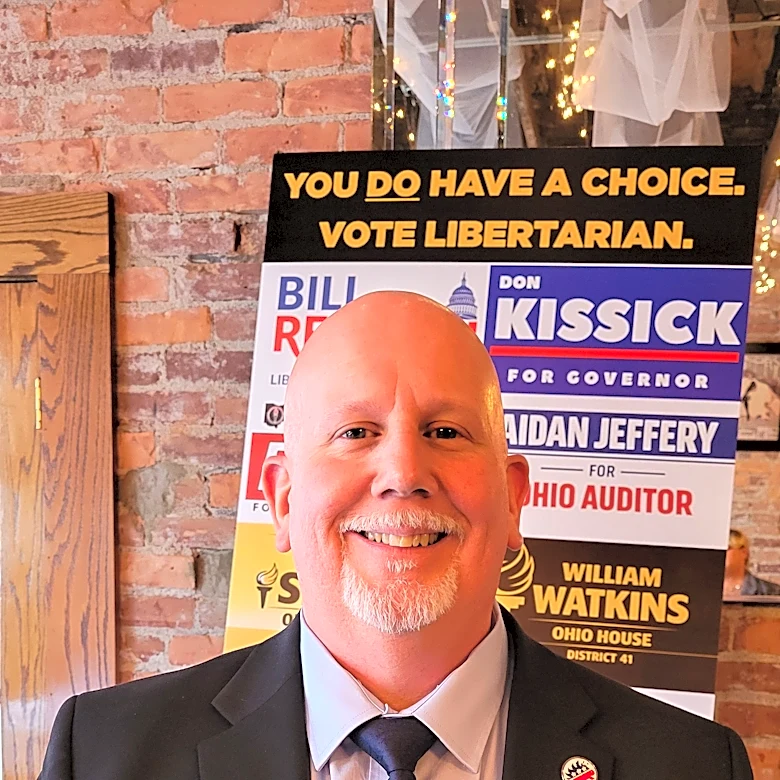
Democrat Jamie Ager wants to make Washington work for struggling families. Republican Jennifer Balkcom is running on her conservative legislative record, though her public comments have raised questions about her policy plans. Libertarian Travis Groo wants government out of the way altogether.
Voters will decide Nov.
3 who represents Western North Carolina’s 11th Congressional District, a Republican-leaning, 16-county district where Tropical Storm Helene recovery, rising prices and national political turmoil have complicated what once appeared to be a relatively predictable election.
How the NC-11 congressional race unraveled
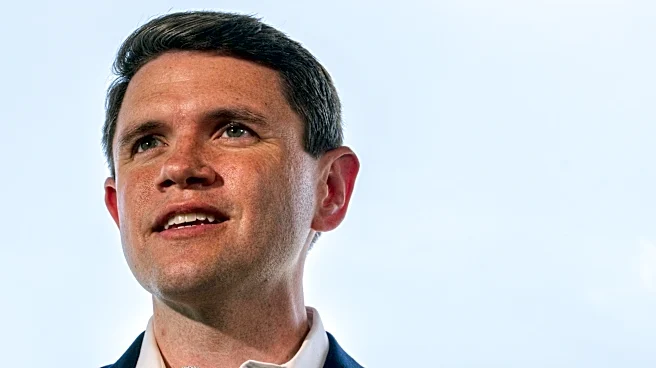
Ager, a fourth-generation farmer from Fairview, entered the race in July 2025. The co-founder of Hickory Nut Gap Farms comes from a politically prominent family. His grandfather, Jamie Clarke, served in Congress, while his father, John Ager, and brother, Eric Ager, have served in the North Carolina House.
His campaign emphasized agricultural roots, small-business experience and dissatisfaction with Washington’s handling of Helene recovery, two years after the storm killed more than 100 people and caused $60 billion in damage.
On Feb. 23, the Democratic Congressional Campaign Committee named Ager to its prestigious Red to Blue program, providing organizational, financial and strategic support for candidates seeking to flip Republican-held districts. The announcement sparked controversy because four other Democrats were still competing for the nomination. Three of them — Richard Hudspeth, Zelda Briarwood and Paul Maddox — joined a national protest accusing party leadership of interfering in primary elections before voters had selected their nominees. Ager ultimately won the March 3 primary with nearly 65% of the vote.
His expected opponent, Republican incumbent Chuck Edwards, had his own problems.

A House Ethics Committee investigation into Edwards’ treatment of two female staffers produced findings of persistent inappropriate and unprofessional conduct, including sexual harassment. Edwards disputed the findings but abandoned his reelection campaign Aug. 5 after the committee recommended censure. The House subsequently censured Edwards by a 413-2 vote. He remains in office, although his withdrawal transformed a contest already drawing national attention into an unexpected scramble for Republicans.
Republicans choose Balkcom after Edwards withdrawal
Several prominent Republicans declined opportunities to replace Edwards, including state senators Tim Moffitt and Kevin Corbin, state Rep. Jake Johnson and former Green Beret Adam Smith, who had challenged Edwards in the Republican primary.
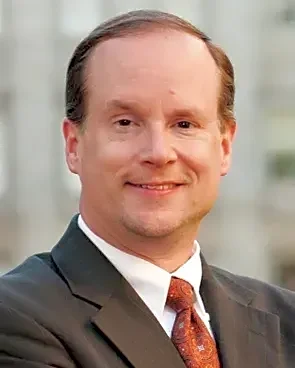
Balkcom, a Henderson County mortgage loan officer serving her second term in the General Assembly, initially supported Moffitt before announcing her own candidacy.
On Aug. 10, Republican district leaders selected Balkcom on the first ballot from a field of six candidates. Balkcom was previously a Libertarian until 2005 and then a Democrat until 2016.
With less than three months remaining before Election Day, Balkcom faced the challenge of establishing a congressional campaign against a well-funded Democrat who had been campaigning for more than a year. During a September interview with Spectrum News, Balkcom was asked whether Edwards, whom she agreed should have been censured, should resign from Congress. A 13-second silence followed.
“I’m not sure. I’m not sure,” she eventually answered. “I mean, he messed up. I think he needed to decide to resign. We’ve censured him, and that’s kind of where I’d leave it. I’m not sure.”

Asked what Congress should specifically do to reduce prices, Balkcom replied, “I’m not sure yet. I have a couple ideas, but I’m not sure which one I would actually implement yet.”
She similarly declined to endorse restrictions on presidential tariff authority without reviewing the legislation.
Asked about analyses warning that Medicaid reductions could threaten rural hospitals, Balkcom said she needed to examine the figures before commenting. When Spectrum supplied additional information, she reiterated, “I’m not sure about that one.”
The interview drew widespread attention, eventually reaching HBO’s “Last Week Tonight,” where comedian John Oliver ridiculed Balkcom during his Oct. 4 program. Balkcom thus joined a peculiar tradition of Republicans congressmen from the rural, out-of-the-way 11th District attracting national late-night television derision, following Mark Meadows, Madison Cawthorn and Edwards.
Balkcom’s legislative record on affordability
Balkcom’s campaign spokesperson Courtney Taylor told The Citizen Times Oct. 2 that she wasn’t available for a campaign interview, citing scheduling. The Citizen Times requested a copy of Balkcom’s schedule to verify the claim. None was ever provided. There are no campaign events listed on her campaign website, nor does she list any policy proposals, however, Balkcom’s record in the General Assembly does speak to her legislative priorities over the past four years.

Balkcom voted against a proposal to gradually raise North Carolina’s $7.25 minimum wage to $13.50 by 2029, with inflation adjustments beginning in 2030.
She supported state budgets that child-care advocates criticized for failing to provide sufficient funding to prevent closures and rising costs for parents. Those same budgets advanced corporate income tax reductions, including the eventual elimination of the state corporate income tax, which critics argue reduces revenue available for public services.
She supported legislation expanding taxpayer-funded private-school vouchers, including eligibility for wealthy families, even as public schools faced funding pressures.
She even voted against a 2025 amendment providing more than $187,000 in recurring funding for additional landslide-hazard mapping — an issue of particular significance in mountain communities devastated by Helene.
Ager prioritizes costs and recovery
Ager sees the affordability crisis as inseparable from decisions made in Washington, particularly the war in Iran, tariffs and health care policy. First, he argues that ending the war would ease fuel prices, while removing unpredictable tariffs would give businesses greater stability.
“Getting inflation under control is just a core problem,” Ager told the Citizen Times Oct. 6. “When your costs go up, you have to raise prices to your customers, and that just kind of ends up in a never-ending cycle.”

Housing requires a more localized approach, he said, including reducing unnecessary regulatory barriers, increasing supply and working with local governments to address different communities’ needs.
Ager supports a reasonable minimum wage, arguing it can help establish expectations for employers and improve workers’ earnings.
On child care, he favors examining additional subsidies and better funding for programs including Smart Start and Head Start, while reconsidering regulations that increase providers’ expenses.
Health care presents a more immediate emergency. Ager wants Congress to restore expired Affordable Care Act premium subsidies and protect rural hospitals from Medicaid reductions. Longer term, he supports comprehensive health care reform.
He criticized the administration’s handling of Iran, calling the war a mistake that has harmed Western North Carolina businesses and families, and supports congressional authority over military decisions.
Immigration policy, Ager said, should combine stronger border security with a path to legal status for longtime residents who have established families, worked and paid taxes. He also wants a faster legal immigration process and criticized immigration enforcement involving masked agents and unmarked vehicles.

Helene recovery remains a central campaign priority. Ager criticized Balkcom and the Republican legislative majority for not doing more to secure recovery funding, arguing that lawmakers representing affected communities should have pressed harder for assistance.
National political headwinds, he believes, are helping his campaign as voters express frustration with incumbent Republicans. A Democratic House majority could pursue investigations of the Trump administration, but Ager cautioned against making impeachment or congressional inquiries the party’s central focus.
“I think from a priority standpoint, from an order of operations standpoint, it’s about Helene recovery money first,” he said. “If I have to choose, clearly we're going to choose what's good for Western North Carolina.”
Libertarian Travis Groo offers a third option for voters
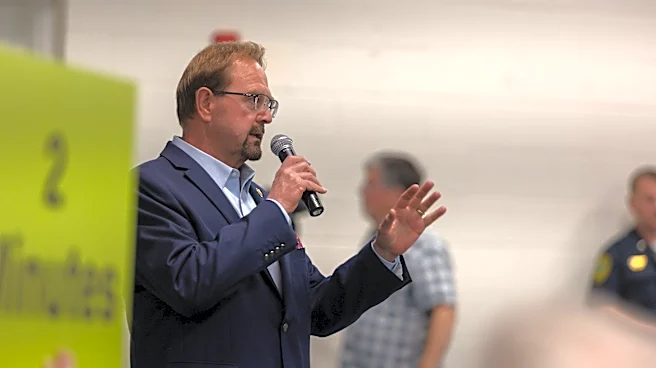
Libertarian Travis Groo approaches the contest from a fundamentally different political perspective.
Born near Dallas, Texas, Groo moved to Florida as a teenager and earned a communications degree from the University of West Florida. He worked in advertising before joining Old Dominion Freight Line more than two decades ago, eventually becoming a corporate safety specialist. He lives in Sanford, outside the 11th District, and previously ran unsuccessfully for the state House, state Senate and Holly Springs Town Council.
Groo describes libertarianism as a philosophy emphasizing personal autonomy, limited government and individual rights, sometimes occupying positions associated with both major parties.

“We're big on individual rights, and we just want to keep the government out of our pocketbooks and out of our bedrooms, where we don't feel like it's any of their business,” Groo told the Citizen Times Oct. 6.
That philosophy informs his support for abortion rights, expansive gun rights, the legalization of personal drug use and opposition to government involvement in marriage.
On affordability, Groo advocates reducing or eliminating taxes on essential purchases, including gasoline, utilities and medical services. He believes increased housing construction and relaxed zoning restrictions would lower housing costs more effectively than permanent government subsidies.
Unlike Ager, Groo favors abolishing the federal minimum wage entirely, arguing that wages should be determined by worker skills and market competition rather than government mandates.
His approach to child care emphasizes lower living expenses and increased competition rather than large public subsidies.
On health care, Groo wants to eliminate certificate-of-need restrictions that limit medical providers’ ability to expand services. He also advocates greater price transparency and restrictions on surprise medical billing.
Foreign policy offers another distinction. Groo opposes American military involvement in Iran, and elsewhere.

“End all wars, bring all of our troops home immediately and mind our own business,” he said.
On immigration, Groo wants a dramatically simplified legal entry process and supports granting citizenship to undocumented immigrants who have lived peacefully in the United States without committing crimes involving victims.
He assigns Balkcom some responsibility for the slow Helene recovery but reserves his strongest criticism for the Federal Emergency Management Agency, which he accused of obstructing local relief efforts. Groo supports an investigation and audit of the agency. Groo also favors investigating the handling of Jeffrey Epstein-related records and questioning federal officials about tariff revenues, although he is considerably less enthusiastic about impeaching Trump — partly because doing so would elevate Vice President JD Vance.
“Is he better or worse? I don't know,” Groo said. “I love the idea of talking about (impeaching Trump), but what do you impeach him on? Just being an idiot?”
Cory Vaillancourt is the Helene Recovery/Investigations Reporter for the Asheville Citizen Times. Find him on X at @The_CoryV or on Signal, via email at cvaillancourt@citizentimes.com or at 912-508-5640.
This article originally appeared on Asheville Citizen Times: Scandal reshaped NC-11 race. Now, 3 candidates fight to represent WNC