




Three incumbents, three challengers, three seats for the taking — three has been the number defining the 2026 midterm election for Asheville City Council.
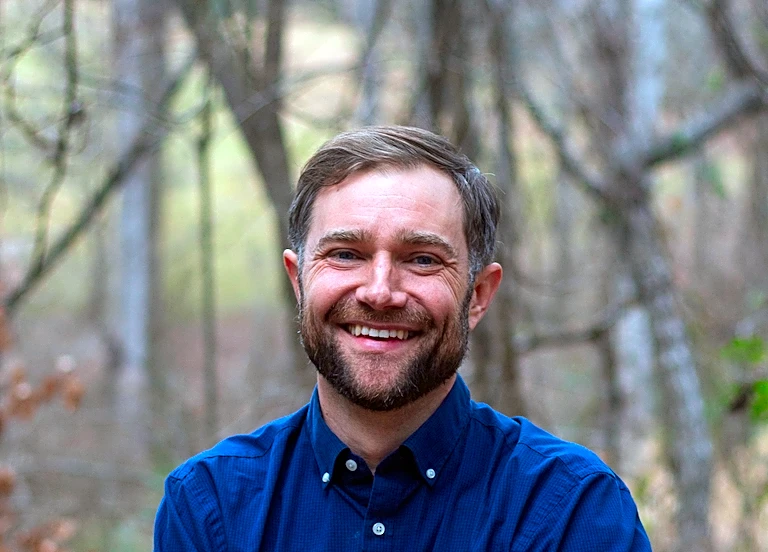
The first trio consists of Vice Mayor Antanette Mosley, Council member Sheneika Smith, and member Maggie Ullman (listed as Maggie Ullman Berthiaume on the ballot). The triad of challengers includes current Buncombe County Board of Commissioners member Drew Ball, River Arts District Artists President Jeffrey Burroughs, and former Council member Keith Young.
Those six hopefuls emerged from a 20-person primary earlier this year. Ball and Ullman had the strongest showings in March, with each winning more than 16% of the vote; none of the other qualifiers earned more than 7%. Voters will choose three
of candidates in November’s election.
Yet another number arguably matters more: four years, the length of the term that victors will serve on Council. The Citizen Times asked each of the candidates to describe their approach to handling Asheville’s business far beyond election season, on issues such as the city’s projected budget gaps, infrastructure needs, and follow-through on existing government plans.
The candidates’ responses are presented in alphabetical order, as they are listed on the midterm ballot.
Drew Ball
When it comes to resolving Asheville’s budget issues, Ball said he would throw his full weight behind City Manager DK Wesley. The two worked together extensively when Wesley served as Buncombe County’s assistant county manager, and Ball said she had helped guide the county through the fiscal challenges of the COVID-19 pandemic and Tropical Storm Helene.

“I’ve got a lot of faith that she’s going to put the nose to the grindstone and really focus on resolving a lot of this,” said Ball. “It’s really working in close partnership with your city manager and ensuring that she has a Council that can support her in difficult decisions to balance the budget.”
Ball also said he’d prioritize relationship-building in Raleigh to help secure state resources and protect Asheville from unfunded mandates. He’s skeptical of raising property taxes, in recognition that many vulnerable residents live on fixed incomes. But he’s open to more targeted ways to generate revenue, such as voter-approved bond issues and special tax areas like the downtown Business Improvement District.
On infrastructure, Ball sees greater opportunities for the city to share costs. He pointed to federal and state support for core services like water treatment and transportation, with private partners and nonprofits backing amenities like a new performing arts center or greenways. “Folks like RiverLink, MountainTrue — these are really awesome partners that expand our capacity, so we should be very eager to bring them to the table and give them ownership over delivering a lot of these services,” he said.
As he considers the next four years, Ball said the city should work on fulfilling promises it’s made to the community. He flagged Asheville’s Municipal Climate Action Plan as one that could save taxpayers money through reducing energy costs. “I think we’ve made some significant promises in our reparations planning that I think we owe it to the community to live up to,” he added.
Maggie Ullman Berthiaume
Ullman said her budgetary approach over the next four years will be on slowing Asheville’s spending. By pausing hires for certain staff vacancies, as well as tightening the reins on contractors and consultants, she hopes to narrow the gap between city expenses and revenues.

She also referenced her work creating coalitions for the region to seek Helene-related funding from North Carolina and the federal government. Through the WNC Recovery and Resilience Partnership — a group of local government leaders on which Ullman is one of the few Democrats — she said she’d helped unlock $20 million in state money for flood resilience work.
”Asheville’s been this blue dot in a red sea,” Ullman said. “The way to be working on this is through bipartisan relationship building and our leaders really coming together to find commonality.”
The incumbent’s top budget priority, she continued, will be infrastructure. An anticipated billion dollars in federal recovery money, Ullman said, will let the city ”leap forward” on bolstering the resilience of its facilities. Like Ball, she favors using public-private partnerships to share costs where appropriate, pointing to the recently completed renovations of the Asheville Tourists baseball stadium as a successful example.
Rather than name specific priorities Asheville needs to revisit, Ullman said she was looking forward to Council’s upcoming strategic planning process. After Buncombe County started developing such plans in 2019, she said, the county had shown “better focus and delivery” on long-term goals like affordable housing.
“Just like if you were going to do a home project, we can do anything you want, but we can’t do everything you want,” said Ullman. “We need to focus and prioritize our resources, and the strategic planning process is a new method that we have not tried and is best practice.”
Jeffrey Burroughs
Instead of raising taxes or drastically slashing costs, Burroughs's emphasis for fixing Asheville's budget is economic growth. "People need to know that the city will prioritize creating the conditions that lead to more opportunity for more people," the candidate wrote to the Citizen Times.

Burroughs, who uses they/them pronouns, suggested that Asheville should stimulate that growth through smart allocations of Helene funding and other city resources. As a small business owner in the River Arts District, they said, they had firsthand experience of the need for infrastructure investments and other public programs to accelerate economic recovery.
Dependability is Burroughs's watchword for infrastructure. With prioritizes on critical systems like water, stormwater, roads, trash, and transit, they would combine bonds, grants, and recurring city dollars to make ongoing investments in maintenance.
"Preventing displacement, fixing infrastructure before it fails, and reducing future costs of climate change are fiscally responsible choices," Burroughs wrote.
Burroughs also criticized the city for what they called a lack of "consistent follow-through at the scale and speed required to meet the moment." The largely unimplemented 2018 Transit Master Plan, they wrote, was a perfect example of a project that would make the community more livable if given adequate government support.
The candidate was also realistic about Asheville's limitations. They flagged the city's 2020 "climate emergency" declaration, and the accompanying goal of powering 100% of government operations with renewable energy by 2030, as an area where Council needed to be honest with the public.
"At this point, we are not on track to meet that commitment," Burroughs wrote. "Carrying this forward without amendment does nothing for the climate and costs us credibility the next time we ask people to believe a target."
Antanette Mosley
Mosley, who voted against this year’s city budget, told the Citizen Times that Asheville needed to rein in its spending before raising taxes on residents. She also recommended that Council take a multi-year approach to budgeting, rather than addressing each fiscal year on its own.

“We need a comprehensive review of administrative costs, vacant positions, contracts, consulting expenses, and programs that may be duplicative or failing to produce measurable results,” Mosley wrote. “My priority is protecting essential services while making sure we’re spending taxpayers’ dollars responsibly.”
The incumbent vice mayor would apply similar discipline to infrastructure work, with a focus on maintaining core services and a skepticism toward new projects without clear long-term funding plans. Mosley flagged deferred maintenance as a particular concern, with fixes in the present helping Asheville avoid even costlier repairs in the future.
On the city’s long-term plans, Mosley said addressing transit was an immediate priority, given its importance to vulnerable community members. She referenced her opposition to recently proposed changes for Asheville’s bus system, which would have expanded service on the most-travelled routes by cutting service to areas with less ridership.
“We also need to determine which reparations recommendations can be implemented, establish realistic timelines for our renewable energy goals, and identify the resources necessary to move forward,” Mosley wrote. “That requires building consensus, setting achievable priorities, and being honest with the public about what we can accomplish and how we intend to pay for it.”
Sheneika Smith
Smith said she’d be examining city contracts and staff salaries as areas of possible savings for Asheville’s budget in the years to come. She referenced upcoming studies of compensation as critical for understanding where the city may be overpaying and “where we can potentially trim some fat.”

On the revenue side of the budget, Smith said Asheville “should aggressively pursue” a city food and beverage tax, an option Mayor Esther Manheimer and other Council members first floated in 2018. Some other North Carolina governments — including the city of Charlotte and Wake, Dare, Cumberland, and Mecklenburg Counties — do have a 1% levy on prepared food, but the state legislature must approve any such tax.
“It’s always been on the table, but we’ve never actually pushed in to see what the results will be,” she said.
Smith’s remarks on infrastructure focused on transportation, where she said Asheville had a great opportunity to partner with Buncombe County. By adopting a regional outlook, she explained, the two governments could pool resources and better serve residents.
Like her fellow incumbent Ullman, Smith said she believed Asheville’s strategic planning process would give the city the chance to revisit and prioritize its existing plans. Whatever emerged from that process, she continued, should recognize the realities of the post-Helene landscape.
“Because we’re still in this window of recovery, we should align those plans with recovering from the storm, potentially leveraging some of the funds that come from recovery,” said Smith. “As a Council, I think we can decide what plans we shelve and what plans we bring to the forefront because of our immediate recovery needs, or maybe some unmet needs that we have yet to discuss.”
Keith Young
Young plans to draw on his previous Council experience to take a closer look at Asheville’s current budget. While he noted that elected officials have limited control over many city expenses, he said staffing, contracts, operations, vacancies, assets, and service delivery all deserved more scrutiny.

“What concerns me is allowing property taxes to become the release valve every time expenses and revenues don’t match,” Young wrote to the Citizen Times. Asheville is already becoming harder to afford. We can’t talk about affordability on one side of our mouth and automatically pass higher costs onto residents with the other.”
Young does want the city to invest in water, stormwater resilience, and transportation as key infrastructure needs. But beyond those core needs, he believes, Asheville should be much more discerning when it sets priorities for capital projects.
“We’re going to have to tell people the truth: We can’t do everything at once. I would rather make that choice deliberately than wait until something fails and makes the choice for us,” wrote Young.
The former Council member had especially strong words about the city’s progress on reparations, which he was largely responsible for pushing through Council in 2020. After hisreelection loss later that year, he said, Asheville put money toward planning and administration, but very little actually reached the Black people reparations were intended to help.
“I didn’t write that resolution so Asheville could spend years discussing reparations, spending money on consultants, and then acting as if none of this ever existed, just like the other policies that have since fallen to the wayside,” Young wrote. “The purpose was to begin repairing some of that damage and help preserve the community that remains.”
Early voting for Asheville and Buncombe County’s midterm elections runs through Saturday, Oct. 31. Election Day is Tuesday, Nov. 3. More information on where and how to vote is available through the Citizen Times voter guide.
Daniel Walton is the City Government Watchdog Reporter for the Asheville Citizen Times. Email him at dwalton@citizentimes.com, and connect with him on social media through Facebook, Instagram, or Reddit.
This article originally appeared on Asheville Citizen Times: Who will be Asheville's next City Council members? Meet the candidates