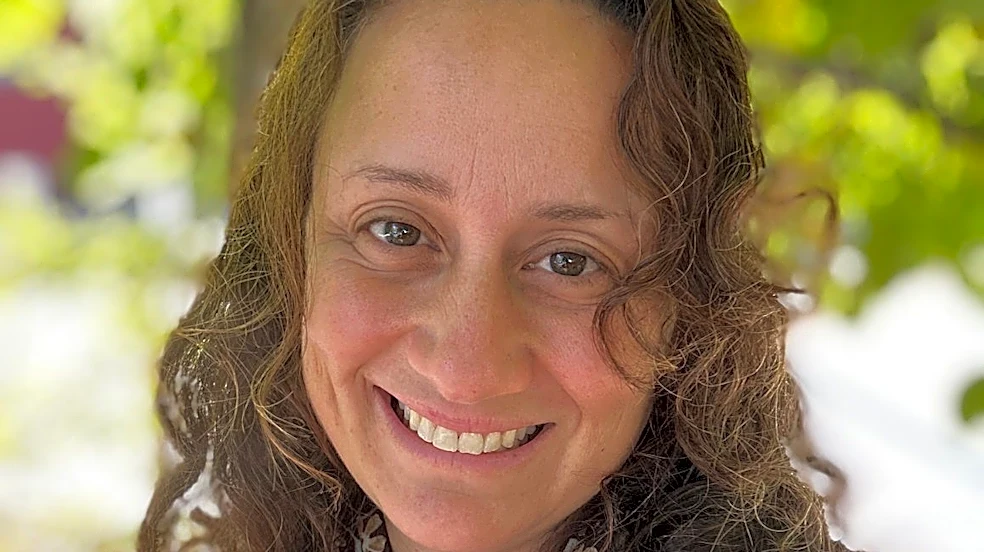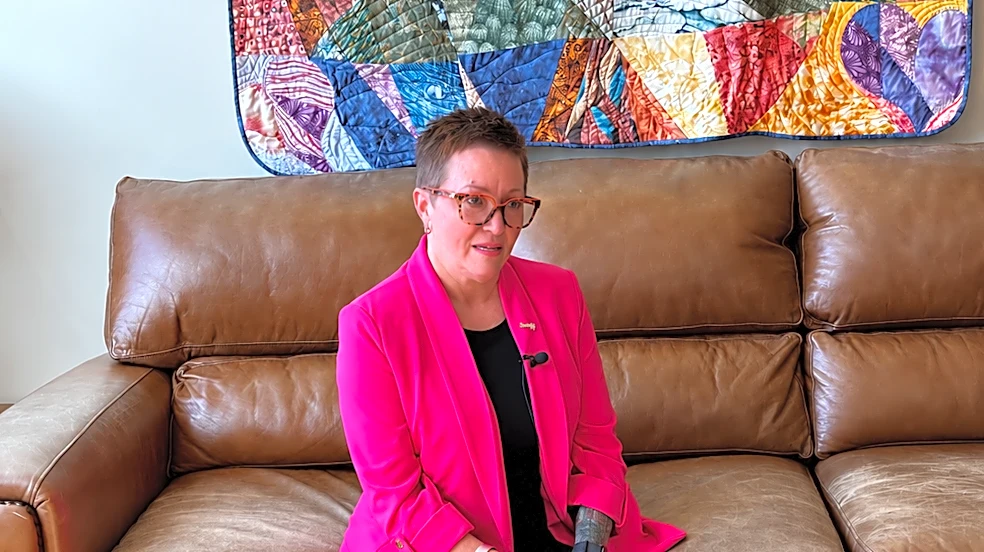










ASHEVILLE - Michelle Treese had always been healthy. She’d never even been diagnosed with the flu or strep throat. But in October 2023, the otherwise healthy Marion woman discovered a lump in her breast that would eventually lead doctors to deliver a terrifying prognosis — without treatment, she had just 11 months to live.
Nearly three years later, Treese is cancer-free, but her experience underscores the importance of breast cancer screenings, early detection and knowing when something isn't right.
During October's Breast Cancer Awareness Month, physicians are emphasizing those same lessons, particularly for women who believe they're too young, too healthy or have too little family history to worry about developing the disease.
Treese, 52, was
born in Missouri and raised in Marion. She works as an educator for HCA Healthcare, training employees on insurance procedures and patient registration.

Despite working in health care, Treese had never seriously considered breast cancer a personal threat. She knew there was some family history of the disease but didn't discover that a grandparent on her father's side had been diagnosed until after her own diagnosis.
She'd undergone regular mammograms without problems, but a self-examination in late October 2023 revealed a lump in her left breast.
Treese contacted her primary care provider, who ordered another mammogram. When the examination was performed in January 2024, it detected not only the lump she'd discovered but another suspicious area in her right breast.
An ultrasound followed that day. Biopsies of both breasts were performed the following week, and seven days later, Treese received the results.
The abnormality in her right breast was benign, but the left contained invasive ductal carcinoma. Further evaluation established that she had stage 2, grade 3 triple-negative breast cancer, an aggressive form of the disease.
Her physicians estimated that without treatment, she had 11 months to live.
"Numb and sad," Treese recalled of her initial reaction. “It was surreal.”

The shock soon gave way to determination, and treatment began quickly. Treese underwent approximately eight months of chemotherapy and about 18 months of immunotherapy, along with surgery in September 2024. Although radiation had initially been considered, she ultimately did not undergo radiation treatment.
The surgical results showed no detectable cancer, and she remains cancer-free today.
Breast cancer screening depends on individual risk
Dr. Blair Harkness, a gynecologic oncologist at Mission Health's Hope Women's Cancer Center, recommends that women begin discussing their individual breast cancer risk with a primary care provider by age 25.
Routine mammograms generally begin at 40 for women at average risk, but family history, genetics, prior breast biopsies and other factors may warrant earlier or additional screening.
Only about 5% to 10% of breast cancers are hereditary, meaning they result from inherited genetic changes. Women without a family history can still develop the disease.
A history of breast or ovarian cancer among relatives can increase risk, particularly depending on which family members were affected and their ages at diagnosis. Physicians may recommend genetic counseling, testing or additional imaging.
Breast density also matters. Dense tissue can make abnormalities harder to detect because both tumors and dense tissue appear white on mammograms. Dense breasts are also associated with an increased risk of developing cancer.
Depending on individual circumstances, supplemental screening may include breast MRI, contrast-enhanced mammography or ultrasound.
Early breast cancer detection improves treatment options
Although mammograms cannot detect every cancer, they can identify abnormalities before a lump becomes noticeable or other symptoms appear.
According to Harkness, earlier detection is associated with better outcomes and may allow patients to undergo less extensive surgery or less intensive treatment.
Women should also recognize changes between scheduled screenings, including new lumps, unusual nipple discharge or changes in breast skin or nipples.
Those symptoms warrant contacting a healthcare provider rather than waiting for another routine examination. For Harkness, the message extends beyond Breast Cancer Awareness Month.

"Don't wait for symptoms or assume you're not at risk because breast cancer doesn't run in your family," he said. "Know your individual risk, talk with your healthcare provider about the screening schedule that's right for you and get your mammogram when it's due."
Breast cancer survivor stresses personal responsibility
Treese recognizes that busy schedules and family obligations can make preventive care easy to postpone. Her experience has also made her more attentive to the importance of taking unusual physical changes seriously.
She wants men to understand that they, too, can develop breast cancer and should seek medical attention for concerning symptoms.
Treese acknowledges that mammograms can cause temporary discomfort, but believes the inconvenience is insignificant compared with the potential consequences of delaying screening.
Her message to others is straightforward.
"If something doesn't feel right today, get it checked today," she said.
For Treese, surviving cancer has also brought unexpected perspective. Stories of other survivors now provide encouragement, while her own experience has deepened her appreciation for life beyond treatment.
"This was a terrible, ugly experience, and the other side of it has been beautiful in many, many ways — more ways than I could have ever imagined," she said.
Cory Vaillancourt is the Helene Recovery/Investigations Reporter for the Asheville Citizen Times. Find him on X at @The_CoryV or on Signal, via email at cvaillancourt@citizentimes.com or at 912-508-5640.
This article originally appeared on Asheville Citizen Times: NC breast cancer survivor's story shows why early detection matters