



ASHEVILLE - The American Flood Coalition works on two kinds of infrastructure — the kind that keeps rising water from destroying communities and the kind that gets Republicans and Democrats working together before it does.
Its name may be unfamiliar to people rebuilding from Tropical Storm Helene, but AFC’s work is familiar to elected officials who have traveled to Raleigh and Washington seeking help, sometimes alongside political opponents confronting the same flood-related issues in their communities.
Nearly two years after Helene, the organization is helping those leaders turn shared losses into a shared agenda. The goal extends beyond recovering from the last flood to reducing the destruction of the next.

Tony McEwen, the coalition’s Carolinas
director, said that work begins with giving communities a stronger voice in decisions about their future.
Founded in 2018, the bipartisan nonprofit staffed by more than 30 employees draws its support entirely from philanthropy, including from larger, well-known funds like the Walton Family Foundation and Kresge Foundation as well as NC-based funders like the Z. Smith Reynolds Foundation. The arrangement allows the coalition to advocate for communities without competing for public funding. Donor support also helps local leaders bring their experiences directly to policymakers.
“One of the unique things about us is that as we work as a coalition, we do not seek any government funding at any level. We do not seek any contracts at any level,” McEwen told the Citizen Times.
The AFC's members number more than 500 across 22 states and include local governments, elected officials, nonprofit organizations, chambers of commerce and military and business leaders.
Much of AFC's work happens outside public view, through arranging meetings, listening to officials describe their problems and helping translate those problems into policy proposals.
The coalition puts those local voices at the center of its advocacy, McEwen said. For smaller communities, particularly rural ones, simply being heard can be a challenge before any discussion of rebuilding even begins.
Before the water rose
In Western North Carolina, AFC's relationships predate Helene.
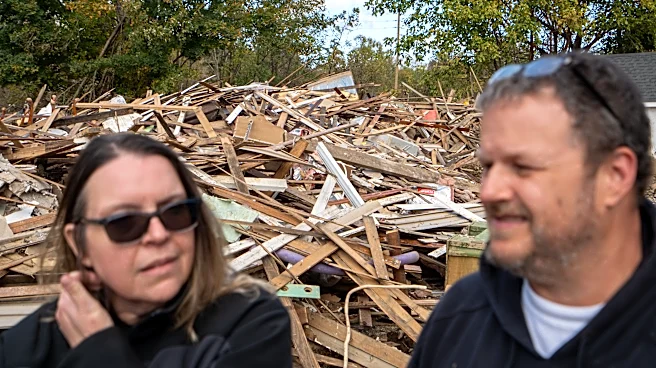
Following Tropical Storm Fred’s deadly flooding in 2021, AFC representatives repeatedly visited Canton, where damaged public buildings and infrastructure exposed the consequences of putting essential services within reach of the river.

During an April 2023 legislative tour, Republican Rep. Mark Pless brought fellow lawmakers through Haywood County to examine recovery needs. Stops included flood-damaged neighborhoods, a strained culvert and a fire station that needed replacement. Pless credited the coalition with helping officials understand how to rebuild more safely. McEwen’s message then was that mountain communities needed attention in flood policy often associated with the coast.
That earlier involvement mattered when Helene struck, McEwen said. The coalition already knew local leaders and understood that flooding was an urgent regional concern.
About a month after the storm, AFC began conversations with officials whose communities had suffered extensive damage. Federal policy and technical specialists joined McEwen on visits to hear what those communities needed.
Those discussions developed into the Western North Carolina Recovery and Resilience Partnership, an effort to bring communities together around faster recovery and better protection against future disasters.

The coalition’s usual focus is preparing communities through better planning and infrastructure, McEwen said. After Helene, however, it recognized that immediate recovery had to be central to the conversation.
It also wanted smaller communities to have opportunities to reach federal officials while Asheville and Buncombe County were making their own appeals.
The partnership gave local leaders a way to identify shared priorities and develop a strategy for pursuing them. Their experiences navigating disaster assistance also gave the coalition firsthand information about the obstacles complicating recovery.
A seat at the table

AFC's approach reaches beyond the region. The AFC brings local elected officials to Washington for multiday gatherings that combine education, discussions of community needs and meetings with congressional offices. An official from North Carolina might work alongside someone from Iowa, comparing experiences and making the case that flooding demands national attention.
The organization also convenes state officials responsible for policy and implementation, giving them opportunities to learn from one another. In Raleigh, advocacy days bring representatives of different communities together to make their needs known.
For small towns, participation requires resources as well as an invitation. McEwen said the coalition works to ensure that limited local capacity does not leave rural communities outside those conversations.
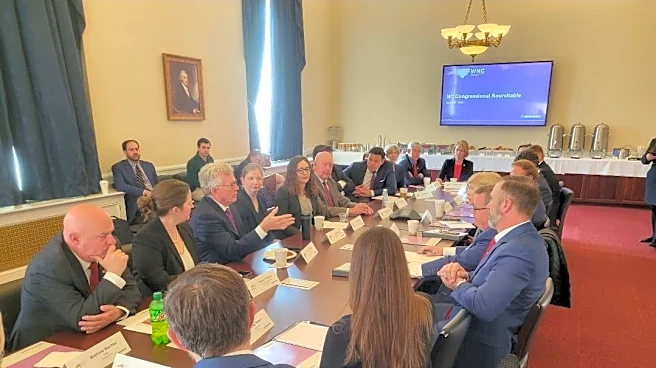
A March 2025 Washington trip showed what that access could accomplish — and what it could not immediately resolve. The coalition helped WNC officials meet with senators, House members, representatives from the Federal Emergency Management Agency and White House staff. At that time, local leaders gave voice to a disconnect between federal promises and money reaching their communities. Canton Mayor Zeb Smathers, a Democrat, and Haywood County Commissioner Brandon Rogers, a Republican, supported giving local governments a greater role in handling recovery funding — and still do.
Getting an audience with decision makers did not in and of itself pay an invoice or rebuild a sewage treatment plant, but it did give local officials a chance to explain the consequences directly to people responsible for the federal response.
Common ground above the floodline
In a political climate where agreement can seem elusive even on something as readily apparent as the color of the sky, Smathers said the partnership has helped officials from opposite ends of the political spectrum develop close working relationships.

“These are very divisive times, but the work this organization does and the leaders they’ve brought together across the political spectrum has resulted in progress,” Smathers said. “Not just for Western North Carolina but across the country — it just goes show that bipartisanship does exist, working together does happen and can accomplish great things. We just have to have audacity to choose it over division.”
McEwen said the officials’ own commitment to their communities has been essential. The coalition helps create opportunities for collaboration, but the willingness to work together belongs to the participants.

“In our country, and even in our county, we’ve become pretty polarized,” said Matt Wechtel, an AFC member and Republican commissioner from hard-hit Madison County. “Ultimately, mother nature doesn’t give a crap whether you’re a Republican or a Democrat. The flood didn’t care who was a Republican or a Democrat. It didn’t spare anybody. The beauty of the American Flood Coalition is that we realize it’s bigger than Democrats and Republicans. Our problems are regional problems, and a rising tide floats all ships.”
McEwen believes those across-the-aisle connections could endure beyond Helene and carry into other regional policy discussions.
For the coalition, helping communities learn from one another is part of preparing for what comes next. In rugged Southern Appalachia, the relationships built during recovery could become another form of protection — a way to approach the next crisis with allies already in place.
“I think it can pay off for the region going forward,” McEwen said.
Cory Vaillancourt is the Helene Recovery/Investigations Reporter for the Asheville Citizen Times. Find him on X at @The_CoryV or on Signal, via email at cvaillancourt@citizentimes.com or at 912-508-5640.
This article originally appeared on Asheville Citizen Times: Behind the scenes, American Flood Coalition bridges WNC’s partisan divide