






ASHEVILLE - Rep. Chuck Edwards lost the fight over his censure on the House floor, but he’s not done fighting the process that put him there.
Two weeks after the House voted 413-2 to censure the embattled Western North Carolina Republican congressman, Edwards has turned his challenge toward the Republican and Democrat who led the ethics investigation against him, filing a complaint with the independent Office of Congressional Conduct against House Ethics Committee Chair Michael Guest (R-MS) and ranking Democrat Mark DeSaulnier (D-CA).
The six-page complaint, dated Sept. 2 and announced publicly Sept. 15, does not ask the OCC to reconsider the Ethics Committee’s factual findings. Instead, Edwards alleges Guest and DeSaulnier circumvented committee
rules, adopted his censure report before considering his formal response and relied on a procedural waiver Edwards says he never validly executed.

“The Ethics Committee demanded that I be punished for supposedly violating the ‘letter and spirit’ of House rules while its own leaders treated those same rules as optional,” Edwards said in a Sept. 15 statement on his website. “There was nothing ethical about this process.”
The OCC is an independent, nonpartisan House entity that reviews allegations of misconduct involving members and staff. A complaint does not automatically trigger an investigation, and the OCC cannot itself impose sanctions. It can, however, refer matters to the Ethics Committee.
Edwards’ complaint asks for an investigation of Guest and DeSaulnier, preservation and examination of communications regarding the disputed waiver, correction of the public record and other action.
A fight over the rules
Edwards’ latest challenge traces back to April 20, when the Ethics Committee issued a broad statement inviting people with information about sexual misconduct by House members or staff to come forward.
The committee said it received information about Edwards shortly afterward and began reviewing allegations involving his treatment of two young women who had worked for him in the North Carolina Senate before following him to Washington.
The committee publicly confirmed the investigation May 14.
Investigators ultimately interviewed 16 people, including Edwards, and reviewed nearly 1,500 pages of documents. The committee voted July 22 to adopt its report, which concluded Edwards had engaged in persistent inappropriate and unprofessional conduct toward the two women and had violated House standards requiring members to behave in a manner reflecting creditably on the chamber.

But Edwards’ attorneys did not receive a draft of that report until July 31, according to his OCC complaint. His formal response followed Aug. 3.
That sequence is now central to his case against Guest and DeSaulnier.
Edwards argues the committee reached its findings, credibility determinations and recommendation of censure before considering his defense. In his Sept. 15 statement, he called the later opportunity to attach a response “window dressing intended to create the appearance of fairness after the verdict had already been written.”
His complaint also disputes the committee’s assertion that Edwards waived procedural steps normally required before a sanction can reach the House floor.
Committee Rule 26(b), Edwards argues, requires a waiver to be written, signed by the respondent and specific about which rights are being surrendered. His filing says no such document exists.

“The Congressman did not waive any rights in accordance with Committee Rule 26(b),” the complaint says.
The Ethics Committee said Aug. 3 that Edwards had agreed to waive certain procedural steps after reviewing the draft report. His complaint says an oral communication between counsel and the committee could not satisfy the written-waiver requirement.
The lawyer behind the challenge
The procedural argument mirrors the defense Edwards’ attorneys began mounting before the report became public.
Washington attorney Andrew D. Herman signed Edwards’ formal response. Herman’s practice includes government and administrative law, white-collar criminal matters and congressional investigations. His professional biography, cited in earlier Citizen Times reporting, says he has represented dozens of members of Congress in ethics investigations and related proceedings and has argued successfully before the U.S. Supreme Court in an election-law case.
Federal campaign records show Edwards’ campaign paid Herman $7,500 April 30 and $23,167 June 10 for professional fees, a total of $30,667.

The timing put a lawyer experienced in government process and congressional investigations at Edwards’ side while the Ethics Committee was building its case.
Edwards’ Aug. 3 response argued there had been no Investigative Subcommittee, no Statement of Alleged Violation and no adjudicatory hearing at which allegations would have to be proven by clear and convincing evidence.
“Recommending the most severe sanction available on a Rule 18(a) information-gathering record exceeded the authority Rule 18(a) confers,” Edwards says in the new OCC complaint.
The Ethics Committee took a different view, saying Edwards’ waiver allowed it to proceed directly toward a House sanction.
Four missed votes and a Christmas tree
The procedural fight does not erase the evidence documented in the bipartisan committee report.
Investigators said Edwards gave the two women jewelry worth more than $1,000, designer purses, guns, electronics, vacations and other gifts. He commented on their appearance, arranged private dinners, sent late-night messages and organized outings the committee said crossed professional boundaries.
The committee found no evidence Edwards had sexual contact with either woman or explicitly propositioned them. It also concluded the case did not involve quid pro quo harassment and did not find a violation of federal sexual harassment law.
But investigators concluded the totality of Edwards’ conduct created a hostile workplace and violated broader House standards governing unwanted advances and member conduct.

One incident involved Edwards’ congressional duties directly.
On Dec. 15, 2024, Edwards offered to visit the home of the woman identified as Staffer 2 to work in her yard and decorate her Christmas tree.
“What if I skip votes and help you decorate your tree once you get home tomorrow?” Edwards wrote.
He did.
House records show Edwards missed four roll-call votes Dec. 16 involving autism programs, veterans health care and federal judgeships. All four measures passed.
The episode drew pointed criticism during the Sept. 1 censure debate. Rep. Teresa Leger Fernández, D-N.M., argued Edwards’ constituents had sent him to Washington to perform congressional duties.

“These women lost their jobs because of Mr. Edwards’ behavior. He should lose his,” Leger Fernández said.
The report also said Edwards knew or should have known by May 2025 that the women were uncomfortable after a senior staffer raised concerns.
One woman told investigators she “did not know how to say no.” The other said she feared Edwards could react adversely if she established boundaries and later testified that she did not believe “having a Member of Congress against me would benefit my career.”
From investigation to censure
The committee released its report Aug. 3 and recommended censure. Edwards withdrew from his reelection campaign against Fairview farmer Jamie Ager two days later but said he would serve through the end of his term.

When the House considered the resolution Sept. 1, Edwards apologized to the two women and to his wife and family — but not his constituents — while maintaining that the committee had stretched inappropriate conduct into a sexual harassment finding the evidence did not support.
“Possibility is not proof, inference is not evidence, and selective context is not totality,” Edwards said during debate. “I am imperfect. I have made mistakes, but I do not believe I committed sexual harassment, and the factual findings of this investigation do not justify branding me as though I did."
Guest defended the committee’s work, saying investigators had considered evidence favorable to Edwards but concluded his behavior crossed professional boundaries when viewed as a sustained pattern.
“The committee found that Rep. Edwards was, at a minimum, blind to the reality, and at worst, dismissive of the impact his conduct had on the career and well-being of the women on his staff,” Guest said.
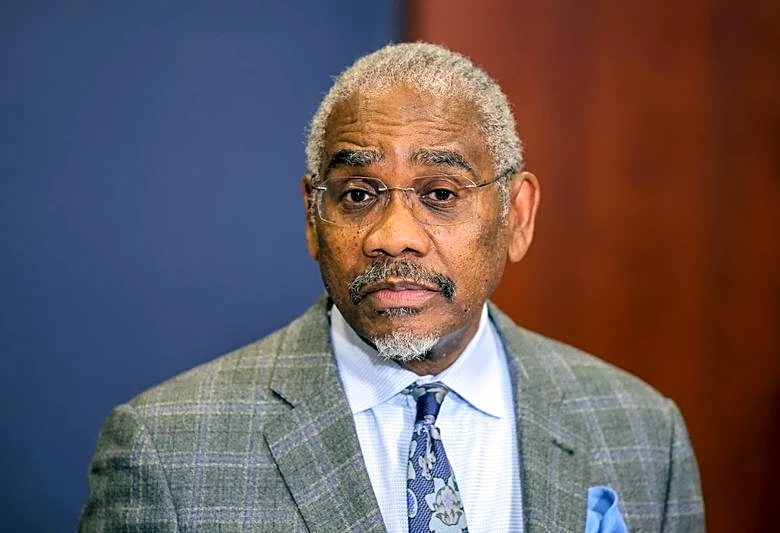
Rep. Glenn Ivey (D-MD), another Ethics Committee member, was more pointed.

“You know that this is over the line. He knows this was over the line, and he knew it when he was doing it,” Ivey said.
The House adopted the censure resolution 4, with Edwards and Rep. Ralph Norman (R-SC), casting the only votes against it.
The next day, Edwards signed the complaint that has now moved his fight from the conduct described by investigators to the conduct of the investigators themselves.
Edwards and Herman didn’t immediately return inquiries from the Citizen Times.
Cory Vaillancourt is the Helene Recovery/Investigations Reporter for the Asheville Citizen Times. Find him on X at @The_CoryV or on Signal, via email at cvaillancourt@citizentimes.com or at 912-508-5640.
This article originally appeared on Asheville Citizen Times: Chuck Edwards challenges ethics process after censure