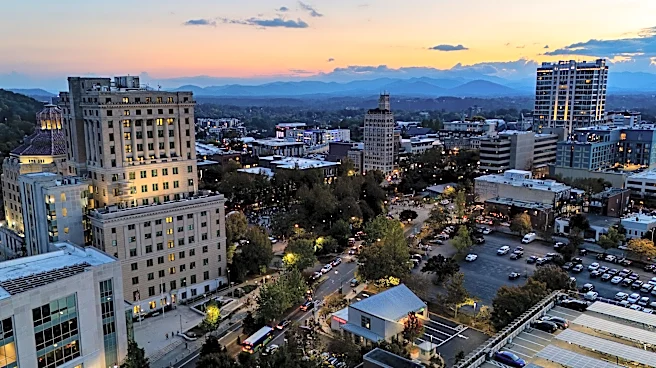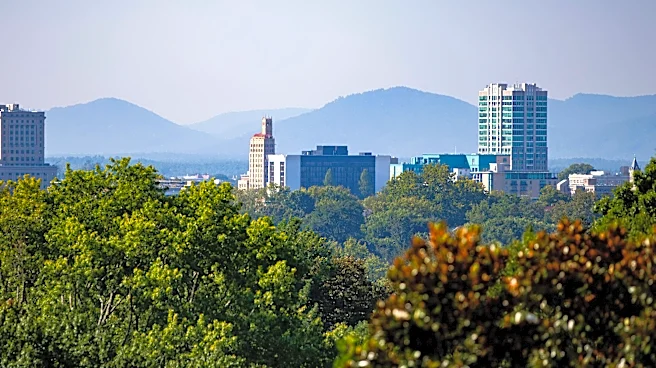








ASHEVILLE - Fire and water are elemental opposites. One consumes what stands in its path. The other tears it loose and carries it away. But it's really all the same when one of them is ravaging your home.
Asheville filmmakers Erin Brethauer and Tim Hussin spent five years documenting what remained after wildfire devastated a California town, only to find themselves living through a different version of the same story when Tropical Storm Helene struck Western North Carolina.

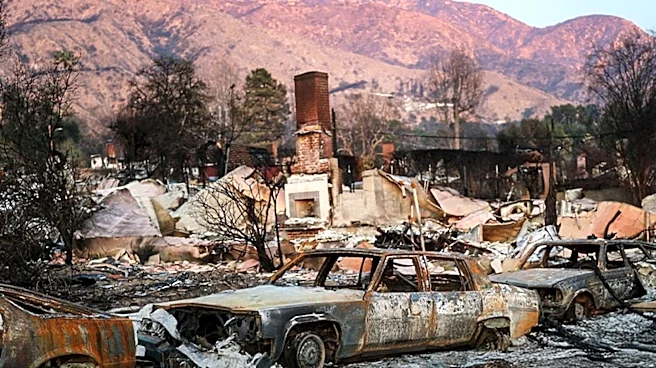
Their feature documentary, “Stray Embers,” follows residents of Paradise, California, through the long aftermath of the 2018 Camp Fire, the deadliest wildfire in state history. Brethauer and Hussin will bring the film to Asheville Sept. 22 for a 7 p.m. screening at the Fine
Arts Theatre, nearly two years after Helene devastated communities across the region in similar fashion.
But just as Helene wasn’t strictly about water, “Stray Embers” is not primarily about flames.
Filmed over five years and more than 45 return trips to Paradise, the documentary stays with residents as the immediate emergency fades and a slower struggle begins. Homes must be rebuilt. Relationships change. New routines emerge. Some people stay while others leave, all under the knowledge that the place they call home could burn again.
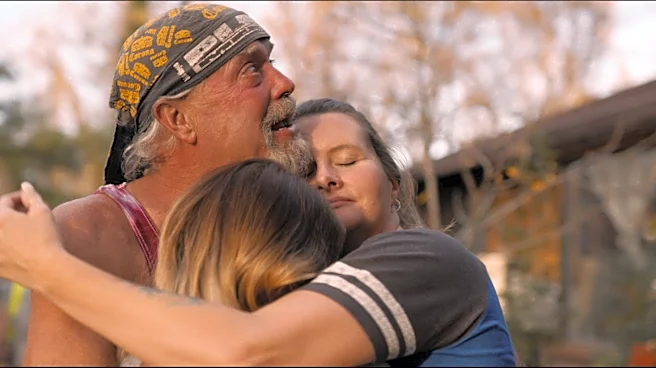
At the center of the film is Brad Weldon, a fifth-generation Paradise resident who saved his home with little more than garden hoses as fire destroyed much of the surrounding community.
In the aftermath, Weldon opened his surviving house to more than 20 displaced neighbors, friends and their dogs. The home became an improvised multigenerational household, crowded and constantly changing, where grief and uncertainty existed alongside humor, generosity and the daily work of resiliency.
When the story hits home

For Brethauer and Hussin, the distance between filmmaker and disaster disappeared in September 2024.
“It wasn't our home that burned down, so when Helene came to Western North Carolina, it really struck us as, 'Wow, this is what it must have felt like to be in Paradise in some ways,'" Brethauer told the Citizen Times Sept. 16. "Just to see it happening in your own home is quite a different experience.”
Brethauer worked as a Citizen Times photojournalist and multimedia editor from 2007 to 2014 before leaving Asheville for the San Francisco Chronicle. She and Hussin later worked there as staff filmmakers before returning to Asheville in 2020.

When Helene struck, they were living in West Asheville with their 3-month-old son. Like many, they spent 10 days without power and 53 days without potable water.
The experience forced them to confront — personally — many of the same questions they had spent years documenting in Paradise. What happens when familiar systems suddenly fail? How much do people come to depend on neighbors? When does rebuilding become recovery, and is there ever a clear point when a disaster truly ends?
“We didn't have cell service, we didn't have electricity, we didn't have potable water," Hussin said. "So what we did instead was turn to our neighbors. We'd go outside, we'd talk to our neighbors, we'd get information that way."
That connection gives the Asheville screening a meaning the filmmakers could not have anticipated when they began documenting Paradise.
“Stray Embers” avoids reducing disaster recovery to a simple story of resilience. Alongside Weldon and the community that formed around his home, the film follows Lenny, a solitary outdoorsman who retreats into the surrounding wilderness.

The two paths show how differently people can respond to the same catastrophe. Some seek community. Others seek distance. Some rebuild quickly while others remain unsettled years later. The decision to stay or leave can itself become part of the long aftermath.
Putting community back in the picture
Brethauer and Hussin are Emmy-winning filmmakers whose work has appeared in The New York Times Magazine, The New Yorker, National Geographic and other publications. They previously co-directed “Last Men Standing,” a feature documentary about long-term HIV survivors in San Francisco.
“Stray Embers” premiered in the Documentary Feature Competition at the Big Sky Documentary Film Festival and was also selected for the RiverRun International Film Festival and San Francisco Documentary Festival.
Paradise is thousands of miles from Asheville, and fire bears little resemblance to floodwater. But what comes afterward may be another matter.

“They morph and they influence you in ways you may not understand,” Hussin said of the traumas a disaster leaves behind. “I think it's important that we keep talking about that and sharing what we're going through and seeking support and community through recovery.”
For Brethauer, those conversations are part of the film’s purpose. She hopes watching it together will help people continue processing what happened to their own community.
“The film is an experience of this community over time, and we want people to kind of be brought back into that space of being folded into a community, caring for one another, to be reminded of what that really feels like, because it's so important right now, and especially in the years after a disaster, people are just still dealing with the trauma of it, but just in different ways,” she said.
Cory Vaillancourt is the Helene Recovery/Investigations Reporter for the Asheville Citizen Times. Find him on X at @The_CoryV or on Signal, via email at cvaillancourt@citizentimes.com or at 912-508-5640.
This article originally appeared on Asheville Citizen Times: Asheville filmmakers find echoes of Helene in wildfire